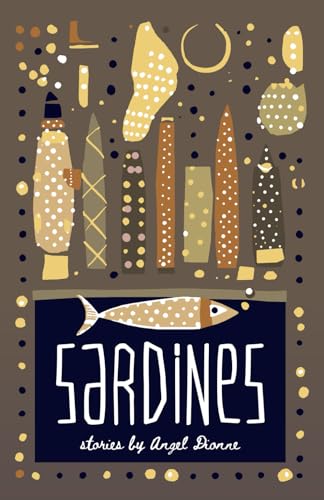
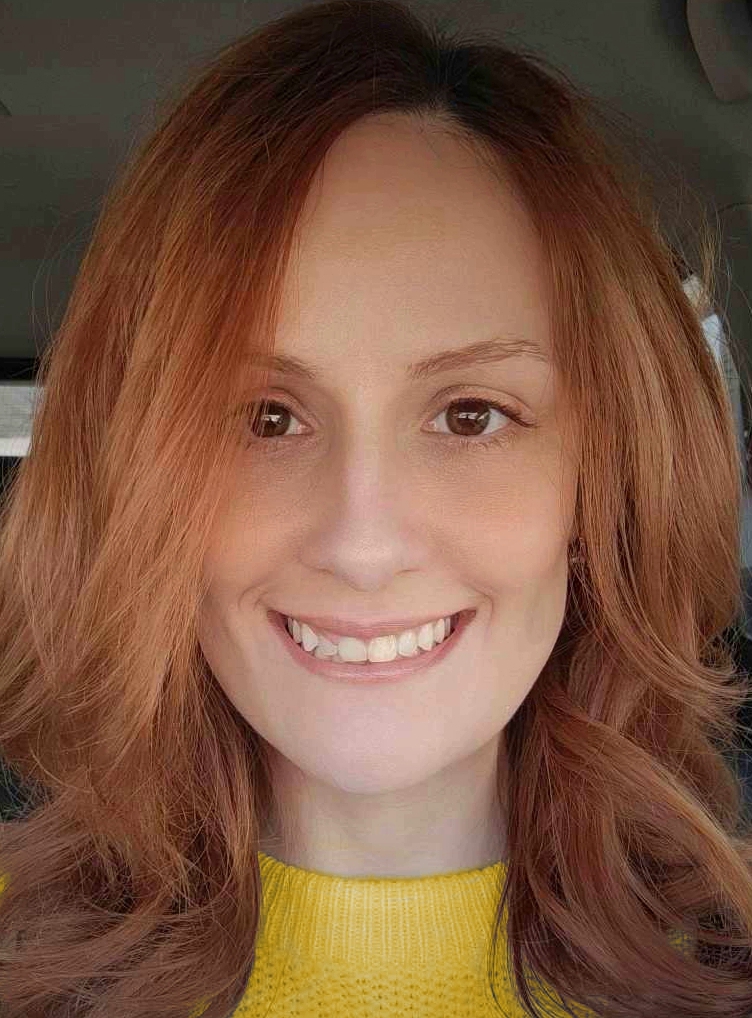
My guest today on What Cathy Read Next is author and classical music critic, Sophia Lambton. When Sophia spotted I was reading Diva by Daisy Goodwin, a novel about the life of Maria Callas, she contacted me to let me know about her biography of Maria Callas, The Callas Imprint: A Centennial Biography. It was published on 2nd December 2023, the 100th anniversary of Callas’s birth.
Unfortunately my existing commitments meant I had to decline Sophia’s kind offer of a review copy. However she kindly agreed to answer some questions about her book. I think you will find her answers fascinating and a real eye-opener if, like me, your only perspective on Maria Callas’s life and career has been gained through works of fiction.
About the Book

Coating opera’s roles in opulence, Maria Callas (1923-1977) is a lyrical enigma.
Seductress, villainess, and victor, queen and crouching slave, she is a gallery of guises instrumentalists would kill to engineer… made by a single voice.
But while her craftsmanship has stood the test of time, Callas’ image has contested defamation at the hands of saboteurs of beauty.
Twelve years in the making, this voluminous labour of love explores the singer with the reverence she dealt her heroines. The Callas Imprint: A Centennial Biography reaps never-before-seen correspondence and archival documents worldwide to illustrate the complex of their multi-faceted creator – closing in on her self-contradictions, self-descriptions, attitudes and habits with empathic scrutiny. It swivels readers through the singer’s on- and offstage scenes and flux of fears and dreams… the double life of all performers.
In its unveiling of the everyday it rolls a vivid film reel starring friends and foes and vignettes that make up life.
It’s verity. It’s meritable storytelling. Not unlike the Callas art.
Find The Callas Imprint: A Centennial Biography on Goodreads
Purchase The Callas Imprint: A Centennial Biography from The Crepuscular Press
Q&A with Sophia Lambton, author of The Callas Imprint: A Centennial Biography
Q. Welcome, Sophia. When did you first become aware of Maria Callas?
A. I was seven years old and on a train en route to school. I remember seeing a little billboard advertising one of those “The Very Best of Maria Callas” compilations, and asking my mother about her. Later on I got to love her voice at the age of thirteen, but it wasn’t until I turned 17 that I became seriously interested in her art.
Q. What made you want to embark on writing a biography of Maria Callas?
A. After absorbing many audio and video interviews with her on YouTube, I felt this extraordinary woman hadn’t been exposed to the world; not even to adoring fans and listeners. From an early age I’d taken as gospel the assumption that she was a “diva” with a “scandalous” life who’d provoked lots of “controversies”.
This is nonsense. YouTube – at first primarily, and then some of the more reliable biographies – helped me discover a self-reflective, lucid and clear-headed woman. She was not selfish: on the contrary, like most great artists, she had in mind a mission to serve art and bring a novel layer to it. It was entirely about being worthy of Verdi, Donizetti, Bellini and other composers. It was never about wanting to be famous, or even respected.
What I truly learnt as a young artist back then was how the process of creating art is just one never-ending act of “striving”. You can never really tell what makes art great or less so: only time is the arbiter. Callas spent her whole life striving to reach timeless heights, but it was not for her sake; it was in the service of the betterment of music.
Q. What do you consider is missing from other books or articles about her?
A. There are so many that it varies enormously from biography to biography; feature to feature. I still believe many omit her full self-consecration to the art. This was a woman who was severely myopic, so prioritised feeling her way through the props before every performance to mentally mind-map them. She sang when she had lethal drops in blood pressure. She performed dangerous physical stunts most actors – let alone opera singers – would have rejected. She rehearsed until 3.30am, and encouraged her colleagues to follow. She was also instrumental in advancing the careers of many, including Leonard Bernstein, James Conlon, Franco Corelli and others.
At the same time, my principal objective was to show how well she knew herself. This is something almost all other biographies lack: they seek to incarnate a Callas who is either chronically victimised, mentally unhinged or just selfish. The creation of art requires what many see as a selfishness, but when you’re just its humble servant, you feel anything but! Callas would sit drinking coffee in front of her vocal coach Janine Reiss – my first interviewee when I was just 19 – and say, “I hope he’s happy.” She was referring to Donizetti. She refused to accept subpar conditions she felt would be compromising not only her reputation, but the beauty of La traviata or Lucia di Lammermoor. In that regard, she lived on a higher plane, often at the expense of her comfort and health.
She also had no predilection for luxury, as many have suggested. And she was not dumped by her long-term partner, Aristotle Onassis: they had been on bad terms for over a year by July 1968, and she left him, contrary to the commonly told narrative. He married Jacqueline Kennedy after months of trying to get her back with giant floral arrangements and unanswered phone calls. According to his housekeeper, Georgia Vetta, he even had problems eating out of despair following her departure. He and Callas remained close friends until his death.
Moreover, Onassis had no desire to dent Maria Callas’s career, as has likewise been alleged. On the contrary, documents I found in the archive of her manager Sander Gorlinsky demonstrate an urge to improve it. He attempted to persuade her to launch a “Maria Callas Television Company” so Callas would have the opportunity to pre-record concerts. But she hated non-live events, and decided against it.
Q. You’ve described The Callas Imprint as your ‘twelve-years-in-the-making, 676-page labour of love’. How did you go about your research?
A. I am a stickler for completism, so I spent 12 years conducting research.
Firstly, I took interviews from many who had known her in English, French and Italian across various cities spanning three continents. These were helpful, but my main aim was to locate never-published correspondence: a hard feat considering great sheafs are already available to the public. I found these through archives of institutions, universities and private collectors in New York, Athens, Rome, Lecco, London and other places. I was fortunate enough to receive great help from a great many archives.
I also spent an enormous amount of time searching through physical, microfilm and online newspaper archives in London, Rome and Paris. The digitisation of papers from everywhere – Rio de Janeiro to Haiti – simplified that task. Over the years I accumulated maybe 1.2 million words’ worth of transcriptions of large chunks from books including not just those on Callas, but of course biographies of and memoirs by her colleagues, friends, acquaintances and hundreds of artists from the 20th century. In addition to these I transcribed newspaper articles in 10 languages, as well as her letters. These transcriptions were inserted into chronological documents that enabled me to position not just what was happening at any given time in Callas’s life, but what she was thinking, drinking, eating, wearing, rehearsing etc. It was an interminable amount of research: you never feel that you are done!
Q. Who was the interviewee you were most excited to talk to?
A. It was two interviewees: Eugene Kohn and Fabrizio Melano. The first had accompanied Callas’s Juilliard masterclasses in New York from 1971 to 1972 at the age of 19. The second had been the assistant director in Callas’s co-directed production of Verdi’s I vespri siciliani. The recency of these events compared to performances in the fifties and sixties made me hope their perspectives and memories would be fresher, and they certainly were! Both these incredibly kind gentlemen had very vivid memories to offer compared to some of my more senior interviewees. Staying in New York at the time, I felt I was able to palpably enter the Callas Juilliard period. I later compiled a ton of correspondence from the Juilliard Archive, so I excitedly pieced all of it together.
Q. What was the most surprising thing you discovered during your research?
A. Well, there are many, but one of the perhaps more amusing – or sadder, depending on how you see it – discoveries was the insecurities of Aristotle Onassis. He is often portrayed as this proud titan of Greek shipping: a billionaire magnate. Instead, he was quite complex-ridden, and Callas would urge him to see a doctor about his nerves. In his archaic male psychology, he would tell her that nerves “[were] not the business of a doctor.” Contrary to what many believe, I felt like she was the stronger person overall, and sometimes it almost seemed as though she wore the pants in that relationship.
Q. If it did, how did your view of Maria Callas change as a result of writing the book?
A. It changed enormously. Prior to launching my research, I had bought the long-prevailing myths: the idea that Callas was this tragic figure who had sacrificed herself for love: a very operatic notion. The creature whom I met instead was stalwartly determined and impermeably independent. She had a vision for opera only she could realise, and was ready to fight anyone to execute it. I happen to agree with much of her vision: there are few interpretations of hers I think missed the mark. She was also empathetic and cherished a great camaraderie with her co-workers: not a diva at all. And the moment you begin to explore what her colleagues reported of her, you understand they likewise didn’t think this. That image was the fruit of paparazzi sleaze.
Q. Do you have a favourite aria of hers?
A. This [link to official Warner Music site on YouTube opens in new tab] is one of many favourites (it’s actually a duet). I’m citing it because to me it’s highly underrated: “Fra le tue braccia, amore” – the end of Puccini’s Manon Lescaut.
As Manon Lescaut – a young, enamoured and ambitious woman – dies of exhaustion and hunger in the desert with her lover des Grieux, she releases a carnal allure; shaping her words, and especially her vowels, to appeal to him even in death. Her final words are, “ma il mio amor… non… muor“: “but my love… doesn’t… die.” The way Callas manipulates her breath and volume here – to sound both fragilely expiring and yet sexualised – is totally unprecedented. There is no other soprano, and I believe no other actress, who could execute such a psychology in voice.
Q. You’ve also ventured into writing fiction, publishing three volumes of a saga which you’ve described as ‘Television drama. Novelised’. Can you tell us more about this?
A. The Crooked Little Pieces is a tale of undefinable relationships. From the age of ten I’ve been obsessed with perverse pairings and male-female dynamics. The saga is a 20th-century soap opera scribed in poetic language centred on sororal twins Anneliese and Isabel van der Holt. Seven volumes long, it follows their travails and destinies in their careers of psychiatrist and music teacher respectively; tracking never-ending “will they, won’t they” couples in the midst of mysteries, murders, music and suicides. I like to call my chapters “scenes” because I’ve been inspired by camera angles and colour palettes to create a tv series in literature. It’s very non-classical but retains a large gamut of metaphors. Readers with a penchant for sustaining long rapports with characters will feel connected to it.
About the Author

Sophia Lambton became a professional classical music critic at the age of seventeen when she began writing for Musical Opinion, Britain’s oldest music magazine. Since then she has contributed to The Guardian, Bachtrack, musicOMH, BroadwayWorld, BBC Music Magazine and OperaWire, and conducted operatic research around the world for The Callas Imprint: A Centennial Biography, which was published to coincide with the soprano’s one hundredth birthday in December 2023. Crepuscular Musings – Lambton’s cultural Substack – provides vivid explorations of tv and cinema together with reviews of operas, concerts and recitals. The first three volumes of The Crooked Little Pieces – her first literary saga – came out in 2022 and 2023. Currently she’s on the third part of her second. She lives in London (Photo/bio: Amazon author page)
Connect with Sophia
Website | Substack | Instagram | Goodreads