
Publication of your novel is always a special day for an author so I’m grateful to Maria McDonald for letting me join in with the celebrations to mark the publication today of her latest book, The Keeper of Secrets. You can read Maria’s fascinating answers to my questions below as well as read an extract from the book.

About the Book
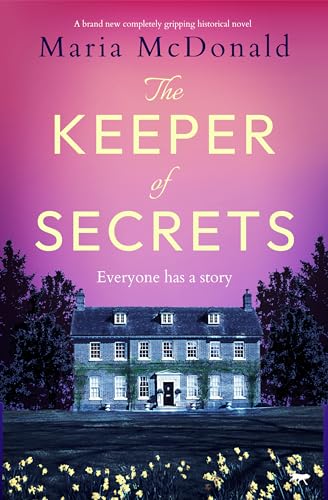
In May 1917 the Americans sailed into Cork to join the Great War. When they left two years later, they brought their war brides with them, including Lizzie McCarthy. Still reeling from the tragic death of her sister Maggie, Lizzie leaves Ireland hoping for a better life with her new husband Ed Anderson.
Lizzie soon finds that America is not the land of opportunity she thought it was. Despite the obstacles in her path, she makes a good life for herself and her family. Ed’s sisters become her closest friends and allies. At home, Ireland’s bloody civil war ends. Lizzie’s brother Jimmy joins her and becomes part of the family until he feels compelled to return to a new independent Ireland.
But another conflict is on the horizon, and as their family grows and plants roots in America, they take the once-unimaginable step of boarding a plane and visiting Ireland. Once there, will Lizzie finally learn the truth about her sister’s death?
Find The Keeper of Secrets on Goodreads
Purchase The Keeper of Secrets from Amazon [link provided for convenience not as part of an affiliate programme]
Q&A with Maria McDonald, author of The Keeper of Secrets
Q. The Keeper of Secrets is set in the aftermath of the First World War. What attracted you to this period in particular?
A. I am fascinated by this period in Irish history. What happened in Ireland, and worldwide, still resonates today. As a country we finished our Decade of Commemorations last year. Those commemorations marked the 100th anniversary of the First World War, The Home Rule Campaign, The Easter Rising, The War of Independence, The partition of Ireland and the Irish Civil War. It was a complex time in our county’s history.
Q. How did you go about creating your main character, Lizzie McCarthy? Did she change much during the time you were writing the book?
A. A few years ago, I saw a documentary about Irish war brides made by historian Damien Shiels. His research was fascinating and sparked an idea to write their story. Lizzie is an amalgamation of several of those war brides and other strong women I have encountered over the years. The story begins when Lizzie is twelve and her Irish twin Maggie dies in awful circumstances. It ends shortly after Lizzie returns to an Ireland changed beyond recognition. The original title of the book was Lucky Lizzie. It was a nickname her father gave her in childhood and one she felt she earned throughout her life, despite the hardships she had to endure. Lizzie was a born optimist.
Q. How did you approach your research for the book, and did you discover anything that surprised you?
A. The stories of the War Brides were a revelation. I started with the documentary, then looked up Damien Shiels website. From there Google became my best friend. I read newspaper articles, old and new, both Irish and American. There are numerous websites offering information and photographs on Irish history. Because it is a time period in Irish history that I am familiar with, I enjoyed writing Lizzie’s story until she left to travel to America. Then I got stuck. It took some time and a lot of research to decide where she was going to. I settled on Pensacola in Florida. I made that decision based on the history of that area. Construction of the naval base in Pensacola commenced in 1826. I have cousins who live there, emigrants from Ireland in the 1960s.
When I investigated life in Florida in the 1920s, I was shocked by the extent of the Jim Crow laws on legal racial segregation. Like many people I was aware of the racial discrimination in the American south, but I don’t think I understood the impact until I realised that Lizzie would have lived through it. As a young Irish woman in 1919 she would never have seen a person of colour before. But as an Irish woman born to farm labourers on an estate owned by English gentry, she would have experienced prejudice based on her religion, her nationality and her socio-economic background.
Q. Were there any scenes that were particularly challenging to write? If so, why?
A. The scenes where Lizzie and her mother visit her sister Maggie in hospital were hard to write. There are so many Irish women who suffered at the hands of the Catholic church who still have never received justice.
Q. What is your favourite and least favourite part of the writing process?
A. Research is my favourite part of writing. So much so, that sometimes I get lost in the research and forget to write the story. In The Devil’s Own my editor cut whole chapters, where I wrote too much fact and not enough fiction.
Q. How will you be celebrating publication day?
A. I may venture to my local, O’Rourke’s Bar, which has been a feature of the main street in Newbridge for over 120 years and in the hands of same family all that time. It started life as a grocery store cum pub cum off license. The father of the current owner was one of the original firefighters in our town. But it is also a busy week with adult children returning home for Easter. My local bookshop, Farrell and Nephew, are hosting a book launch of The Keeper of Secrets on Saturday 6th April at 2pm. I look forward to that and will celebrate on that day.
Q. What are you working on next?
A. I am currently working on a new book about yet another strong Irish woman. Amanda was born in County Down into a Unionist family. Her father was an officer in the British forces, her friends are landed gentry. She marries Lord Glassdrumman, but her married life is not what she expected it to be. She finds herself drawn to the Irish Literary Revival and to the cause for women’s suffrage. As usual, I have bogged myself down in the research and am now only halfway through writing the story when my first draft should have been finished. I can only say that the stories of these strong Irish women have kept me enthralled. Women such as Maud Gonne, Countess Markievicz, Eva Gore Booth, Alice Milligan, Anna Johnston and Lady Gregory.
I am also working on a joint project with my writers Group. The Ink Tank Creative Writing Group have been meeting since 2018. We published two anthologies in 2019 and in 2020, each raising €3000 for charity, but our latest project was a challenge. We wrote a relay book. The premise was: ‘What happens when a small-town writing group is taken hostage in their local library? Lives will be threatened, and mayhem will ensue. Will anyone survive unscathed?
Seven members of the group took up the writing challenge, while several others took up the task of editing. We didn’t expect the twists and turns our story took but with seven different writers, it was inevitable. The final product is now ready for readers. We launch in Newbridge library on 4th April with all proceeds going to our local Samaritans.
Extract from The Keeper of Secrets by Maria McDonald
Chapter 1 – Knockrath Manor, 1912
It was Da who nicknamed me Lucky Lizzie. I was born in the first minute of the first day of the 20th century. Da said that I brought luck and joy to the whole family, but mostly luck, for it was after I was born their fortunes changed for the better. Our family was offered a cottage on the grounds of the big house Ma and Da both worked in. Primrose Cottage sat at the edge of the woods, its half door permanently open, slivers of smoke trailing into the sky from the open fire which always had a pot of soup or stew bubbling away in preparation for the family evening meal together. My mother insisted that we always ate together. She swore that the family who eat together and pray together, stay together. So that’s what we did.
The Haughton family were in residence in the big house during the summer months and during those months my ma, Catherine McCarthy, spent her morning baking bread and cakes for the family then hurried home to cook and clean for her own family. My da, Mick McCarthy, worked on the estate. He was a large man, hands like shovels they used to say, which everyone continued saying for years afterward, the one abiding memory of Mick McCarthy, big hands, big heart. He would arrive home in the evenings and grab Ma, the two of them laughing as his hands encircled her narrow waist and he danced her around the table, before whisking his children to join in, his rich baritone booming out, warm and engulfing everyone. Our home was a happy one, full of love and laughter.
My sister Maggie and I are what was known as Irish twins: born in the same year, me in January, Maggie in November. Maggie was the pretty one, dark hair, slim figure, everyone said so. Da used to say that she’d steal hearts when she was older. Jimmy was the baby, three years younger than Maggie. Blond, bonny and smart as a whippet, us girls treated him like a doll. We walked the two miles to school in the village every morning and back to the estate in the afternoon. Then after we’d finished the jobs set out for us by Da, we frolicked in the woods, gathering flowers in the spring and berries in the autumn. Da taught us how to grow vegetables in a plot to the side of our cottage and Ma taught us how to make preserves from the berries we picked in the autumn. It was an idyllic life.
I’ll never forget my first interaction with Lord Haughton, the landowner and master of the estate. It was on a summer afternoon when I went to the kitchen door of the big house with Ma’s coat. She had left it on the hook on the back of the door on that bright sunny morning, but the afternoon had brought dull and persistent rain. We had spent the morning picking strawberries. I left Maggie and Jimmy washing them for Ma to make jam when she got home. It was a short ten-minute walk to the back of the big house, and I could feel the rain soaking through my outer clothing as I reached the kitchen yard. I turned to look back but from that vantage point all that could be seen of our home was a wisp of smoke blending into the grey sky. “Good afternoon.” The strange voice came out of nowhere. I stepped back abruptly, my hand to my chest. The outline of a tall, thin person stood in the open doorway of a small building to the left of the yard. Recognising Lord Haughton, I recovered my composure, nodded and curtsied in his direction.
“Hello, sir.”
“And what are you doing, sneaking around the backyard of Knockrath Manor?”
“My mother’s coat, sir. I thought she might need it.”
He beckoned me and, with a glance at the firmly shut kitchen door, I stepped towards him. He lunged forward and grabbed my hand, pulling me forcefully into the shed. It smelt of butter and cream and I realised that it was the outhouse used for making and storing cheese. “And your mother is?”
Stunned, I stared into the face of the master. He was towering over me, taller than my da even, but thin like a rake, with thin pale lips drawn in a straight line.
“Mrs… Catherine McCarthy, sir.” I stuttered over my mother’s name as if I had never said it before.
“And you are…?”
“Lizzie, sir.” And I curtsied again.
“Well, well.” He spun me around. “Quite the young woman now, Lizzie McCarthy. You certainly have grown up since I saw you last.”
About the Author

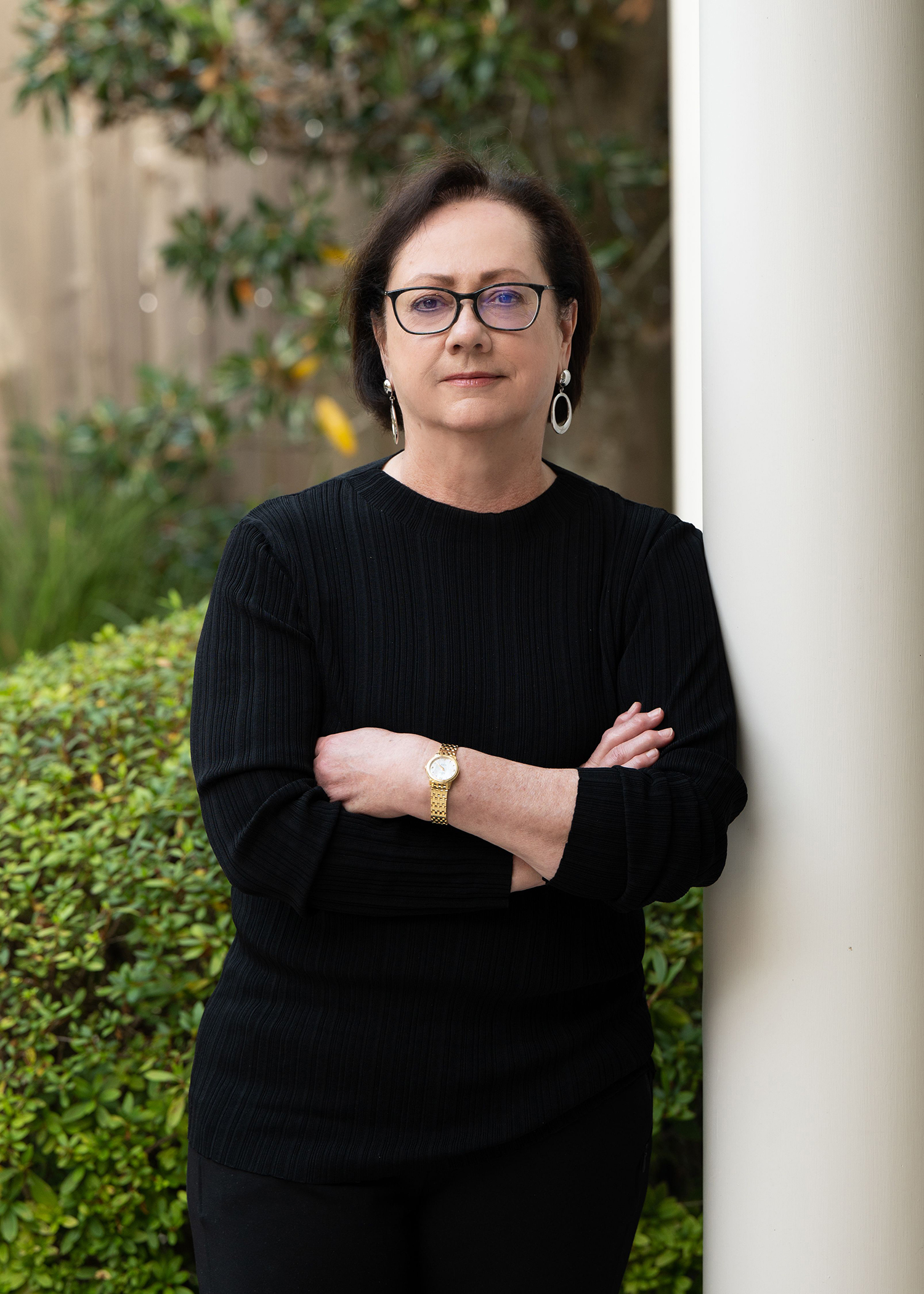
Originally from Belfast, Maria McDonald lives in Kildare, with her husband Gerry. After raising four children to adulthood, they are having great fun with their grandchildren.
Maria is an avid reader who loves to write but only indulged in her passion for writing fiction after retirement. Since then, her short stories and articles have been published in Woman’s Way and Ireland’s Own, as well as numerous anthologies; Intermissions, Grattan Street Press Melbourne; Same Page Anthology, University College Cork; Fragments of Time, Amber Publishers.
Maria is a founder member of Ink Tank Writing Group, based in Newbridge library and contributed to their anthologies, Timeless in Kildare and Let Me Tell You Something.
Connect with Maria
Website | X | Instagram | Facebook



 What Cathy Read Next...