
About the Book
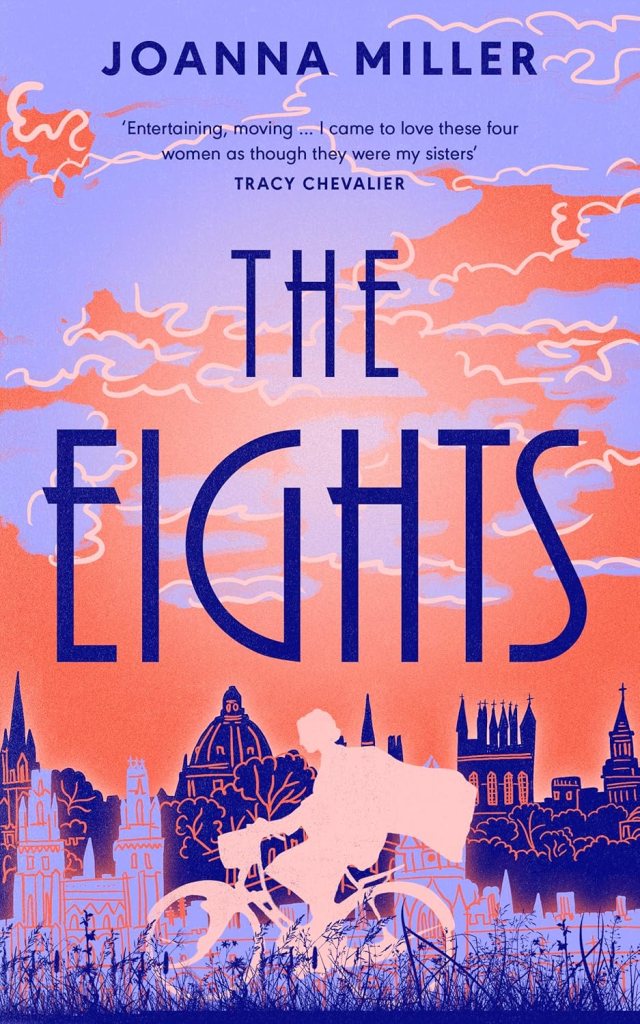
They knew they were changing history. They didn’t know they would change each other.
Oxford, 1920. For the first time in its 1000-year history, the world’s most famous university has admitted female students. Giddy with dreams of equality, education and emancipation, four young women move into neighbouring rooms on Corridor Eight. They have come here from all walks of life, and they are thrown into an unlikely, life-affirming friendship.
Dora was never meant to go to university, but, after losing both her brother and her fiancé on the battlefield, has arrived in their place. Beatrice, politically-minded daughter of a famous suffragette, sees Oxford as a chance to make her own way – and her own friends – for the first time. Socialite Otto fills her room with extravagant luxuries but fears they won’t be enough to distract her from her memories of the war years. And quiet, clever, Marianne, the daughter of a village vicar, arrives bearing a secret she must hide from everyone – even The Eights – if she is to succeed.
But Oxford’s dreaming spires cast a dark shadow: in 1920, misogyny is still rife, influenza is still a threat, and the ghosts of the Great War are still very real indeed. And as the group navigate this tumultuous moment in time, their friendship will become more important than ever.
Format: ebook (369 pages) Publisher: Penguin
Publication date: 3rd April 2025 Genre: Historical Fiction
Find The Eights on Goodreads
Purchase The Eights from Bookshop.org [Disclosure: If you buy books linked to our site, we may earn a commission from Bookshop.org, whose fees support independent bookshops]
My Review
One of the brilliant things about The Eights is how it explores the impact of the First World War not just on those directly affected – the bereaved, those left with life-changing physical injuries or psychologically damaged – but on wider society. And how, two years on, it still permeates many aspects of life including a kind of survivor’s guilt in which it feels wrong to find enjoyment in things. ‘Still, it would be nice to look at the sky, a painting, or a flower one day and admire it just for itself, to feel no dread, no shame.’
Having achieved the right to attend Oxford University, the four women who become friends when they are allocated to the same corridor in St Hugh’s College might have expected to be able to concentrate on their studies. However what they encounter is continuing opposition to women’s right to university education, even outright hostility. They have to endure everything from ragging by male students to dismissive remarks about women’s intellectual ability from staff of other Oxford colleges. University publications include articles in which Oxford’s women are lambasted for being ‘prudish old maids one week and frivolous husband-hunters the next’, are mocked for being either ‘too dowdy or too attractive’, categorised as being ‘too feeble-minded or too diligent’, criticized for breaking rules or slavishly adhering to rules. Essentially the women cannot win, there is no room for error. They are always held to higher standards than their male counterparts.
The author gives the four women different social backgrounds, back stories and motivations for studying at Oxford University.
Otto is the most lively character, always the first to suggest a jape or an outing and not afraid to ignore the strict rules laid down for female students. What we learn, however, is the confident exterior she presents to the world is a mask. Her sense of guilt about her shortcomings as a VAD caring for severely wounded men during the war is never far away. She’d always imagined she’d be up to tackling any challenge but knows she failed this particular one. There’s a particularly sobering moment when she realises cruel gossip she overhears is about her. We learn Otto is a brilliant mathematician so perhaps a role in code-breaking beckons in years to come?
My favourite character was Beatrice. I loved seeing how she grew in self-confidence, following a distressing incident earlier in her life, and became more comfortable in her own skin. Dora represents the many young women whose future – marriage, starting a family – looked assured but was suddenly changed because of the war. Now women outnumber eligible young men or those that do remain carry the mental and physical scars of war. Dora’s story also allows the author to introduce an element of mystery. The gentle Marianne’s secret wasn’t particularly hard to guess but the author still wrongfooted me about one aspect of it.
The singular terminology of Oxford University features throughout the novel – tutes, cuppers, chap rules, the Bod, the Rad. Luckily there is a glossary to help with the more unfamiliar terms. There’s also a very interesting list of key dates in the development of women’s education, including the founding of Somerville College where Vera Brittain and Winifred Holtby (both of whom make brief appearances in the novel) studied, to the appointment of Baroness Amos as the first black woman to head an Oxford college in 2020. Plus, always a joy, there’s a map.
As The Eights discover, the University is a place of rules. For the female students, the rules are particularly strict, laughably so to our modern eyes with permission required for all sorts of minor things or the presence of chaperones. Descriptions of events such as the Summer Eights rowing races or May Morning celebrated on 1st May which begins at 6am with Magdalen College Choir singing a hymn from Magdalen Tower, immerse you in the rituals of Oxford life.
If you are fond of a romantic storyline you’ll find it in this book. If you’re interested in women’s emancipation then you’ll learn much about that struggle. But, above all, The Eights is an engaging story of female friendship.
In three words: Fascinating, emotional, heartwarming
Try something similar: Testament of Youth by Vera Brittain
About the Author

Joanna was raised in Cambridge and studied English at Exter College, Oxford. After a decade working in education, she set up an award-winning poetry gift business. She has recentlygraduated from Oxford agai, with a dilpoma in creative writing. She lives with her husband and three children in Hertfordshire. The Eights is her first novel.
Connect with Joanne
Website | X | Facebook | Instagram



 What Cathy Read Next...