

Reading is entertainment but it can also be education. I thought I’d share just a few of the things I learned from the books I read last week. Some of the facts I knew about vaguely but other information was completely new to me. Click on the title of the book to read my review.
What did you learn from your reading last week?
In one of the scenes in The Crowded Street by Winifred Holtby, Muriel Hammond witnesses the shelling of Scarborough during the First World War.
 Scarborough was bombarded by German warships on 6th December 1914, part of an attack by the Imperial German Navy on the coastal ports of Hartlepool, West Hartlepool and Whitby in Yorkshire. In total the attack resulted in 592 casualties, many of them civilians, of whom 137 died. In Scarborough, nineteen people were killed. Buildings damaged included the Lighthouse (which later had to be destroyed), the Royal Hotel, the Grand Hotel and the Town Hall. The furthest bomb damage was three miles inland on a farm.
Source: Wikipedia
In Fault Lines by Doug Johnstone the lead character is named Surtsey by her volcanologist mother.
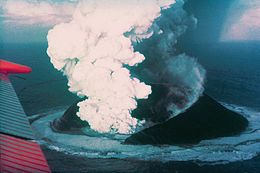 Surtsey is a volcanic island located off the southern coast of Iceland. It was formed in an eruption which reached the surface on 14 November 1963 and lasted until 5 June 1967. Its name derives from Surtr, a fire giant from Norse mythology.
Source: Wikipedia
 In The Illumination of Ursula Flight by Anna-Marie Crowhurst, the reader is transported to the theatres of Restoration London, populated by actors and, for the first time, actresses as well as the so-called ‘Orange Girls’.
An ‘Orange Girl’ or ‘Orange Wench’ stood in the pit of the theatre with their backs to the stage and sold oranges in between acts. ‘Orange Girls’ also acted as liaisons between audience members and actresses, running back stage to deliver messages for later rendezvous.
Source: Restoration Theater Blog
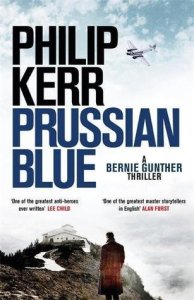 In Prussian Blue by Phillip Kerr – the twelfth outing for his fictional detective, Bernie Gunther – Bernie is ordered by Erich Mielke, deputy head of the East German Stasi, to murder Bernie’s former lover by thallium poisoning. His refusal means he’s soon on the run.
The Prussian blue of the title is a dark blue pigment, also known in painting as Paris Blue. Prussian blue was the first modern synthetic pigment and is more long-lasting than earlier blue pigments derived from natural sources. It was first synthesised by the paint maker, Diesbach, in Berlin around 1706. More significantly, orally administered, Prussian blue is an antidote for certain kinds of heavy metal poisoning, including by thallium.
Source: Wikipedia
In Grace After Henry, the eponymous couple’s favourite book is Charles Dickens’ A Christmas Carol.
 A Christmas Carol or, to give it its full title A Christmas Carol in Prose, Being a Ghost-Story of Christmas, was first published in London by Chapman & Hall on 19th December1843. The first edition sold out by Christmas Eve and, by the end of 1844, thirteen editions had been released. In 1849 Dickens began public readings of the story which proved so successful that he undertook 127 further performances until 1870, the year of his death. A Christmas Carol has never been out of print.
Source: Wikipedia






 What Cathy Read Next...