
Reading is entertainment but it can also be education – new words, myth that turns out to be reality and vice versa. Here are just a few of the things I learned from the books I read this week. Click on the title of the book to read my review.
[Please note, I take no responsibility for the authenticity of the information on the sites to which I’ve provided links.]
I was intrigued to learn in the opening chapter of War Girl Ursula by Marion Kummerow about government sanctioned proxy marriages carried out between German soldiers serving at the front in World War II and the sweethearts they’d left behind. Known as Stahlhelmtrauung, a photograph of the fiancée or a wedding veil would take the place of the real life bride during the ceremony wherever the soldier was stationed, whilst a steel helmet stood in for the groom at the ceremony carried out back home in a registry office.
I got an insight into the curious world of superstitions courtesy of Honey, one of the main characters in Claire Dyer’s novel, The Last Day. Honey can’t start the day without consulting her horoscope and takes a very specific course of action to ensure good luck at an interview (on page 47 for those of you planning to read the book.) Honey is particularly careful about ensuring good luck on New Year’s Eve, including throwing open all the doors of the house (or wherever you’re celebrating) at midnight to let the Old Year escape unimpeded so the New Year can come in. When Honey and Boyd move in with Boyd’s ex-wife, Vita, Honey observes the superstition that you should exit through the same door you entered the first time in a new home to ensure good luck. Also that sprinkling salt on the floors in every room and at your front door will ward off evil spirits.
Source: House Beautiful
Reading John Buchan’s A Lost Lady of Old Years, set at the time of the Jacobite Rebellion, gave me a lesson in Scots dialect words. For example:
- ‘kenspeckle’ which means ‘easily recognisable, conspicuous, of familiar appearance’
- ‘camsteery’ which means ‘perverse, unmanageable, riotous; given to quarrelling; excitable’,
- ‘shilpit’ which refers to a person who is ‘thin, emaciated, puny in growth, shrunken, pinched, with sharp starved-looking or drawn features’
- ‘drouthy’ which means ‘dry’ or ‘thirsty’.
Source: Dictionary of the Scots Language
Finally, I have two fascinating facts that I came across when reading Carol Jones’ The Last Concubine. One of the characters in the book, Ho Jie, is referred to as a ‘self-combed woman’ or zishunü. I came across a fascinating article (see link below) which explains the custom by which Chinese women made a lifelong commitment to remain single, enabling them to leave their parents’ home without marrying. The article also talks about the role of ‘amah’, which is the position that Ho Jie occupies in the Chan household in the book.
Source: Biblioasia
What did you learn from your reading this week?


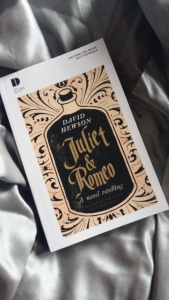 Whilst reading
 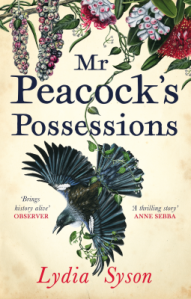 Staying on the bird theme, in
  Next, we’re off to the Scotland and the fictional island of Seal, one of the locations in
  Now we’re moving south to Cornwall, the location of the historical mystery
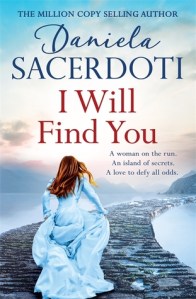
  Finally, it’s back to Italy and
 What Cathy Read Next...