
 For me, reading is chiefly entertainment but it can also be an education – new words, events in history, myths that turns out to be reality and vice versa. Here are just a few of the things I learned from the books I’ve read this week. Click on the title of the book to read my review or the book description on Goodreads.
 A frequent meeting place in the seventeenth century London depicted in Kate Braithwaite’s historical novel, The Road to Newgate, is the coffee house. In the book they act as gentlemen’s meeting place, news distribution point and hotbed of gossip and, at times, of dangerous intrigue. As a keen cappuccino drinker who’s visited a few coffee shops in her time, I was intrigued to find out more about the history of the coffee house. Luckily Kate has written an article about this very subject (link below). I learned that in 1675, worried that coffee shops were hotbeds of plot and sedition against his rule, Charles II issued A Proclamation for the Suppression of Coffee Houses, although it seems to have had little effect because by the end of the 17th century there were over 1000 coffee houses.
Source: English History Authors Blog
 In Song by Michelle Jana Chan, set in what is now Guyana, the eponymous hero is enticed by talk of men who have made it rich by mining gold and diamonds along the banks of the river. Such men are referred to in the book as ‘pork-knockers’ and of course that immediately sparked my interest – not in gold mining – but in finding out more about the term. As is often the case with terms such as this, its derivation is disputed although it is thought to refer to the miners’ diet of pickled wild pig commonly eaten at the end of the day. What is not disputed is that the term was applied specifically to freelance Guyanese prospectors who mined for diamonds and gold in the alluvial plains of the Guyanese interior.
Source: Wikipedia
 In The Lost Letters of William Woolf by Helen Cullen, William works as one of a team of ‘letter detectives’ trying to reunite undelivered letters and parcels with their intended recipients. In an article in the Mirror newspaper (link below), reporter Steve Myall went behind the scenes of its real-life counterpart, the Royal Mail National Returns Centre in Belfast, finding wedding photographs, jewellery and some more unusual objects amongst the undelivered items.
Source: Mirror
 In Betty Church and the Suffolk Vampire by M. R. C. Kasasian, Inspector Betty Church is posted back to her home town, the fictional sleepy seaside resort of Sackwater on the Suffolk coast, complete with pier that, although rather rundown, will play an important role in the book. It’s 1939 and, with war recently declared, Betty notices on her travels around Sackwater examples of many of the anti-invasion measures installed by the government in large numbers along the southern and eastern coasts of Britain. These include: blocking beaches with barbed wire; installing defensive measures on seaside piers; and building obstacles, popularly known as ‘Dragon’s teeth’ – pyramid-shaped concrete blocks designed to counter tanks.
Source: Wikipedia
 Hold by Michael Donkor transports the reader from Ghana to London and back again through the story of three young women, Belinda, Mary and Amma. Ghanaian culture is a strong feature of the book and, as someone always interested in references to food in books, a dish mentioned that caught my eye was jollof. I also recall seeing jollof mentioned in other books set in Africa. Time to finally find out what it is and how it is made. Jollof is a rice dish common throughout West Africa. However, the precise recipe differs from one region to another and it seems there is particular rivalry between Nigerians and Ghanaians about which country has the authentic and best recipe. I’m not going to intrude into that debate by providing a link to a recipe however, typically, jollof consists of rice, tomatoes and tomato paste, red palm oil, onions, salt, spices (such as nutmeg, ginger and cumin) and chili peppers (such as Scotch bonnet). Other ingredients may be added such as vegetables, meat or fish.
Source: Wikipedia

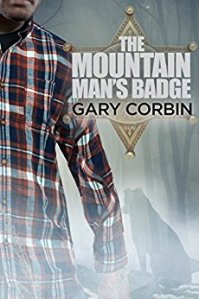 In
In  In
In  Kirtle wasn’t the only word that caught my eye in The King’s Daughter. A method of transport mentioned quite a few times in the book is a palanquin: ‘The carriage without wheels…was more or less a wide, cushioned chair with raised sides all around. The seat centred on a platform supported by two stout poles carried on the shoulders of six burly men.’ I knew vaguely that this was some kind of litter (defined as a human-powered, wheel-less vehicle for transport of people) but was curious to find out what it looked like. This was the best (copyright free) image of what I believe is being described I could come up with. Two burly men missing, sadly.
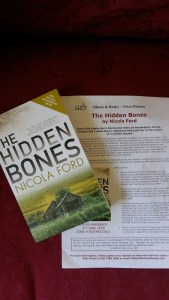 Set in Wiltshire, Nicola Ford’s debut crime novel,
 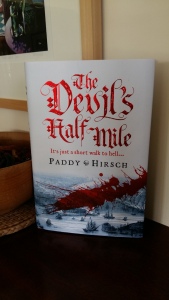 My final ‘fascinating fact’ comes from a book I’ve just finished and will be reviewing shortly –
 What Cathy Read Next...