Buchan of the Month: Introducing The House of the Four Winds by John Buchan #ReadJB2019

buchan of the month 2019 poster

The House of the Four Winds is the tenth book in my John Buchan reading project, Buchan of the Month 2019.   You can find out more about the project and the books I read in 2018 here and view my reading list for 2019 with links to my reviews of the books I’ve read so far here.

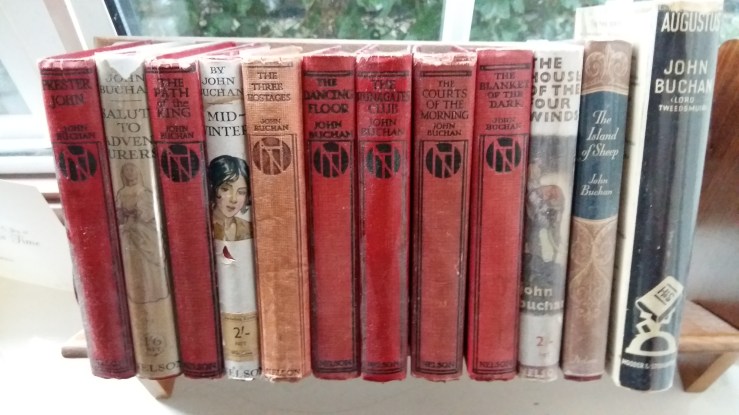
20191015_134401_resizedWhat follows is a (spoiler-free) introduction to The House of the Four Winds.  It is also an excuse to show off my 1942 Nelson edition of the book with its striking dust-jacket.    I will be publishing my review of the book later this month.

The House of the Four Winds was published in the UK by Hodder & Stoughton on 23rd July 1935 and by Houghton Mifflin in the United States on 25th July 1935.  It is the third book to feature retired Glasgow grocer, Dickson McCunn, and continues his adventures that started in Huntingtower and later Castle Gay.

The setting for The House of the Four Winds is the fictional country of Evallonia.  Buchan’s first biographer, Janet Adam Smith, ruefully notes that ‘Buchan is not at his best in the Anthony Hope [author of The Prisoner of Zenda] terrain of imaginary European states with princes, pretenders and disguises’.  In fact, she goes on to describe the story as ‘on the feeble side’, regretting the absence of the ‘sharp little scenes and characters between the moments of melodrama’ that feature in other Buchan novels.

However, she does point out that 1934 was a year of intense industry for Buchan.  As well as completing The House of the Four Winds, he wrote two works of non-fiction – Gordon at Khartoum and Cromwell – began the last Richard Hannay novel, The Island of Sheep, and started work on his book about George V, The King’s Grace.  This at the same time as preparing for the move to Canada to take up the post of Governor-General. It was perhaps useful then, that he received a higher than usual advance for the book of £1,250.

Unfortunately, Janet Adam Smith is not the only critic to be less than impressed with The House of the Four Winds.  David Daniell concedes it is not Buchan at his best although he does feel there ‘are striking images and scenes’.  He notes that it features a parade of characters from previous books.  This is a point taken up by Kate MacDonald who describes the book’s ‘crossover tendencies between the separate Buchan worlds’. She gives as examples the Lamanchas (from the Leithen novels), Jaikie Gait and Alison Westwater (from the previous Dickson McCunn books) and the Roylances, Janet and Archie (from, amongst others, The Courts of the Morning).

MacDonald also contends that Buchan was trying to make a serious point in the book about the dangers of amateurs dabbling in foreign affairs.  [I believe we can all think of some contemporary examples of that.] She makes the case that, in extending the idea of the amateur hero of the thriller into the realities of 1930s politics, Buchan is ‘looking in the direction that Eric Ambler and Graham Greene would go’.

Whilst describing The House of the Four Winds as ‘probably JB’s worst novel’ and as ‘Ruritania without the charm’, Ursula Buchan, author of the recent biography Beyond the Thirty-Nine Steps: A Life of John Buchan (and also Buchan’s granddaughter), does acknowledge the book’s ‘masterly dissection of 1930s angst about the growing menace of authoritarian regimes’ in Italy and Germany.  She also provides the fascinating nugget of information that the book contains the first mention of ‘mole’, meaning an undercover agent, forty years before John Le Carré’s Tinker, Tailor, Soldier, Spy.  Go JB!

The House of the Four Winds Floor enjoyed reasonable but hardly outstanding commercial success.  Janet Adam Smith reports that combined sales up to 1960 for the Hodder & Stoughton edition and later Nelson edition totalled 101,000 copies.  The Penguin paperback edition contributed a further 84,000 sales up to June 1964.

To find out what I thought, look out for my review later this month.

Sources:

Ursula Buchan, Beyond the Thirty-Nine Steps: A Life of John Buchan (Bloomsbury, 2019)
David Daniell, The Interpreter’s House: A Critical Assessment of the Work of John Buchan (Nelson, 1975)
Kate Macdonald, John Buchan: A Companion to the Mystery Fiction (McFarland, 2009)
Janet Adam Smith, John Buchan: A Biography (OUP, 1985 [1965])
Kenneth Hillier and Michael Ross, The First Editions of John Buchan: A Collector’s Illustrated Biography (Avonworld, 2008)
buchan of the month 2019

A Barbados Reading List

IMG_0188

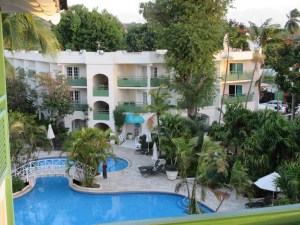
I may be on holiday at the fabulous Mango Bay in Barbados but my blog isn’t, so here are ten books about or set in this wonderful island. Full disclosure: I’ve only read two of them but several more are on my wishlist or in my TBR pile. List compiled with help from the fantastic TripFiction and the Around the World in 80 Books Goodreads Group.


Non-fiction

downloadGrowing Up Stupid Under the Union Jack by Austin Clarke

From the award-winning author of “The Polished Hoe” comes this delightful memoir. Alive with the warmth and colour of the Caribbean, singing with the lilting cadence of Barbadian speech, this is renowned author Austin Clarke’s own story of the trials, joys, and ultimate disillusionment of a small Barbadian boy experiencing British colonialism in the 1940’s. Authentic and vivid, “Growing Up Stupid Under the Union Jack” details the life of a boy whose mother struggled against insurmountable odds, yet succeeded in giving her son the best available education. It is a dazzling account of a slow, dogged climb upward in a society whose rigid customs, rules and expectations were imported from England and accepted almost without question by the islanders. It is the story of a boy bent on making his mark in that society, despite the cruelty of British schoolmasters and the incongruity of studying for his Senior Cambridge examinations in a mango tree–his improvised study–in a vast field of sugar cane. Throughout this first volume of Clarke’s autobiography courses his irrepressible exhilaration with life itself, his deep delight in the antic humour of people who populated his childhood, and his unshakable pride in his heritage.

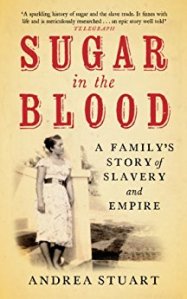
517cNVFGkSL._SY346_Sugar in the Blood: A Family’s Story of Slavery and Empire by Andrea Stuart

In the late 1630s, lured by the promise of the New World, Andrea Stuart’s earliest known maternal ancestor, George Ashby, set sail from England to settle in Barbados. He fell into the life of a sugar plantation owner by mere chance, but by the time he harvested his first crop, a revolution was fully under way: the farming of sugar cane, and the swiftly increasing demands for sugar worldwide, would not only lift George Ashby from abject poverty and shape the lives of his descendants, but it would also bind together ambitious white entrepreneurs and enslaved black workers in a strangling embrace. Stuart uses her own family story—from the seventeenth century through the present—as the pivot for this epic tale of migration, settlement, survival, slavery and the making of the Americas.

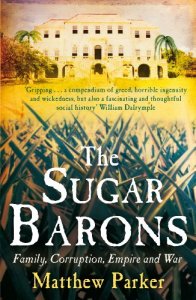
51x96wcG-5LThe Sugar Barons by Matthew Parker

The contemporary image of the West Indies as paradise islands conceals a turbulent, dramatic and shocking history. For 200 years after 1650, the West Indies witnessed one of the greatest power struggles of the age, as Europeans made and lost immense fortunes growing and trading in sugar – a commodity so lucrative that it was known as white gold. This compelling book tells how the islands became by far most valuable and important colonies in the British Empire. How Barbados, scene of the sugar revolution that made the English a nation of voracious consumers, was transformed from a backward outpost into England’s richest colony, powered by the human misery of tens of thousands of enslaved Africans. How this model of coercion and exploitation was exported around the region, producing huge wealth for a few, but creating a society poisoned by war, disease, cruelty and corruption.

Fiction

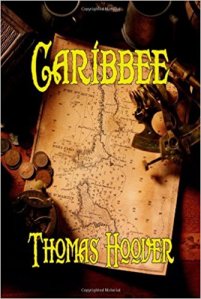
513WmhL7uBL._SX333_BO1,204,203,200_Caribbee by Thomas Hoover

Caribee is the untold story of the first American revolution, as English colonists pen a Declaration of Defiance (“liberty” or “death”) against Parliament and fight a full-scale war for freedom against an English fleet – with cannon, militia, many lives lost – over a century before 1776. The powerful story line, based on actual events, puts the reader in the midst of the first major English slave auction in the Americas, and the first slave revolt.

Plantation slavery, introduced into the English colonies, set a cruel model for North America a few decades later, and unleashed the greed of early Puritans who burned unruly slaves alive, a far different truth from that presented in sanitized history books.  Buccaneers, one-time cattle hunters who banded together to revenge a bloody Spanish attack on their home, soon became the most feared marauders in the New World.

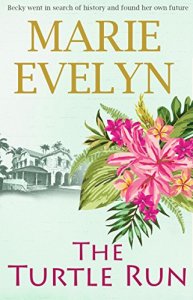
51p30U0ygTLThe Turtle Run by Marie Evelyn

She went in search of history and found her own future.

Becky has lost her job and her direction in life so is thrilled when she gets the chance to go to Barbados and research the exiled Monmouth rebels. But the Caribbean paradise isn’t all that it seems. The old plantation house is beautiful but lonely, and the locals are unfriendly. As her research becomes an obsession, one of the rebel descendants, who still works the same land as his ancestors, begins to get a hold on her mind. Is she living in a fantasy, or is this really an island of long memories? She soon finds that she is not the only one being led by the past…

61c64yJM1nL._SY346_The King’s Exile (Thomas Hill 2) by Andrew Swanston

Thomas Hill is arrested on charges invented by his old enemy Tobias Rush, whom he thought had been executed for treason. He is deported to Barbados where he is indentured to Rush’s business partners. When news of the King’s execution arrives, political stability on the island is threatened. Also in danger is Thomas’s sister and nieces back in England, and he knows he must return home to them. However when a fleet commanded by Admiral Sir George Ayscue arrives to take control of the island for Cromwell, his departure is blocked.  A coded message from Ayscue to a sympathiser on the island is intercepted, and Thomas is asked to decipher it. A potentially disastrous battle seems inevitable, and Thomas volunteers for the dangerous role of envoy to Ayscue. But with his sworn enemy hot on his heels, will Thomas ever find safety and make it home to his family alive?

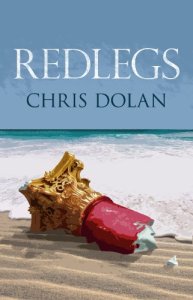
51AGL4J41lLRedlegs by Chris Dolan

Elspeth, a young Scottish actress, is selected by the elusive impresario Lord Coak for an acting career on the Caribbean Island of Barbados. She is briefly feted by the island community, but a tempest kills her lover and destroys the theatre in which she was to star. She is obliged to take on a supposedly temporary and fairly ambiguous role at Lord Coak’s plantation home. The closed environment of the estate is stifling, but it institutionalizes her and gives her a degree of status.  Clearly Lord Coak’s grand plan to modernize the estate cannot be implemented without social reform but a catastrophic event breaks the spell and divides the community.

51-SnIl13RL._SX318_BO1,204,203,200_No Man in the House by Cecil Foster

It is 1964. Howard lives a hand-to-mouth existence in the small island protectorate of Barbados with his brothers, two aunts, and his grandmother. He is waiting for his parents, who left for England long ago, to send for him. And as the sparks of independence crackle all around them, Howard’s life changes forever when Mr. Bradshaw, a black headmaster, is hired for his school. Howard begins to blossom under Bradshaw’s guidance, and learns that neither freedom nor knowledge comes without sacrifice, and that even battles won leave victims. In this beautiful, poignant, and ultimately hopeful novel, the fate of one Bajan family rests in the hands of change–change that only liberation and learning can bring.

51zCUg9GX8L._SY346_It So Happen by Timothy Callender

A collection of West Indian stories which features such characters as Saga-Boy and Jasper, preparing for a grand stick-fight; Big Joe, who will do anything to marry the girl he loves; Pa John, who is foiled by his own wicked spell; and all the men who try to beat Marie in a rum-drinking contest.

starside2.inddThe Star Side of Bird Hill by Naomi Jackson

After their mother can no longer care for them, young Phaedra and her older sister, Dionne, are exiled from Brooklyn to Bird Hill in Barbados to live with their grandmother Hyacinth, a midwife and practitioner of the local spiritual practice of obeah. Dionne spends the summer in search of love, testing her grandmother’s limits, and wanting to go home. Phaedra explores Bird Hill, where her family has lived for generations, accompanies her grandmother in her role as a midwife, and investigates their mother’s mysterious life. When the father they barely know comes to Bird Hill to reclaim his daughters, and both Phaedra and Dionne must choose between the Brooklyn they once knew and loved or the Barbados of their family.