

Throwback Thursday is a weekly meme originally created by Renee at It’s Book Talk. It’s designed as an opportunity to share old favourites as well as books that we’ve finally got around to reading that were published over a year ago.
Today I’m reviewing a book from my Classics Club list – The Dark Tide by Vera Brittain. You can find my full list here.
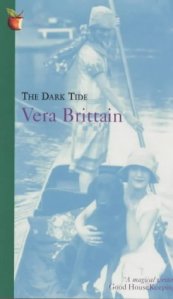 About the Book
Bright, romantic and vivacious, Daphne Lethbridge is back at Oxford after a period of voluntary work. The First World War has ravaged Europe, but it has done nothing to daunt her spirit, and she plunges headlong into the whirl of college dinners, debates and romances. Her enjoyment, though, is soured by her cynical contemporary Virginia Dennison, who spars with Daphne on every occasion. Beneath their surface civility seethes a deep envy.
Daphne seems to triumph over Virginia when she makes a brilliant marriage to a rising political star. But after they settle in London, she begins to realize the bitter truth of her marriage. It takes a chance encounter with her old enemy for her disillusionment to give way to a mature understanding of a woman’s destiny and a woman’s friendship.
Format: Paperback (260 pp.) Publisher: Virago Modern Classics
Published: 1999 [1923] Genre: Fiction
Find The Dark Tide on Goodreads
My Review
Better known for her autobiographical works, in particular Testament of Youth, Vera Brittain also wrote a number of novels. The Dark Tide was in fact her first novel and, although I hesitate to say so, it shows. However, you don’t need to take my word for it because the author herself was fairly critical about this first attempt at fiction in her foreword to the reprinted 1935 edition. Although defending the accuracy of the novel’s depiction of the life of women students in the 1920s, she concedes ‘the crude violence of its methods and unmodified black-and-whiteness of its values’.
As Mark Bostridge, Vera Brittain’s biographer, observes in his introduction to the 1999 edition of The Dark Tide, the book created a minor sensation when first published on account of its portrayal of an Oxford women’s college (a thinly veiled Somerville College). It also risked causing offence to her friend, Winifred Holtby, caricatured as the character Daphne Lethbridge in the novel. He describes the characters in The Dark Tide as ‘not so much imaginatively redeveloped as simply transferred direct from fact to fiction’. One of the key scenes in the book describing a college debate in which Daphne and Virginia cross verbal swords re-enacts an actual event involving Vera Brittain and Winifred Holtby during their time at Somerville (described by Brittain in Testament of Youth).
My main issue with the book is that I felt I was being invited to see aspects of Virginia’s character as faults when they seemed to me mostly positive traits. Conversely, Daphne, whom I felt I was supposed to admire, came across as spiteful, vindictive and envious of Virginia’s achievements and intellect. My view of Daphne was redeemed to a certain extent by her developing self-awareness at the book progresses but it’s difficult to like a character who displays snobbery such as in the following passage: ‘She flung her books and papers in a heap on the table, and took down her new green coat and skirt from the wardrobe. It was very expensive, and Daphne loved it – especially as it would make her appear such a contrast to Virginia. Virginia always seemed so fond of black; it was sheer affectation, Daphne thought, to adopt such a sombre style.’
The character I really liked was History Tutor, Miss O’Neill, for her kindliness towards the students. She came across as perceptive, intelligent and successful but not arrogant about that success; a really positive role model for a woman of that time. I do thought have to give the author credit for conveying the insular, slightly claustrophobic and at times bitchy atmosphere of an institution where people are thrown together in close proximity and in academic competition.
Towards the end of the book, I began to feel more sympathy for Daphne and the situation in which she finds herself. However, I still found myself frustrated at her submissiveness and how, for a clearly intelligent woman, she had the wool pulled over her eyes so comprehensively.
The Dark Tide is interesting from the point of view of its place in the evolution of Vera Brittain’s writing but I believe she definitely wrote better novels and that her non-fiction remains her crowning achievement. If you feel inclined to explore her fiction, Honourable Estate or Born 1925 may be better places to start.
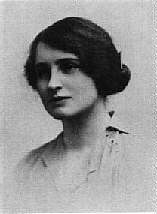 About the Author
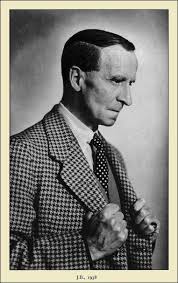
Vera Mary Brittain (1893 – 1970) grew up in provincial comfort in the north of England. In 1914 she won an exhibition to Somerville College, Oxford, but a year later abandoned her studies to enlist as a VAD nurse. She served throughout the war, working in London, Malta and the Front in France.
At the end of the war, with all those closest to her dead, Vera Brittain returned to Oxford. There she met Winifred Holtby – author of South Riding – and this friendship which was to last until Winifred Holtby’s untimely death in 1935 sustained her in those difficult post-war years.
Vera Brittain was a convinced pacifist, a prolific speaker, lecturer, journalist and writer, devoting much of her energy to the causes of peace and feminism. She wrote 29 books in all – novels, poetry, biography, autobiography and other non-fiction – but it was Testament of Youth which established her reputation and made her one of the best loved writers of her time.
Vera Brittain married George Catlin in 1925 and had two children. Her daughter is Shirley Williams, Baroness Williams of Crosby, who is a British politician and academic who represents the Liberal Democrats in the House of Lords.

 About the Book
 About the Author
 What Cathy Read Next...