Book Review – Mary Anne by Daphne du Maurier

About the Book

She set men’s hearts on fire and scandalized a country.

In Regency London, the only way for a woman to succeed is to beat men at their own game. So when Mary Anne Clarke seeks an escape from her squalid surroundings in Bowling Inn Alley, she ventures first into the scurrilous world of the pamphleteers. Her personal charms are such, however, that before long she comes to the notice of the Duke of York.

With her taste for luxury and power, Mary Anne, now a royal mistress, must aim higher. Her lofty connections allow her to establish a thriving trade in military commissions, provoking a scandal that rocks the government – and brings personal disgrace.

Format: Hardcover (379 pages) Publisher: Victor Gollancz
Publication date: 1st January 1954 Genre: Historical Fiction

Find Mary Anne on Goodreads

Purchase Mary Anne from Bookshop.org [Disclosure: If you buy books linked to our site, we may earn a commission from Bookshop.org, whose fees support independent bookshops]

My Review

Mary Anne is the first book from my new Classics Club list. Set during the Napoleonic Wars it’s a fictional account of the life of Daphne du Maurier’s own great-great-grandmother, Mary Ann Clarke. From 1803 to 1808, Mary Anne was the mistress of Frederick, Duke of York and Albany (the ‘Grand Old Duke of York of the nursery rhyme) who was the second son of King George III.

Mary Anne’s story is one of a woman determined to rise above the circumstances of her birth and provide a better life for her three children, the product of a disastrous early marriage to a man with whom she was smitten but who turned out to be an inveterate gambler and drunkard. Scarred by this experience Mary Anne is encouraged to use her beauty and charm to attract a succession of wealthy men willing to support her increasingly lavish lifestyle. Throughout she keeps her marriage a secret, presenting herself as a widow.

When she comes to the notice of the Duke of York, it looks like she’s hit the jackpot. He appears besotted with her although she knows, given his position and the fact he is married, she will never be anything more than his mistress. Having said that I thought she developed a genuine affection for him. However, even the Duke proves unable to fund Mary Anne’s lifestyle – the dinner parties, the gowns, the jewellery – resulting in her running up debts with numerous traders. Forced to look elsewhere for money she becomes involved in using her influence with the Duke to obtain military commissions for those willing to pay.

Unfortunately it all comes tumbling down when her relationship with the Duke comes to an end. Mary Anne finds herself facing financial ruin and embarks on a campaign of revenge threatening to reveal his personal letters. Eventually she goes one step too far with catastrophic consequences.

Mary Anne makes a lively, very engaging heroine. She is quick-witted and charming but at the same time there’s a ruthless streak to her. And the line ‘Hell hath no fury like a woman scorned’ could have been written with her in mind. Although she professes to be acting in the interests of her children, they have to move frequently from place to place whenever creditors threaten and Mary Anne is forced to seek a new patron.

The book’s major flaw is that it gets bogged down in a lengthy section describing a Parliamentary inquiry into the Duke of York which reads like a court transcript. Apparently du Maurier herself wasn’t entirely satisfied with the book acknowledging that some of it read more like newspaper reportage.

I listened to the audiobook narrated by Nathalie Buscombe as the text in my hardback copy was too small to read comfortably. I thought she did a great job of conveying the wit and charm that proved so irresistible to Mary Anne’s male acquaintances.

In three words: Lively, fascinating, detailed
Try something similar: England’s Mistress: The Infamous Life of Emma Hamilton by Kate Williams

About the Author

Daphne du Maurier (born May 13, 1907, London, England—died April 19, 1989, Par, Cornwall) was an English novelist and playwright, daughter of actor-manager Sir Gerald du Maurier, best known for her novel Rebecca (1938).

Du Maurier’s first novel, The Loving Spirit (1931), was followed by many successful, usually romantic tales set on the wild coast of Cornwall, where she came to live. She also wrote historical fiction, several plays, and Vanishing Cornwall (1967), a travel guide. Her popular Rebecca was made into a motion picture in 1940.

Du Maurier was made a Dame Commander in the Order of the British Empire in 1969. She published an autobiography, Growing Pains, in 1977; the collection The Rendezvous and Other Stories in 1980; and a literary reminiscence, The Rebecca Notebook and Other Memories, in 1981. (Source: Britannica)

The Classics Club 26 in 2026

To kick off the New Year, the lovely people who give up their time to be moderators of The Classics Club have invited members to reflect on their relationship with the classics by answering a series of questions:

  1. When did you join The Classics Club? How many titles have you read for the club so far? Share a link to your latest classics club list.
    I joined in 2017 and completed my first list in July 2021. I’ve recently put together my second list of 50 books with the aim of reading them by the end of 2030.
  2. What classic are you planning to read next? Why? Is there a book first published in 1926 that you plan to read this year?
    I’ve started listening to the audiobook of Mary Anne by Daphne du Maurier. (The text in my copy is very small.) It just happened to be the first title on the shelf I’ve set aside for the books on my list. I don’t have anything published in 1926 on my list.
  3. Best book you’ve read so far with the club? Why?
    From my first list, Mr Standfast by John Buchan because a) I’m a Buchan enthusiast and b) it’s one of my favourite of his books. Great story and the ending always makes me cry
  4. Classic author who has the most works on your club list? Or, classic author you’ve read the most works by?
    Easy answer – John Buchan
  5. If you could explore one author’s literary career from first publication to last — meaning you have never read this author and want to explore him or her by reading what s/he wrote in order of publication — who would you explore? Obviously this should be an author you haven’t yet read, since you can’t do this experiment on an author you’re already familiar with.  Or, which author’s work you are familiar with might it have been fun to approach this way?
    Paul Gallico. I have Trial by Terror on my new list, it will be the first book I’ve read by him. I was surprised to discover he wrote The Poseidon Adventure (which was made into a film) so now I’m intrigued about his other books.
  6. First classic you ever read?
    Can’t remember, probably something I was forced to read at school (a long time ago)
  7. Favorite children’s classic?
    Swallows and Amazons by Arthur Ransome.
  8. Which classic is your most memorable classic to date? Why?
    The House of Mirth by Edith Wharton because I was not expecting that ending.
  9. Least favorite classic? Why?
    Ironically it’s a book by John Buchan, A Lodge in the Wilderness. Although nominally fiction, it’s essentially a debate about imperialism conducted by a group of fictional characters. I described it as ‘turgid’ and ‘paternalistic’ amongst other things.
  10. Favourite movie or TV adaption of a classic?
    A toss-up between the 1943 adaptation of Jane Eyre starring Joan Fontaine and Orson Welles or the 1946 adaptation of Great Expectations starring John Mills
  11. Favorite biography about a classic author you’ve read, or the biography on a classic author you most want to read, if any?
    John Buchan: Beyond The Thirty-Nine Steps by Ursula Buchan
  12. Favourite classic author in translation? Do you have a favorite classics translator? What do you look for in a classic translations?
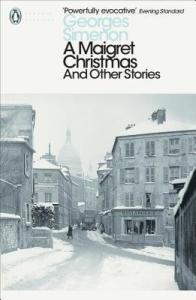
    I haven’t read many translated classics except a couple of crime novels by George Simenon and Frédéric Dard.
  13. Do you have a favorite classic poet/poem, playwright/play? Why do you love it?
    I rarely read poetry or plays.
  14. Which classic character most reminds you of yourself? Which classic character do you most wish you could be like?
    Very unoriginal but Jo March from Little Women or Elizabeth Bennet from Pride & Prejudice
  15. What is the oldest classic you have read or plan to read? Why?
    The Fall of the House of Usher and Other Stories by Edgar Allan Poe, published in 1839. I’ve seen Roger Corman’s film adaptations of some of the stories but never read the originals.
  16. If a sudden announcement was made that 500 more pages had been discovered after the original “THE END” on a classic title you read and loved, which title would you be happiest to see continued?
    Great Expectations to know how Pip and Estella’s relationship panned out
  17. Favorite edition (or series) of a classic you own, or wished you owned, if any?
    My first edition of The Power-House by John Buchan, published in 1916. It’s the only first edition of his books I own and I found it of all places in a secondhand bookshop on the Scottish island of Iona.
  18. Do you reread classics? Why, or why not?
    Not often because I can’t resist new books. If I do it will be an old favourite like A Christmas Carol.
  19. Has there been a classic title you simply could not finish?
    The Last Man by Mary Shelley, just could not get into it.
  20. Has there been a classic title you expected to dislike and ended up loving?
    Not dislike exactly but I kept putting off reading Katherine by Anya Seton because it was over 500 pages long but it came up on a spin and I loved it
  21. List five fellow Classic Clubbers whose blogs you frequent. What makes you love their blogs?
    There are probably more but I can only think of Margaret at BooksPlease and Helen at SheReadsNovels. They like the same sort of books as I do and I enjoy reading their reviews.
  22. If you’ve ever participated in a readalong on a classic, tell us about the experience? If you’ve participated in more than one, what’s the very best experience? the best title you’ve completed? a fond memory? a good friend made?
    I don’t think I ever have.
  23. If you could appeal for a readalong with others for any classic title, which title would you name? Why?
    If I could persuade my book club to choose any classic at all I’d consider that a success! A couple of us suggested a Jane Austen novel to celebrate the 250th anniversary but got outvoted.
  24. What are you favourite bits about being a part of The Classics Club?
    The motivation to read more classic books, especially ones I own but haven’t yet tackled, reading other members’ reviews, taking part in spins
  25. What would like to see more of (or less of) on The Classics Club?
    More frequent spins, perhaps once a quarter? It’s my favourite activity the club organises.
  26. Question you wish was on this questionnaire? (Ask and answer it!)
    How easy do you find it to keep up to date with Club and members’ activity? Answer: Not very easy unless I’m following individual members on social media such as X, Instagram or Bluesky, or subscribed to their blog.

If you’re a member of The Classics Club, or even if you’re not, how would you answer some of these questions?