Book Review – The Small Museum by Jody Cooksley @AllisonandBusby

Welcome to today’s stop on the blog tour for The Small Museum by Jody Cooksley. My thanks to Helen at Helen Richardson PR for inviting me to take part in the tour and to Allison & Busby for my review copy via NetGalley. Do check out the posts by my tour buddies today, Clare at The Fallen Librarian, and Sara at Intensive Gassing About Books.


About the Book

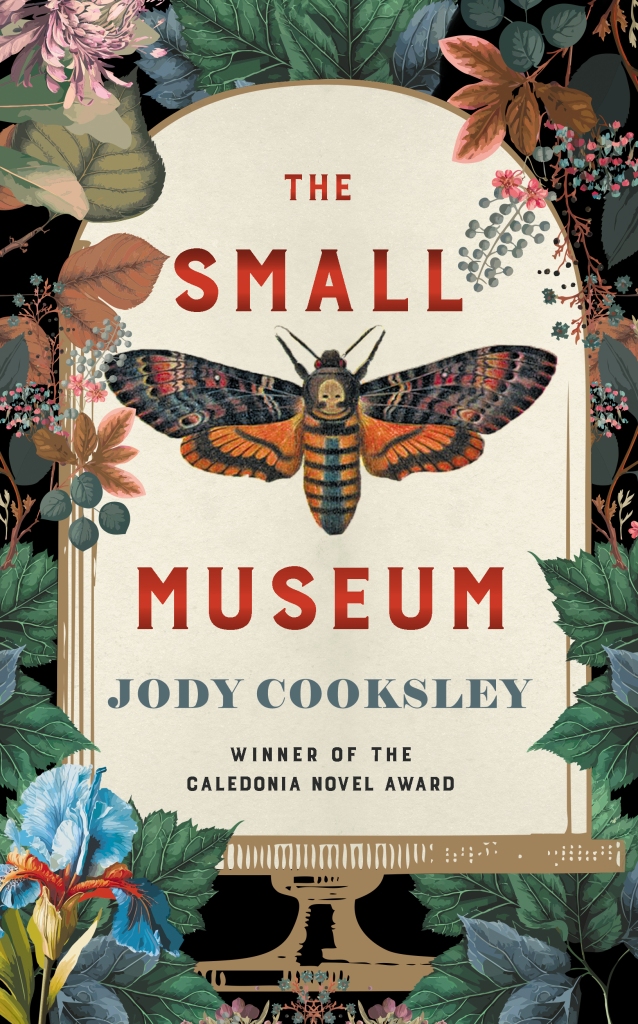
Book cover of The Small Museum by Jody Cooksley

London, 1873. Madeleine Brewster’s marriage to Dr Lucius Everley was meant to be the solution to her family’s sullied reputation. After all, Lucius is a well-respected collector of natural curiosities, his ‘Small Museum’ of bones and things in jars is his pride and joy, although kept under lock and key. His sister Grace’s philanthropic work with fallen women is also highly laudable. However, Maddie is confused by and excluded from what happens in what is meant to be her new home.

Maddie’s skill at drawing promises a role for her though when Lucius agrees to let her help him in making a breakthrough in evolutionary science, a discovery of the first ‘fish with feet’. But the more Maddie learns about both Lucius and Grace, the more she suspects that unimaginable horrors lie behind their polished reputations. Framed for a crime that would take her to the gallows and leave the Everleys unencumbered, Maddie’s only hope is her friend Caroline Fairly. But will she be able to put the pieces together before the trial reaches its fatal conclusion?

Format: Hardcover (320 pages) Publisher: Allison & Busby
Publication date: 16th May 2024 Genre: Historical Fiction

Find The Small Museum on Goodreads

Purchase The Small Museum from Bookshop.org [Disclosure: If you buy books linked to our site, we may earn a commission from Bookshop.org, whose fees support independent bookshops]


My Review

The author has created a ‘small museum’ of her own, in this case a literary one, by bringing together all the elements you could wish for in a Victorian age historical mystery. In particular, it incorporates the macabre interest in the collection and display of anatomical curiosities as well as more outlandish theories about the evolution of species circulating at the time.

Poor Maddie, married off to Lucius in order to try to restore her family’s social standing following the ‘disgrace of her sister Rebecca, is pretty much a lamb to the slaughter. She cannot understand Lucius’ coldness towards her nor the fact that she is kept pretty much a prisoner in her new home which is run with ruthless efficiency by housekeeper, Mrs Barker. Lucius is invariably absent, either visiting patients or attending scientific meetings, so Maddie’s is a lonely existence, made worse by unsettling little things, such as the unexplained rearrangement of objects or the strange sounds she hears in the night. Could it be her imagination? Everyone seems anxious to convince her it is. Have a cup of cocoa and an early night, dear…

Maddie makes touching attempts to show interest in Lucius’s work in the hope of gaining his attention but it’s only when her artistic skill seems likely to assist his work that she gains a modicum of value in his eyes. Unfortunately, it will be a long time until she discovers what her real value to him is, and when she – and the reader – does, it’s positively shocking. Maddie badly needs a friend and Caroline Fairly proves a particularly steadfast one, along with Maddie’s maid, Tizzy, who risks her own wellbeing if she is discovered.

The book has a generous role call of villains. I’d single out Lucius’s sister, Grace, whose knack for gliding into rooms unexpectedly reminded me of Mrs Danvers in Daphne du Maurier’s Rebecca. She willingly goes along with the gaslighting of Maddie whilst at the same time cultivating an air of philanthropy through her involvement in a home for fallen women (reminiscent of the establishment in Stacey Halls’s The Household). Then there are the Barkers, the Eversleys’ loyal retainers, a persistent malign prescence and whom, one suspects, know all the family’s dirty secrets. And, of course, there’s Lucius himself who for a long time seems to be just a coldly obsessive man determined to prove a theory he has developed. But what lengths will he go to in pursuit of that proof?

I particularly liked the use of chapter headings that describe some of the often quite macabre ‘curiosities’ in Lucius’s collection and the way the author subtly insinuated some of these into the story. I was fascinated to learn that some were inspired by actual exhibits in the Hunterian Museum in London.

The Small Museum is a chilling and immersive historical mystery generously infused with elements of Gothic fiction.

In three words: Creepy, dramatic, atmospheric
Try something similar: Things in Jars by Jess Kidd


About the Author

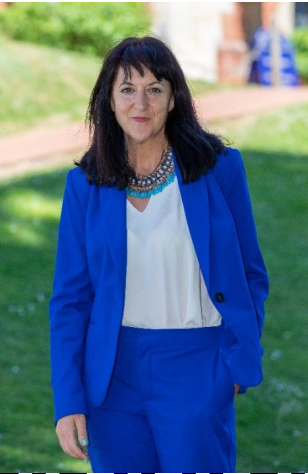
Author Jody Cooksley
Photo credit: Lillian Spibey

Jody Cooksley studied literature at Oxford Brookes University and has a Masters in Victorian Poetry. Her debut novel The Glass House was a fictional account of the life of nineteenth-century photographer, Julia Margaret Cameron. The Small Museum, Jody’s third novel, won the 2023 Caledonia Novel Award.

Jody is originally from Norwich and now lives in Cranleigh, Surrey.

Connect with Jody
Website | X | Instagram

Book Review – The Paris Peacemakers by Flora Johnston @allisonandbusby

Welcome to today’s stop on the blog tour for The Paris Peacemakers by Flora Johnston. My thanks to Josie at Allison & Busby for inviting me to take part in the tour and for my review copy. Do check out the reviews by my tour buddies for today, Chrissie at hiddengirl.41, Joanne at Portobello Book Blog and Kelly at Love Book Tours.


About the Book

Book cover of The Paris Peacemakers by Flora Johnston published by Allison & Busby

Paris, 1919. Will the brittle pieces of Europe ever fit together again?

As the fragile negotiations of the international Peace Conference get underway, typist Stella Rutherford throws herself into her work and the mixture of glamour and devastation the City of Light reveals. Anything to escape the grief coming in waves for her beloved brother Jack.

Her sister Corran is about to put her academic career to use among the troops in France, a chance to see what the experience was like for countless men, including her fiancé Rob.

Rob Campbell, profoundly changed by his time as a surgeon on the front line, has had little chance to lift his head from the incessant grind of the injured, dying and dead. If he did the ghosts of his teammates, the Scottish rugby players who followed the same path into hell, would surely be waiting for him.

Format: Hardcover (384 pages) Publisher: Allison & Busby
Publication date: 18th April 2024 Genre: Historical Fiction

Find The Paris Peacemakers on Goodreads

Purchase The Paris Peacemakers from Bookshop.org [Disclosure: If you buy books linked to our site, we may earn a commission from Bookshop.org, whose fees support independent bookshops]


My Review

Flora Johnston has crafted the most wonderful novel set against the backdrop of the Paris Peace Conference, responsible for formulating the agreement that would become the Treaty of Versailles. Woven into the historical details of the Peace Conference are the stories of Scottish sisters Stella and Corran, and Corran’s fiancé, Rob.

Stella knows better than anyone the price of war. She is devastated by the loss of her brother Jack, to whom she was so close, especially since she alone possesses the evidence of the toll his experiences on the front line had taken on him. One of the many poignant scenes in the book is the train journey she and Corran take to the site of Jack’s grave through countryside devastated by war. ‘It was impossible to imagine what this wasteland had looked like before the war, as they travelled slowly through ravaged, abandoned fields of death. The streaky light of dawn revealed the blackened, disfigured remains of what had once been trees.’

Stella is overjoyed to be chosen to work in Paris as one of the typists responsible for recording the output from the conference but becomes disillusioned once she realises that the more interesting roles, as usual, have been given to men. However, she embraces the luxury of the Majestic hotel and life in Paris even if the bright lights sit uneasily alongside the evidence of war: ruined buildings, women and children begging in the streets. ‘In this city the chic and the shattered were held together as close companions.’

Corran has already experienced the prejudice displayed towards educated women. She finds her vocation teaching in France, equipping soldiers with the education necessary for them to gain employment once they return home. I loved Corran’s strength of will in rejecting what might have been the safe, socially acceptable option in order to maintain her independence.

The character I was most drawn to was Rob. The scenes of his time as a surgeon in a Casualty Clearing Station on the Western Front are rendered in brutal, graphic detail. They’re difficult enough to read but they must have been indescribably more difficult to witness first-hand. Rob struggles with the notion his role is to patch up men so they can return to the front. He agonises over the men he’s not able to save (including men he knew), the lives that will be changed forever as a result of the grave injuries they have suffered and the crude methods he and his fellow surgeons have to use. (I couldn’t help thinking of the medical staff currently operating under gruelling conditions in Gaza.) Such experiences have a longlasting psychological impact on him and for a time he’s rudderless, unsure whether he still retains the necessary skills or vocation to be a surgeon. Gone is the man who represented his nation on the rugby field; now all he sees is the team mates who never returned or were punished for their pacifist principles.

Sadly we know from history that the First World War was not ‘the war to end all wars’ and that many of the misgivings voiced about the treaty proved well-founded. ‘It was everywhere, this creeping sense of fear that, after everything they had been through and all they had lost, the world might not be so very much better after all.’ Germany was humilated – as France was insistent it should be – and the Allied powers argued amongst themselves as they carved up Germany’s former dominions for their own gain. It instilled a longlasting sense of grievance that was used as motivation by Hitler in the 1930s.

The end of the book gives us a glimpse of the ways in which Stella, Corran and Rob – like so many others – might move on from what they have experienced, and even find happiness in a world that has utterly changed. As one character observes, ‘It’s not just the nations that need to rebuild: we’ll all be picking up the pieces of these years for a long time to come.’

There was so much about this novel I loved, and so much I learned from reading it. And I’ll freely admit to having been moved to tears at several points. The Paris Peacemakers is easily one of the best historical novels I’ve read so far this year.

In three words: Powerful, emotional, poignant
Try something similar: The Visitors by Caroline Scott


About the Author

Flora Johnston worked for over twenty years in museums and heritage interpretation, including at the National Museums of Scotland, which has greatly influenced the historical fiction she now writes.

Her debut novel, What You Call Free, was published by Ringwood Publishing. She studied at St. Andrews University and lives in Edinburgh.

Connect with Flora
Website | X/Twitter | Instagram | Facebook