Blog Tour/Book Review: The Summer Will Come by Soulla Christodoulou

The Summer Will Come Tour Banner

I’m thrilled to be co-hosting today’s stop on the blog tour for The Summer Will Come by Soulla Christodoulou and to share my review of this novel set partly in 1950s Cyprus and partly in London.  It made me want to book a holiday to Cyprus right this minute.

 The Summer Will ComeAbout the Book

Set in the 1950s, the story begins in Cyprus. EOKA, British rule, and the fight for Enosis (unity) disrupt the world of two Greek Cypriot families, living in different villages on the island. They are desperately trying to cope with the unpredictability of this fractious time. Circumstances over a five-year period push both families to escape to London where, as immigrants, they struggle to settle, face new challenges, trauma and cope with missing their homeland’s traditions and culture. Both families’ lives cross paths in London and it seems that happier beginnings could be theirs. But at what cost?

A story of passion for a country in turmoil, family love, loyalty and treachery and how, sometimes, starting over isn’t always as imagined.

Format: ebook, paperback (492 pp.)      Publisher:
Published: 6th March 2018                       Genre: Historical Fiction

Purchase Links*
Amazon.co.uk  ǀ  Amazon.com
*links provided for convenience, not as part of any affiliate programme

Find The Summer Will Come on Goodreads


My Review

The Summer Will Come tells the story of two Cypriot families both affected by the unrest on the island resulting from the struggle for Cypriot independence that took place in the 1950s.  The reader sees events from the points of view of Elena and her mother, Evangelia, and Christaki and his father, Loizos.

The author does a great job of communicating the atmosphere of rising tension and fear on the island as families and communities are split by support for one side or the other.  Supporters of the nationalist organisation EOKA risk arrest, internment, interrogation (and potentially worse) by the British authorities as they smuggle coded messages and hold secret meetings.   It’s a time of curfews, informers, repression and often violent reprisals.

However, the book is not all doom and gloom.  There are wonderful descriptions of the landscape of Cyprus and, for those of us in the United Kingdom currently enduring snow and overcast skies, enticing depictions of blue skies, hot days and balmy nights.  In addition, there are some evocative descriptions of food that literally made my stomach rumble as I was reading them.  ‘Elena imagined paklava, galatoboureko, pitoues, daktila and kateifi, the sweet filo and shortcrust pastries bursting with chopped pistachios, almonds and thick yellow custard sitting together in a warm goo of syrup’.  (By the way, there is a really helpful glossary at the back of the book including, for those not on a diet, mouth-watering descriptions of Cypriot pastries and desserts.)

Eventually both families are forced to leave Cyprus to seek a new life in England.  For Elena, her twin brother, Andreas, and their mother, Evangelia, the journey offers the prospect of being reunited with their father, Kostas.    For Christaki, his brother and sister and, in particular, his mother, Anastasia, it’s a chance to leave traumatic memories behind.

However, the move to England brings fresh challenges for both families.  The author brilliantly conveys the contrast between their life in Cyprus and their experience of London.  There are obvious things like the cold weather and different food.  ‘She felt like she was always shrouded in grey; she could barely see the buildings, the streets, the sky, the landscape from a few hundred yards away.’  But also less obvious things, such as the dirty, dingy housing, the multi-racial nature of London  and the noise.  ‘It was not the peaceful sound of the lapping waves of the sea in Limassol.  No, it was a different world, a noisy one.’  And they find it difficult to adjust to the different pace of life as well. ‘Loizos noticed how those around him seemed to be in a hurry to get somewhere; a complete contrast to life in Cyprus, or at least life as it used to be before the Cyprus tragedy, with trundling buses, slow donkeys and hours spent in the kafenion.’

I loved the little details like the families’ surprise that in England olive oil is only available from a pharmacist!  There’s a lovely sense of the atmosphere of the 1950s – the fashion, the music and things like the opening of the first Wimpy Bars!  However, there are also forceful reminders of the darker side of life.

Conflict arises as the younger members of both families – especially the female members – seek to take advantage of the freedom enjoyed by their peers whilst their parents cling to the traditions of Cyprus, including the custom of arranging introductions between members of the opposite sex and the expected behaviour of girls. ‘The women in the village were raised to be passive and accepting of their role in life; to marry well, be respectful wives and loving mothers…’   When connections within the Cypriot community eventually (and perhaps inevitably) bring two members of the families together, this reader certainly had a clear idea of the resolution she desired.

I really enjoyed The Summer Will Come.  I loved learning about the culture and traditions of Cyprus.  My only minor niggle (and it is minor) is that the book felt slightly longer than it needed to be.  For instance, there was a section set in Blackpool that I felt could have been removed entirely.   However, I found the parts of the book set in Cyprus absolutely fascinating and the story of the two families once they moved to London really compelling.  If you love historical fiction that is rich in cultural detail and rooted in actual events, then The Summer Will Come will not disappoint.

I received a review copy courtesy of the author and Rachel’s Random Resources in return for an honest and unbiased review.

Follow my blog with Bloglovin

In three words: Emotional, engaging, hopeful

Try something similar…Letting Go by Maria Thompson Corley (click here to read my review)


Soulla ChristodoulouAbout the Author

Born in London to Greek Cypriot parents, Soulla Christodoulou spent much of her childhood living carefree days full of family, school and friends. She was the first in her family to go to university and studied BA Hotel & Catering Management at Portsmouth University. Years later, after having a family of her own she studied again at Middlesex University and has a PGCE in Business Studies and an MA in Education.

Soulla is a fiction author and wrote her first novel Broken Pieces of Tomorrow over a few months while working full time in secondary education. She is a mother of three boys. She is a compassionate and empathetic supporter of young people. Her passion for teaching continues through private tuition of English Language and Children’s Creative Writing Classes as well as proof reading and other writing services.

Her writing has also connected her with a charity in California which she is very much involved in as a contributor of handwritten letters every month to support and give hope to women diagnosed with breast cancer. One of her letters is featured in a book, Dear Friend, released on Amazon in September 2017.

When asked, Soulla will tell you she has always, somewhere on a subconscious level, wanted to write and her life’s experiences both personal and professional have played a huge part in bringing her to where she was always meant to be; writing books and drinking lots of cinnamon and clove tea!

She also has a poetry collection, Sunshine after Rain, published on Amazon.  The Summer Will Come is her second novel. She is currently working on a third novel Trust is a Big Word about an online illicit relationship that develops between two people.

Connect with Soulla

Website  ǀ  Facebook ǀ  Twitter  ǀ  Instagram ǀ Pinterest ǀ Goodreads
 

The Summer Will Come Full Banner

Blog Tour/Guest Post: London Spies by S. J. Slagle

London Spies Tour Banner

World War 2 London.  Spies.  Espionage.  Count me in!  As a lover of historical fiction and someone always on the lookout for a new historical mystery series, I’m thrilled to be kicking off the blog tour for London Spies by S. J. Slagle.

I’m delighted to say I have a fascinating guest post by the author about the real life exploits of amazing women who worked in military intelligence in World War 2.

WinPlus…there’s a giveaway with a chance to win a $5 Amazon giftcard. 

To enter, click here.

Follow my blog with Bloglovin


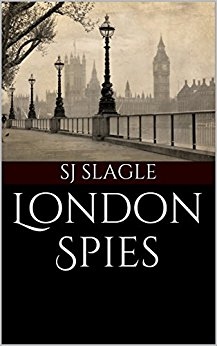
London SpiesAbout the Book

Phyllis Bowden, a secretary at the American Embassy, is catapulted into the limelight when the Military Attache is arrested for espionage and her boss, the Assistant Military Attache, assumes the position.   The arrest throws suspicion on everyone at the Embassy, particularly the Military Attache’s secretary whose attempted suicide convinces Phyllis to be more curious about what really happened. With bombs still falling on a devastated city, Phyllis begins asking questions but she never imagined the dark underbelly of diplomacy. Entering a shadowy world of cryptic messages, secret rendezvous and dangerous men, Phyllis learns quickly that a safety net doesn’t exist and if she wants to survive, she better figure out the game fast.

Format: ebook, paperback (196 pp.) Publisher:
Published: 9th May 2017                      Genre: Historical Fiction

Purchase Links*
Amazon.co.uk  ǀ  Amazon.com ǀ Barnes and Noble ǀ Kobo ǀ iTunes ǀ Smashwords
*links provided for convenience, not as part of any affiliate programme

Find London Spies on Goodreads


Guest Post: ‘Women in Military Intelligence’ by S. J. Slagle

Was my cousin a spy?

Women have long had varied positions with the United States military, but not much information has been forthcoming regarding women in military intelligence. What did they do? What sort of intelligence was collected?

While conducting research for a novel loosely based on the wartime experiences of a cousin, I uncovered the stories of three other women who made significant contributions toward the Allied efforts in World War II.

My cousin had, more than likely, been with the OSS, the Office of Strategic Services. My family learned of her involvement with the OSS after she had passed away. She had worked in the Pentagon and gone over to London at the end of the war to work as a civilian contractor with the War Department. She was placed in the Office of the Military Attaché at the American Embassy and later went on to Oslo, Norway when the war was over.  Her official title was stenographer, although she was upgraded to research analyst and later intelligence officer when she joined the CIG, Central Intelligence Group, which evolved into the Central Intelligence Agency. Her wartime experiences were cloaked in secrecy during her career and life. She didn’t speak of sensitive topics and took her oath of confidentiality to the grave.

Most people have heard of Mata Hari, but how many remember Claire Phillips, Virginia Hall and Amy Elizabeth Thorpe Pack?

Claire Phillips was never trained in military intelligence. A mother from Portland, Oregon, Claire (Clara Taste) grew up a devout Christian Scientist. An outgoing girl craving adventure, Claire ran away with a travelling circus passing through town. Her mother brought her home, but Claire was an entertainer who loved to sing and dance. She soon signed with a stock company touring the Far East eventually ending in the Philippines. In 1942, Claire witnessed American prisoners of war staggering by on the Bataan Death March and vowed she would try to help the prisoners. Hocking her jewellery, she started the exclusive Tsubaki Club in Manila frequented by Japanese officers and civilians. Claire’s code name in the smuggling business she conducted was “High Pockets” because she carried notes in her bra, notes containing intelligence pried from loose Japanese lips. She used her Manila contacts to smuggle money and medicine to the prisoners of the infamous Cabanatuan Prison, but eventually her time ran out. She was arrested, imprisoned, tortured and sentenced to twelve years in a women’s correctional institution on the island. Rescued when the camp was liberated in 1945, Claire went on to receive honors for her service to the military. “I was an American Spy” was a popular movie made in Hollywood about her. Claire Phillips lived out the rest of her life in Portland.

Virginia Hall Goillot was born in Baltimore. She was university educated with a desire to join the Foreign Service and was placed in the American Embassy in Warsaw as a clerk in 1940.  It was during her next assignment in Turkey when she lost part of her leg due to an accident. Still, Virginia continued her work wearing a prosthetic she affectionately named Cuthbert. When World War II broke out, Virginia joined the ambulance corps in France. Making her way to England, she volunteered to serve with British Special Operations, which trained her in weapons, resistance and communications. Virginia became a legendary intelligence officer with the OSS (Office of Strategic Services) and then CIA. Her exploits were well known and she was the only woman to be awarded the Distinguished Service Cross. The “Limping Lady” continued her intelligence work with resistance groups in countries behind the Iron Curtain. Virginia Hall retired from the CIA in 1966.

Amy Elizabeth Thorpe grew up travelling the world with her family and U.S. Marine Corps officer father. Gorgeous and well bred, Amy attracted men like bees to honey. An illicit affair brought about her marriage to Arthur Pack, a British Embassy secretary and when Arthur transferred to Madrid on the eve of the Spanish Civil War, Amy became involved in covert operations such as smuggling rebel Nationalists to safety. When Amy and her husband moved on to Warsaw, she was recruited by British intelligence and began a career trading sexual favours for information. Some say Amy deserves credit with helping to give the Allies the edge over the Nazis with the Enigma cipher machine when she learned crucial intelligence from a Polish diplomat. She and Arthur travelled to New York where she was given the code name of Cynthia. Her cover was a journalist in Washington, D.C. where Amy gleaned information about the Italian Navy’s code and cipher books contributing to British victories in the Mediterranean.  In 1942, she worked with Bill Donovan, head of the OSS on her most famous mission. Working with a French press attaché and an expert safe cracker, Amy was able to steal French naval ciphers used to help the Allies in North Africa. She once said, “Wars are not won by respectable methods.”

Wars are won by every method possible and every soldier who helped the Allied powers win in World War II deserves to be credited openly. So thank you to the women in military intelligence. All your exploits are not currently known, but perhaps one day they will be. If not, thank you from the bottom of our hearts.

Sources

“Claire Phillips: Forgotten Hero,” 1859, Oregon’s Magazine, Sig Unander, January 1, 2016 Virginia Hall: The Courage and Daring of the Limping Lady, http://www.cia.gov, October 8, 2015 “Amy Elizabeth Thorpe: WWII’s Mata Hari, www.historynet.com, June 12, 2006.

Teaser - London Spies by SJ Slagle


S J SlagleAbout the Author

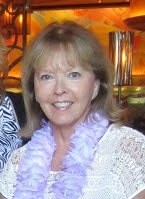
S. J. Slagle is the celebrated author of the Sherlock and Me series and the Phyllis Bowden series. A teacher and nonfiction writer for part of her career, she taught in Florida, California and Nevada. She also writes western romances as Jeanne Harrell including the bestselling series Rancher, The Westerners and These Nevada Boys with picturesque settings in the wild west of Nevada.

Connect with S. J. Slagle

Website  ǀ  Facebook  ǀ  Twitter  ǀ  Instagram  ǀ Pinterest  ǀ Goodreads


RABT Book Tours & PR