#BookReview The Whispering House by Elizabeth Brooks @DoubledayUK @izzieghaffari

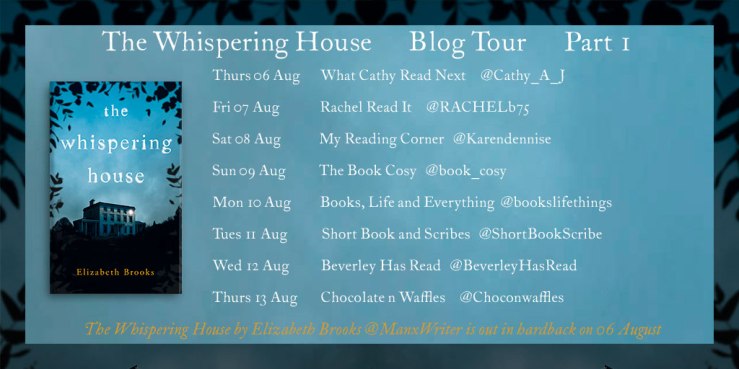
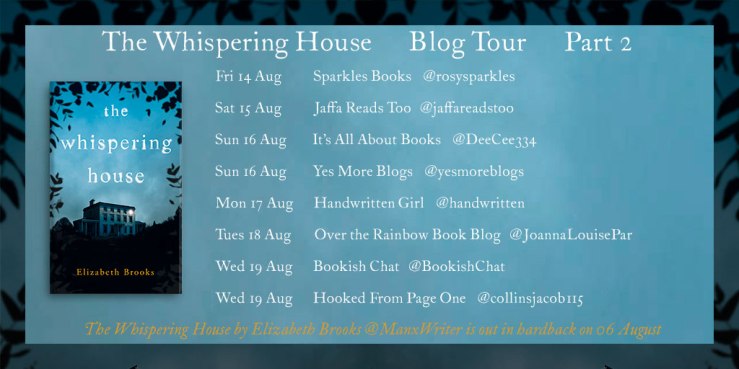
The-Whispering-House-blog-tour-week-1I’m delighted to welcome you to today’s stop on the blog tour for The Whispering House by Elizabeth Brooks. Not only is it the first day of the tour, it’s also publication day! My thanks to Izzie at Doubleday for inviting me to participate in the tour and for my digital review copy via NetGalley.


The Whispering HouseAbout the Book

Freya Lyell is struggling to move on from her sister Stella’s suicide five years ago. Visiting the bewitching Byrne Hall, only a few miles from the scene of the tragedy, she discovers a portrait of Stella – a portrait she had no idea existed, in a house Stella never set foot in. Or so she thought.

Driven to find out more about her sister’s secrets, Freya is drawn into the world of Byrne Hall and its owners: charismatic artist Cory and his sinister, watchful mother. But as Freya’s relationship with Cory crosses the line into obsession, the darkness behind the locked doors of Byrne Hall threatens to spill out.

Format: Hardcover (352 pages)       Publisher: Doubleday
Publication date: 6th August 2020 Genre: Fiction, Mystery

Find The Whispering House on Goodreads

Purchase links*
Amazon UK | Hive (supporting UK bookshops)
*links provided for convenience not as part of an affiliate programme


My Review

There’s no doubt that in Byrne Hall the author has created another mysterious location for her novel. Viewed for the first time from its gardens, as Freya does, or glimpsed from afar, it seems picture perfect. “There it was; there was Byrne Hall. Impossible to mistake the graceful white house with its pillared porch, and the tiered garden tumbling down through the trees like a wide, green river.” However, delve deeper and its elegant frontage is revealed as merely a facade; the rest of the house is in various stages of disuse and decay, “as godforsaken as Sleeping Beauty’s castle”.  This is something of a metaphor for the characters who inhabit it – Diana Byrne and her son, Cory.

Once doyenne of the art world, Diana is now ailing and physically frail, reliant on Cory, the son she dotes on, to look after her. However, through the occasional insights into her thoughts, the reader senses she possesses an inner steel and a strong will. In a curious and rather unsettling way, the house seems to inhabit her as much as she inhabits it. “She – Diana – had become the whispering voice of the house. No, more than that, she had become it’s mind and soul.”

Even Freya begins to think of Byrne Hall as in some sense having a life of its own. “We didn’t get silences like this back home. It was a silence with character and colour; it was the wakeful mind of Byrne Hall, brimful of history and intent.” This air of unreality, along with her desire to find out more about the circumstances of her sister’s death, goes some way to explaining why Freya finds herself drawn into a relationship with Cory. I confess I struggled to see the attraction Cory held for Freya. Convinced he possesses as yet unrecognised artistic talent, his behaviour is increasingly manipulative and controlling. However, having always felt as if she was in her sister’s shadow, Freya finds Cory’s adoration difficult to resist. In addition, Byrne Hall seems to offer her the prospect of a new and more fulfilling life.

As Freya uncovers more connections between Byrne Hall and her sister’s death, picking up fragments here and there, she observes “It was like holding a couple of jigsaw pieces in my palm, knowing there was a whole picture to be made, if only I could find the rest.” You may think you know exactly where the story is going but, like me, you could be wrong. Never underestimate the lengths to which people will go to preserve the things they treasure.

With its atmospheric setting and gothic elements (yes, there is even an attic), The Whispering House combines suspenseful mystery with an absorbing story of delusion and obsession.

In three words: Atmospheric, creepy, immersive

Try something similar: Call of the Curlew by Elizabeth Brooks

Follow this blog via Bloglovin
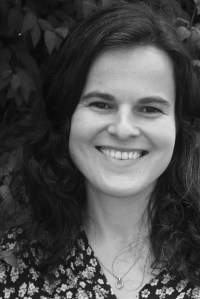

Elizabeth Brooks. B+WAbout the Author

Elizabeth Brooks grew up in Chester and read Classics at Cambridge. Her debut novel Call of the Curlew was shortlisted for the Waverton Good Reads award. The setting for her new novel, The Whispering House, is a manor house named Byrne Hall and is inspired by the home of Agatha Christie. It is full of dark corners and old portraits that carry untold stories of their subjects. Elizabeth lives on the Isle of Man with her husband and children.

Connect with Elizabeth
Twitter | Goodreads
 

The-Whispering-House-blog-tour-week-1

The-Whispering-House-blog-tour-week-2

#BookReview Miss Graham’s Cold War Cookbook by Celia Rees @HarperFiction

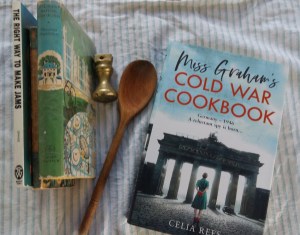
Miss Graham BT PosterWelcome to today’s stop on the blog tour for Miss Graham’s Cold War Cookbook by Celia Rees which was published on 23rd July 2020. I’m delighted to be co-hosting today’s stop with the lovely Nicola at Short Book & Scribes. My thanks to Anne at Random Things Tours for inviting me to get involved and to HarperCollins for my review copy.

20200717_093842-1About the Book

An ordinary woman. A book of recipes. The perfect cover for spying…

Sent to Germany in the chaotic aftermath of World War II, Edith Graham is finally getting the chance to do her bit. Having taught at a girls’ school during the conflict, she leaps at the opportunity to escape an ordinary life – but Edith is not everything she seems to be.

Under the guise of her innocent cover story, Edith has been recruited to root out Nazis who are trying to escape prosecution. Secretly, she is sending coding messages back to the UK, hidden inside innocuous recipes sent to a friend – after all, who would expect notes on sauerkraut to contain the clues that would crack a criminal underground network?

But the closer she gets to the truth, the muddier the line becomes between good and evil. In a dangerous world of shifting loyalties, when the enemy wears the face of a friend, who do you trust?

Format: Hardcover (480 pages)    Publisher: HarperCollins
Publication date: 23rd July 2020 Genre: Historical fiction

Find Miss Graham’s Cold War Cookbook on Goodreads

Purchase links*
Amazon UK| Hive (supporting UK bookshops)
*links provided for convenience not as part of an affiliate programme


My Review

Of the many things I loved about Miss Graham’s Cold War Cookbook, the standout was Miss Graham herself. Edith is smart, shrewd and eager to do good, to make a difference. Her family don’t see it that way, but her decision to work for the Control Commission in Germany is not an excuse to shirk family responsibilities, it’s out of a desire to do something. “All through the war, she’d seen others leave to join the forces, do useful work. She’d done nothing. She felt wasted and unfulfilled, as though she’d missed an important experience.”

Edith has a keen sense of justice and shows empathy towards those whom others ignore. For example, the German maids employed in the house where she is billeted are treated as mere skivvies, symbols of a defeated nation, by some of the other girls who live there. Edith treats them as equals, listens to their stories and tries to help them where she can. However, Edith is no straight-laced prude; she’s not averse to the occasional amorous adventure.

I also loved Edith’s friends, Adeline and Dori, equally remarkable women with their own very personal missions to undertake, whether that’s exposing the realities of war to the wider public or learning the fate of wartime comrades. (In respect of the latter, I liked the inclusion of references to real-life heroines who served with the Special Operations Executive, such as Noor Inayat Khan.) Both Adeline and Dori will prove to be true friends to Edith in a way I found especially moving.

There are so many clever touches in the book. Not just the recipes and menus at the beginning of each chapter, or the central idea of using a cookery book to send coded messages, but the use of cooking as a metaphor. For example, the process of collecting intelligence is described as “a patient gathering. A foraging, a nosing up of morsels” and, at one point, Edith fears she’s “following a breadcrumb trail of duplicity”. Other clever elements include Edith’s invented friend who provides her with convenient excuses for trips away, reminding me of Algernon Moncrieff’s invalid friend Bunbury in Oscar Wilde’s The Importance of Being Earnest, and the intriguing prologue which I simply had to reread – with fresh insight – once I’d finished the book.

The gap between “the conquerors and the conquered” is vividly brought home in the contrast between the generous portions of food enjoyed by the Allies in their messes or billets and that of the German citizens and thousands of displaced people “caught like a feather on the great gusting breath of war, picked up and put down again”. Not for the British or Americans pancakes made of potato peelings or ‘tea’ made from pine needles, but copious quantities of toast and jam, and homely dishes such as spotted dick. The period detail about food, clothing and so on, and the descriptions of the bomb-damaged German cities with their “churned streets carved through ruins and rubble” is clearly the result of impeccable and lengthy research.

Although there are delicious sounding recipes for cakes and pastries, Miss Graham’s Cold War Cookbook is definitely not all sweetness. Far from it. There are sour and bitter flavours as well, and moments of real darkness that may shock and surprise you. For example, the testimonies of some of the people Edith encounters; tales of suffering, displacement and wartime atrocities that are a “black muster roll of monstrous perversions”. Like the reader, Edith awakens to the growing realisation that no side has the monopoly on right and – like that hotel dinner menu staple, the Vienna steak – not everything is exactly what it claims to be. The warning “There’s a darker side of life in the Zone” proves all too true.

The final chapters are full of drama and tension, keeping me completely gripped. If you’ll pardon the pun, Miss Graham’s Cold War Cookbook contains all the ingredients I look for in great historical fiction. I loved everything about it and it’s definitely in the running to be one of my favourite books of the year.

In three words: Compelling, moving, dramatic

Try something similar: Then We Take Berlin by John Lawton

Follow this blog via Bloglovin


Celia ReesAbout the Author

Celia Rees was born in Solihull, West Midlands, UK. She studied History and Politics at Warwick University and has a Master’s degree from Birmingham University. She taught English in city comprehensive schools for seventeen years before beginning her writing career.

She is the author of over twenty acclaimed books for young adults and has won various prizes both in Britain and abroad. Her work has been translated into twenty-eight languages. Celia lives in Leamington Spa, Warwickshire, with her husband. Miss Graham’s Cold War Cookbook is her first adult novel.

Connect with Celia
Website | Twitter | Facebook | Instagram | Goodreads