#BookReview When I Come Home Again by Caroline Scott @simonschusterUK

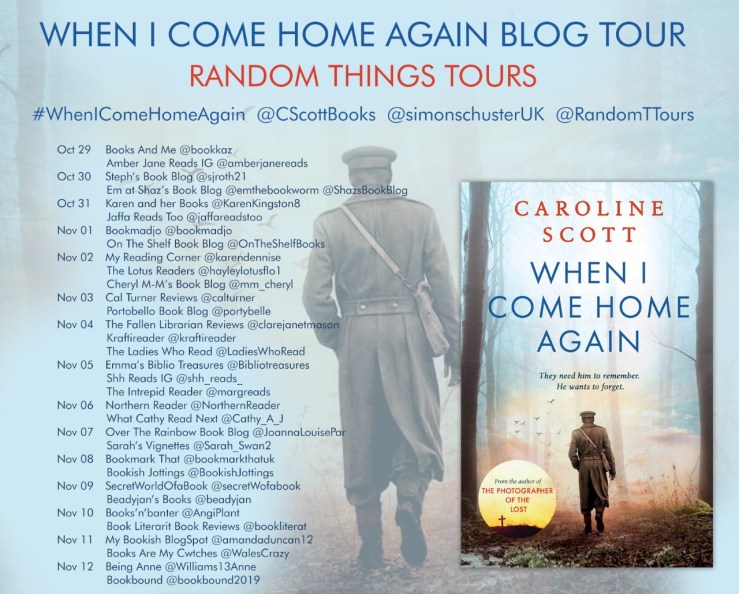
When I Come Home Again BT Poster

Welcome to today’s stop on the blog tour for When I Come Home Again by Caroline Scott. My thanks to Anne at Random Things Tours for inviting me to take part and to Simon & Schuster for my digital review copy via NetGalley. Do also check out the post by my tour buddy for today, Joules at Northern Reader.


When I Come Home Again - Graphic 3About the Book

How can you know who you are, when you choose to forget who you’ve been?

November 1918. On the cusp of the end of the First World War, a uniformed soldier is arrested in Durham Cathedral. It quickly becomes clear that he has no memory of who he is or how he came to be there. The soldier is given the name Adam and transferred to a rehabilitation home where his doctor, James, tries everything he can to help Adam remember who he once was. There’s just one problem. Adam doesn’t want to remember.

Unwilling to relive the trauma of war, Adam has locked his mind away, seemingly for good. But when a newspaper publishes Adam’s photograph, three women come forward, each just as certain that Adam is their relative and that he should go home with them.

But does Adam really belong with any of these women? Or is there another family waiting for him to come home?

Based on true events, When I Come Home Again is a deeply moving and powerful story of a nation’s outpouring of grief, and the search for hope in the aftermath of the First World War.

Format: Hardcover (496 pages)           Publisher: Simon & Schuster
Publication date: 29th October 2020 Genre: Historical Fiction, Romance

Find When I Come Home Again on Goodreads

Purchase links*
Amazon UK | Hive (supporting UK bookshops)
*link provided for convenience not as part of an affiliate programme


My Review

I loved Caroline Scott’s book, The Photographer of the Lost, so I was prepared for an emotional story and beautiful writing in this, her second book; I wasn’t disappointed. Once again the focus is the period after the First World War and the long-lasting effect of the conflict on the lives of so many.

Appropriately, as we approach Remembrance Sunday, the opening scenes of the book depict the journey of the coffin containing the body of the Unknown Warrior prior to its interment in Westminster Abbey. For some, the possibility the body may be that of a lost loved one brings solace, pride even. But for others, including the three women featured in the book, it does nothing but add to their fierce conviction that their missing brother, son or husband is not the body in the coffin, is not dead and will return some day. Often this in the face of advice from others to accept their loved one is gone and move on with their lives.

I loved how photographs play a part in the story, providing a link to the author’s first book. There’s the photograph published in the newspaper of the man given the name Adam Galilee that raises such fervent hope in those who have lost loved ones. And there are the photographs cherished by those families – of brothers, sons, husband who went to war and never came back – produced as evidence that Adam belongs with them. Or the photographs of parents, places or children placed in Adam’s hands in the hope of provoking a response, a flicker of recognition or a glimpse of his life before.

The scenes in which the three women who believe that Adam is their husband, son or brother come face to face with him for the first time are full of emotion and anguish. Their certainty, even though they cannot all be right, is heart-breaking to witness. But the author also conveys the emotional impact these encounters have on Adam himself, knowing the disappointment it will bring if they evoke no memories for him. Equally, the reader witnesses the effect on James Haworth, the doctor in charge of Fellside House, whose dogged determination to uncover Adam’s true identity threatens his own peace of mind.

The theme of memory runs through the book. Whether that’s the memories – good and bad – evoked by a particular place, the “muscle memory” of throwing a pot on a wheel or playing a piece by Chopin on the piano, the memory of a face but without the ability to put a name to it, or the act of remembrance in general. As long as someone is remembered, are they ever really lost? The book also poses the question whether memory can always be relied upon or, in wanting something so much to be true, it can become distorted. “Grief and hope are powerful emotions. What we see is sometimes what we want to see.”

When I Come Home Again is a beautifully crafted, emotional story that is also a timely reminder of the damaged minds and bodies that are the legacy of war.

In three words: Tender, insightful, emotional

Try something similar: The Return of the Soldier by Rebecca West

Follow this blog via Bloglovin


thumbnail_Caroline Scott author photo - credit Johnny RingAbout the Author

Caroline completed a PhD in History at the University of Durham. She has a particular interest in the experience of women during the First World War, in the challenges faced by the returning soldier, and in the development of tourism and pilgrimage in the former conflict zones. Caroline is originally from Lancashire, but now lives in south-west France.

Connect with Caroline
Twitter

#BookReview When the Music Stops by Joe Heap @fictionpubteam

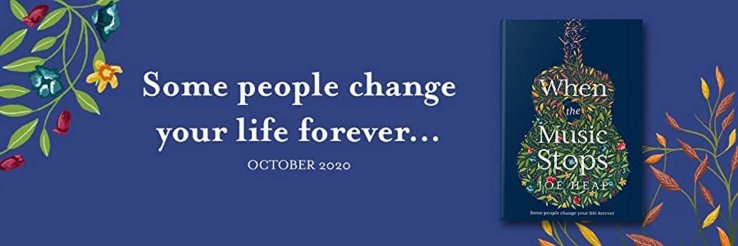
When The Music Stops Banner

Welcome to today’s stop on the blog tour for When the Music Stops by Joe Heap. My thanks to Anne at Random Things Tours for inviting me to take part in the tour and to Harper Collins for my digital review copy via NetGalley. Do check out the post by my tour buddy for today, Jo at Over The Rainbow Book Blog. And, for a limited time, you can grab yourself a signed copy of When the Music Stops from Hewson Books.

Finally, a note from Joe:
I owe this book to my grandparents, John and Jean Sands, for sharing the stories that inspired it. In many ways their story is more remarkable than the one I have written.

At a summer season in Ramsgate, 1959, two ice skaters held a party. My grandfather, a Glaswegian saxophonist who would rather have gone to the pub, was convinced by a comedian on the same bill to come along. My grandmother, another one of the ice skaters, sat down next to him and spilt her drink in his lap. Though she has since denied it, her first words of note to him were ‘Oh no, not another Scot.’

Nobody could have guessed how much would spin off that moment, myself and this book included. Here are a few pictures of them.”

images


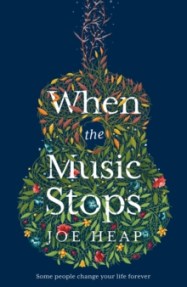
9780008293208About the Book

This is the story of Ella. And Robert. And of all the things they should have said, but never did.

What have you been up to?’
I shrug, ‘Just existing, I guess.’
‘Looks like more than just existing.’
Robert gestures at the baby, the lifeboat, the ocean.
‘All right, not existing. Surviving.’
He laughs, not unkindly. ‘Sounds grim.’
‘It wasn’t so bad, really. But I wish you’d been there.’

Through seven key moments and seven key people their journey intertwines. From the streets of Glasgow during WW2 to the sex, drugs and rock n’ roll of London in the 60s and beyond, this is a story of love and near misses. Of those who come in to our lives and leave it too soon. And of those who stay with you forever…

Format: Hardcover (384 pages)           Publisher: Harper Collins
Publication date: 29th October 2020 Genre: Contemporary Fiction, Romance

Find When the Music Stops on Goodreads

Purchase links*
Amazon UK | Hive (supporting UK bookshops)
*link provided for convenience not as part of an affiliate programme


My Review

The book’s structure, revisiting seven key moments and people in Ella’s life, was, according to the author, inspired by the ‘Seven Ages of Man’ speech from Shakespeare’s As You Like It. However, as Joe Heap also writes, “This is a book about music, inspired by music” so cleverly incorporated into the story are the seven modes that have been part of musical notation since ancient times.

In When the Music Stops, each of these modes is represented by a song in a music book Ella acquires when she first takes up the guitar. Although other elements of her memory have faded by the time we first meet her as an old woman – alone, in rather strange circumstances – the tunes are still at her fingertips, evoking memories of significant stages in her life – and the people who shared them with her. As she muses, “There are seven songs. I have to play all of them, though I don’t know what will come at the end. I just have to play them.”

The ability of music to evoke memories is just one of the fascinating concepts explored in the book, along with the nature of memory itself and how we experience the passing of time. I’ll leave others to explain Einstein’s theories on the latter but I liked the metaphor Robert, Ella’s friend since childhood, employs. He compares time to a long-playing record. While you’re listening to the second verse of a song, he explains, the first verse is still there but you’re just not listening to it anymore.

As the reader learns, Ella’s life has been punctuated by moments of loss, often signalled by that thing we’ve probably all come to dread – the unexpected early morning or late night telephone call. Robert’s earlier metaphor is applicable here too. As he confides to Ella about a person they both knew, “I don’t think she’s really gone… I just think we can’t see her anymore.”

Another key theme of the book is that of the missed opportunities in life, especially between people like Ella and Robert. ‘The Road Not Taken’ of Robert Frost’s poem, as it were. Their encounters over the years are populated by falsely reassuring thoughts such as “There will be other chances” and fateful hesitations, “The door of possibility stays open, waiting for her to walk through, but she stays put”.

I admired the way the author recreated the atmosphere of each stage on the journey through Ella’s life, referencing the clothing, the television programmes or even the food of the time: the school playground gift of tablet (a sweet similar to fudge for you non-Scots out there) or a corned beef and pickle sandwich prepared for a picnic.

The standout section for me, entitled ‘The Rebel’, was Ella’s experiences as a session musician in 1960s London, rubbing shoulders with many famous, or soon to be famous, bands of the period. (In his acknowledgements, Joe mentions Carol Kaye, “a trailblazing female musician” who played guitar and bass on many hit records and was the inspiration for Ella.) I also found the section entitled ‘The Matron’ particularly moving.

At one point in the book, a character mentions ‘fantastical thinking’ and I think that’s a great description of the premise of this clever but very touching novel. At the online book launch, Joe Heap mentioned fantasy as making up some of his own early reading – books by authors such as Terry Pratchett and Neil Gaiman – and it’s easy to see that influence in elements of the book. However, more than anything, When the Music Stops is an emotional story of love, loss and the power of the human spirit. I think it would make a great book club choice.

With its gorgeous cover, this is one of those occasions when I feel I’ve slightly missed out by opting for a digital version of a book.  So I may just have to treat myself and help out an independent bookshop through Lockdown 2.0 in the process…

In three words: Imaginative, insightful, heartfelt

Try something similar: Fred’s Funeral by Sandy Day

Follow this blog via Bloglovin


Joe Heap Author PicAbout the Author

Joe Heap was born in 1986 and grew up in Bradford, the son of two teachers. His debut novel, The Rules of Seeing, won Best Debut at the Romantic Novel of the Year Awards in 2019 and was shortlisted for the Books Are My Bag Reader Awards. Joe lives in London with his girlfriend, their two sons and a cat who wishes they would get out of the house more often.

Connect with Joe
Twitter

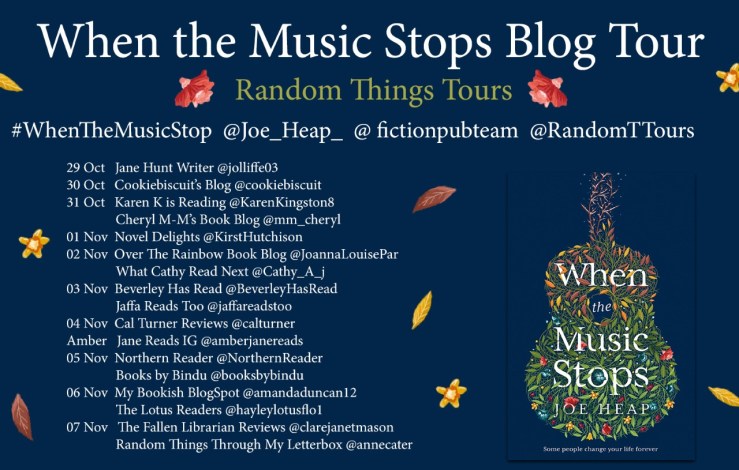
When The Music Stops BT Poster