
It’s the first Saturday of the month so it’s time for 6 Degrees of Separation!
Here’s how it works: a book is chosen as a starting point by Kate at Books Are My Favourite and Best and linked to six other books to form a chain. Readers and bloggers are invited to join in by creating their own ‘chain’ leading from the selected book.
Kate says: Books can be linked in obvious ways – for example, books by the same authors, from the same era or genre, or books with similar themes or settings. Or, you may choose to link them in more personal or esoteric ways: books you read on the same holiday, books given to you by a particular friend, books that remind you of a particular time in your life, or books you read for an online challenge. Join in by posting your own six degrees chain on your blog and adding the link in the comments section of each month’s post. You can also check out links to posts on Twitter using the hashtag #6Degrees
This month’s starting book is A Gentleman in Moscow by Amor Towles and for my chain I’ve decided to make a literary journey across the capitals of Europe. Apart from anything else, it seems appropriate given what is currently going on in UK politics. Links from the book title will take you to my review or the book description on Goodreads.
I haven’t yet read A Gentleman in Moscow although it’s been in my TBR pile for some time. However, I know it’s set in 1922 and concerns Count Alexander Rostov who is deemed an unrepentant aristocrat by a Bolshevik tribunal and sentenced to house arrest in the Metropol, a grand hotel across the street from the Kremlin.
For my first link in the chain, we continue the theme of imprisonment with The Good Doctor of Warsaw by Elisabeth Gifford. It’s a powerful, compelling account of the fate of those who struggled for survival in the Warsaw ghetto during the Second World War.
It’s the Cold War which is the backdrop to Prague Spring by Simon Mawer, set in the former Czechoslovakia during a turbulent period of its history. Although I haven’t read it, it’s been on my wishlist ever since I read another of the author’s novels, Tightrope.
Hopping across the border to Austria takes me to Vienna Spies by Alex Gerlis. Described as ‘a taut, tense masterclass in espionage fiction’ it’s another book I haven’t read but which I added to my wishlist having enjoyed the author’s previous book, The Swiss Spy. Vienna Spies takes place in the fiercely pro-Nazi city of the title in the final months of the Second World War.
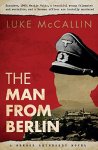
On to Germany and The Man from Berlin by Luke McCallin, the first in his terrific historical crime series featuring German military intelligence officer, Captain Gregor Reinhardt.
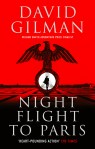
Staying with World War Two, we’re taking a Night Flight to Paris courtesy of author David Gilman. Set in Nazi occupied Paris in 1943, the book immerses the reader in a world where danger, suspicion and fear is a constant companion. I loved its mixture of atmospheric period detail, dramatic action scenes and compelling story line.
Finally, let’s cross the Pyrenees into Spain for Winter in Madrid by C J Sansom. Set in 1940 in the aftermath of the Spanish Civil War, it tells the story of Harry, a privileged young man traumatized by his experiences at Dunkirk, who is despatched to the ruined city of Madrid as a reluctant spy for the British Secret Service.
This month we’ve travelled across war-torn Europe from Moscow to Madrid. Where did your chain take you?




 What Cathy Read Next...