
 I’m thrilled to be joining my tour buddies, Adele at Kraftireader and Laura at Laura Patricia Rose, in hosting the first stop on the blog tour for Paris Savages by Katherine Johnson. The book will be published by Allison & Busby on Thursday 23rd July but is available to pre-order now.
My thanks to Lesley at Allison & Busby for inviting me to take part in the tour and for my digital review copy via NetGalley.
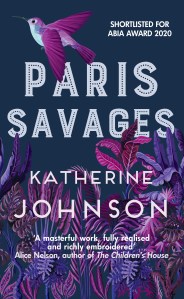 About the Book
Fraser Island, 1882. The population of the Badtjala people is in sharp decline following a run of brutal massacres. When German scientist Louis Muller offers to sail three Badtjala people – Bonny, Jurano and Dorondera – to Europe to perform to huge crowds, the proud and headstrong Bonny agrees, hoping to bring his people’s plight to the Queen of England.
Accompanied by Muller’s bright, grieving daughter, Hilda, the group begins their journey to belle-epoque Europe to perform in Hamburg, Berlin, Paris and eventually London. While crowds in Europe are enthusiastic to see the unique dances, singing, fights and pole climbing from the oldest culture in the world, the attention is relentless, and the fascination of scientists intrusive.
When disaster strikes, Bonny must find a way to return home.
Format: Hardcover, ebook (352 pages) Publisher: Allison & Busby
Publication date: 23rd July 2020 Genre: Historical fiction
Find Paris Savages on Goodreads
Pre-order/Purchase links*
Publisher | Hive (supporting UK bookshops)
*links provided for convenience not as part of an affiliate programme
My Review
In her Author’s Note, Katherine Johnson describes Paris Savages as “a work of imagination” inspired by a little-known true story. That story involves three Aboriginal people – Bonangera (known as Bonny), Dorondera and Jurano – members of the Badtjala tribe, who were taken from their home on K’gari (Fraser Island) to Europe as living exhibits in 1882-83.
Katherine also explains her choice not to assume Aboriginal viewpoints in telling the story. So, alongside the narrative told from the point of view of Hilda Muller, daughter of the German scientist who organises the trip, and excerpts from Hilda’s journal, a “ghost storyteller” provides the reader with an insight into Bonny’s experiences. Initially, I was unsure about this element of magic realism but I came to see it as a way of replicating, honouring even, the belief of the Badtjala people in spirit guides and an oral storytelling tradition.
For Hilda, the trip to Europe is a process of disillusionment as her trust in her father’s judgment and motives are tested. “Surely he would not have anything to do with a venture that collects people as curiosities and promises them ‘fancy articles’, as if they were children.” She is torn between her love for her father, still grieving the death of Hilda’s mother, Christel, her desire to support him in bringing to fruition her mother’s dream of a reserve for the threatened Badtjala people, and her doubts about the trip.
When they arrive in Europe, the initial excitement that greets them soon gives way to misgivings about how they are being represented in the displays organised for the paying public. They are exhibited as curiosities, forced to engage in often unrepresentative activities, or dance displays that ignore their traditional meaning. “That is where the interest lies. Natural. Exotic. Picturesque.” It poses the question, who are the savages? Those on display, or those who watch?
Alongside the “human zoos”, I’m sure I’m not the only reader to share Hilda’s growing sense of horror at the indignities and pseudo-scientific procedures to which the three Badtjala people are subjected. With a growing sense of guilt she wonders if she has led her ‘friends’, as she thinks of them, into a terrible trap.
Hilda becomes increasingly dismayed at the gulf between the enlightened views inherited from her mother and those of many of the supposedly educated individuals she encounters. She wonders, “Was she so different from most whites in her beliefs? Had her mother indeed been as alone in her opinions as she had said?” She recalls the words of her mother that “we do not need rulers and lengths of tape to see that our friends are as human as we are”.
At one point the ghost storyteller whispers to Bonny’s son back on K’gari, “Sorry, Little Bonny, if this story is becoming difficult for you to hear. It is becoming difficult, too, to tell.” The story of Bonangera, Dorondera and Jurano is a difficult one to read, especially as it is based on fact. I think we’d all like to imagine we have come a long way since the days when human beings were exhibited in zoos and freak shows. However, as recent events have demonstrated, ending inequality, valuing other cultures, and protecting the natural world are still live issues.
In highlighting the story of Bonangera, Dorondera and Jurano, Paris Savages not only provides a fascinating, if disturbing, insight into the past but is a timely reminder that challenges still remain in how we treat one another.
In three words: Fascinating, moving, thought-provoking,
Try something similar: Mr Peacock’s Possessions by Lydia Syson
Follow this blog via Bloglovin
 About the Author
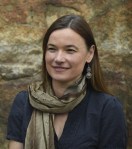
Katherine Johnson lives in Tasmania with her husband and two children. She is the author of three previous novels and her manuscripts have won Varuna Awards and the Tasmanian Premier’s Literary Prizes. She recently completed a PhD, which forms the basis of her latest novel, Paris Savages.
Connect with Katherine
Website | Twitter | Facebook | Instagram | Goodreads

 My Buchan of the Month for July is The Gap in the Curtain, John Buchan’s only full-length novel with a supernatural element. Written between March 1930 and February 1931, it was published in the UK by Hodder & Stoughton on 7th July 1932 and in the US by The Riverside Press on 27th July 1932. The book is dedicated to his friends, Sybil and Lambert Middleton.


 What Cathy Read Next...