
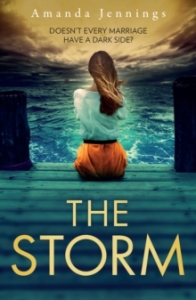
#BookReview The Storm by Amanda Jennings @HQStories

9780008287061About the Book

To the outside world Hannah married the perfect man. Behind the closed doors of their imposing house it’s a very different story. Nathan controls everything Hannah does. He chooses her clothes, checks her receipts, and keeps her passport locked away. But why does she let him?

Years before, in the midst of a relentless storm, the tragic events of one night changed everything and Hannah has been living with the consequences every since. Keeping Nathan happy. Doing as she’s told.

But the past is about to catch up with them…

Format: ebook (412 pages)            Publisher: HQ Stories
Publication date: 23rd July 2020 Genre: Contemporary fiction, thriller

Find The Storm on Goodreads

Purchase links*
Amazon UK | Hive (supporting UK bookshops)
*links provided for convenience not as part of an affiliate programme


My Review

I really enjoyed Amanda Jennings’ previous book, The Cliff House, and her beloved Cornwall is once again the location for her latest novel, The Storm. Set mainly around the fishing village of Newlyn and moving between the present day and twenty years earlier, the reader witnesses how the lives of a number of people were changed by the dramatic events of one night in 1998. Fragments of that eventful night are glimpsed in the prologue but the full picture will not become clear until the end of the book.

For Hannah, the events of that night led to her marriage to Nathan, a kind of Faustian bargain she entered into to protect others. Nathan’s obsessive jealousy has seen him control every aspect of Hannah’s life. She steels herself to complicity in this out of guilt – “Our marriage is punishment for what I did” – and for the sake of their son, Alex. So she plays the part expected of her and recites her lines in order to keep the peace. Alex is pretty much the only source of joy in Hannah’s life along with her best friend, Vicky.

Nathan is one disturbing individual. Outwardly he’s a model citizen and pillar of the community, but inside he’s something quite different. As Hannah remarks, he’s “my very own Jekyll and Hyde”. A damaged individual, a traumatic event in Nathan’s childhood explains, if not excuses, his actions towards Hannah.

In the scenes set in 1998, the author vividly depicts the back-breaking work of the six-man crew aboard a small trawler and the dangers they face on a daily basis. Taking such risks out of economic necessity, a safe return to harbour is never guaranteed but when it occurs, the crew seek release through drink, and sometimes drugs, in the local pub. When the Atlantic storm of the title hits the trawler, the awesome force of the sea is evident. “Six men, no more than specks of dust on an ocean so powerful and unpredictable, so savage, they could be swallowed up in the blink of an eye.” The consequences of the storm will change lives forever.

I’m not sure which element I found more compelling: the chilling portrait of Hannah and Nathan’s toxic relationship or the scenes set on the storm-lashed trawler.  The Storm is an intensely atmospheric and compelling drama that shows even the most carefully guarded secrets have a way of coming to the surface. The final lines sent chills down my spine.

I received an advance review copy courtesy of HQ Stories via NetGalley.

In three words: Dark, intense, gripping

Try something similar: The Other You by J. S. Monroe

Follow this blog via Bloglovin
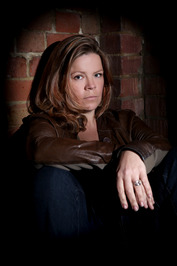

Amanda JenningsAbout the Author

Amanda Jennings lives in Oxfordshire with her husband, three daughters, and a menagerie of animals. She studied History of Art at Cambridge and before writing her first book, was a researcher at the BBC.

With a deep fascination for the far-reaching effects of trauma, her books focus on the different ways people find to cope with loss, as well as the moral struggles her protagonists face. When she isn’t writing she can usually be found walking the dog. Her favourite place to be is up a mountain or beside the sea.

Connect with Amanda
Website | Twitter | Facebook | Instagram


#BookReview Munich by Robert Harris

MunichAbout the Book

September 1938. Hitler is determined to start a war. Chamberlain is desperate to preserve the peace. The issue is to be decided in a city that will forever afterwards be notorious for what takes place there. Munich.

As Chamberlain’s plane judders over the Channel and the Fürher’s train steams relentlessly south from Berlin, two young men travel with secrets of their own. Hugh Legat is one of Chamberlain’s private secretaries; Paul Hartmann a German diplomat and member of the anti-Hitler resistance. Great friends at Oxford before Hitler came to power, they haven’t seen one another since they were last in Munich six years earlier. Now, as the future of Europe hangs in the balance, their paths are destined to cross again .

When the stakes are this high, who are you willing to betray? Your friends, your family, your country or your conscience?

Format: Hardcover (352 pages)                Publisher: Hutchinson
Publication date: 21st September 2017 Genre: Historical fiction

Find Munich on Goodreads

Purchase links*
Amazon UK | Hive (supporting UK bookshops)
*links provided for convenience not as part of an affiliate programme


My Review

Despite becoming a fan of Robert Harris’s writing since reading An Officer and A Spy, his 2017 novel Munich has been sitting on my bookshelf for quite a while. Including it in my 20 Books of Summer list was a deliberate ploy to make me finally read it, as well as acquiring the audio book version (narrated brilliantly by David Rintoul) so I could listen or read as the mood took me. How glad I am I did as I thought it was terrific.

Despite the fact we know from our history books the agreement reached at the Munich conference did not ultimately prevent the outbreak of war, the author still manages to create an atmosphere of tension and expectation. The book gives a fascinating, behind the scenes insight into the backroom going-ons on the British side: the careful drafting and re-drafting of papers and statements, the discussions with advisers, the telegrams to and fro from London. I particularly liked the scenes on the plane as Chamberlain and his team of diplomats fly to the conference. Surely only the British could have an in-flight meal sourced from a Fortnum & Mason hamper!

On the German side, I was transfixed by  the scenes on Hitler’s train as the Fuhrer and his entourage travel to Munich. It’s here that both German diplomat Paul Hartmann and the reader have their first face to face encounter with Hitler. For Hartmann, it is a pivotal moment. He also picks up a rather unwelcome fellow passenger who will dog his footsteps in the days to come.

Feted at the time (even in Germany, which annoyed Hitler intensely), Chamberlain was later accused of appeasing Hitler and the Munich agreement was regarded as a failure because it did not prevent the outbreak of war. In the author’s hands, the reader gets a more sympathetic and nuanced appraisal of Chamberlain. There is a touching scene in the garden of 10 Downing Street in which the reader gets a true sense of what lies behind Chamberlain’s steely determination to avoid war. And far from being a failure, the author subtly prompts the reader to consider that, in at least delaying the outbreak of war, the Munich agreement provided valuable time for Britain to rearm.

One of the questions at the back of my mind whilst reading/listening to the book was how much of the story was based on fact and how much the author’s imagination. That question was answered when I listened to this interview with Robert Harris recorded in 2017. In short, pretty much all of the events are based on documented fact. The only two fictional characters are Hugh Legat and Paul Hartmann, although even the latter is inspired by a real life figure. Legat and Hartmann allow the author to introduce an element of espionage to the plot, adding further tension as both are risking their careers, possibly their lives.

An autocratic leader with narcissistic tendencies who removes anyone who disagrees with him, surrounds himself only with people willing to do his bidding, acts on whim, has little time for detail and delivers rabble-rousing speeches in which he incites hatred of others. Just as well we no longer have individuals like that in positions of power in the world, isn’t it?

Munich is my favourite kind of historical fiction: based on fact but enhanced by the author’s imagination. I learned a lot from the book and was thoroughly entertained at the same time.

In three words: Fascinating, detailed, suspenseful

Try something similar: Hitler’s Secret by Rory Clements

Follow this blog via Bloglovin


About the Author

Robert Harris is the author of thirteen bestselling novels: the Cicero Trilogy – Imperium, Lustrum and DictatorFatherland, Enigma, Archangel, Pompeii, The Ghost, The Fear Index, An Officer and a Spy, which won four prizes including the Walter Scott Prize for Historical Fiction, Conclave, Munich and The Second Sleep. Several of his books have been filmed, including The Ghost, which was directed by Roman Polanski. His work has been translated into forty languages and he is a Fellow of the Royal Society of Literature. He lives in West Berkshire with his wife, Gill Hornby. His next book, V2, is coming out in Autumn 2020.

Connect with Robert
Website | Twitter | Facebook