

Hosted by Taking on a World of Words, this meme is all about the three Ws:
- What are you currently reading?
- What did you recently finish reading?
- What do you think you’ll read next?
Why not join in too? Leave a comment with your link at Taking on a World of Words and then go blog hopping!
Currently reading
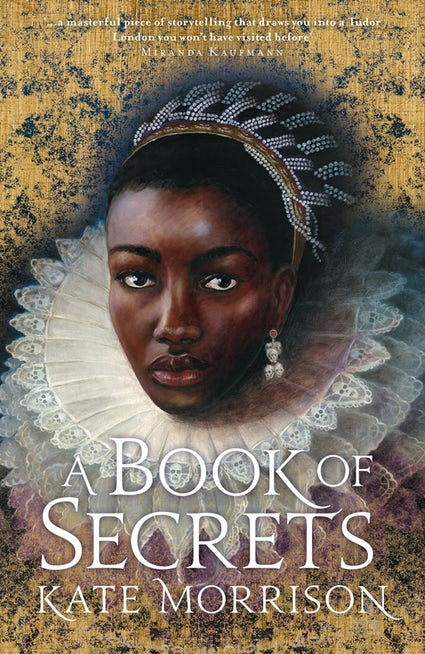 A Book of Secrets by Kate Morrison (eARC, courtesy of Jacaranda Books and Random Things Tours)
A Book of Secrets is the story of a woman named Susan Charlewood living in Elizabethan England. Born in what is now Ghana, Susan is enslaved by the Portuguese but later rescued by British sailors, who bring her to England. Once in England, she is raised and educated in an English Catholic household.
When Susan comes of age, the family marry her off to an older Catholic man, John Charlewood. Charlewood runs a printing press and uses it to supply the Papist nobility with illegal Catholic texts and foment rebellion amongst the Catholic underclass. When Charlewood dies, Susan takes over the business and uses her new position to find out more about her origins.
A look at racial relationships on the eve of the beginning of the transatlantic slave trade, A Book of Secrets is a revealing and compelling glimpse into a fraught time.
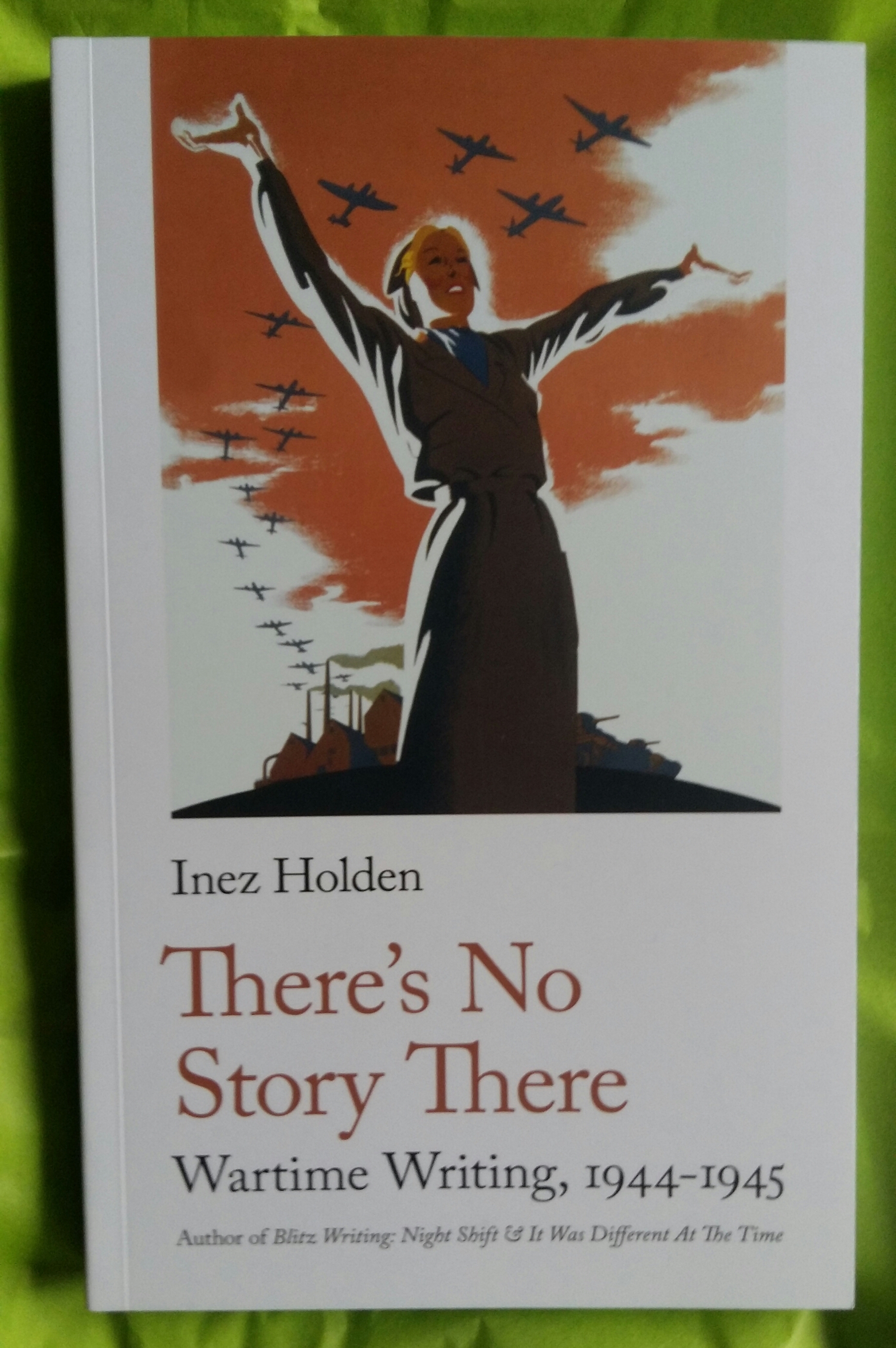 There’s No Story There: Wartime Writing, 1944-45 by Inez Holden (paperback, Handheld Press)
There’s No Story There is about the lives of conscripted workers at Statevale, an enormous rural munitions factory somewhere in England during the Second World War. The workers are making shells and bombs, and no chances can be taken with so much high explosive around. Trolleys are pushed slowly, workers wear rubber-soled soft shoes, and put protective cream on their faces. Any kind of metal, moving fast, can cause a spark, and that would be fatal. All cigarettes and matches are handed in before the workers can enter the danger zone, and they wear asbestos suits.
This remarkable novel from 1944 about wartime life and work is a companion to Blitz Writing (2019), Handheld Press’s edition of Inez Holden’s novella Night Shift (1941) and her wartime diaries It Was Different At The Time (1943). This edition of There’s No Story There includes three pieces of Holden’s long-form journalism, detailing wartime life.
Recently finished
Links from the titles will take you to my review.
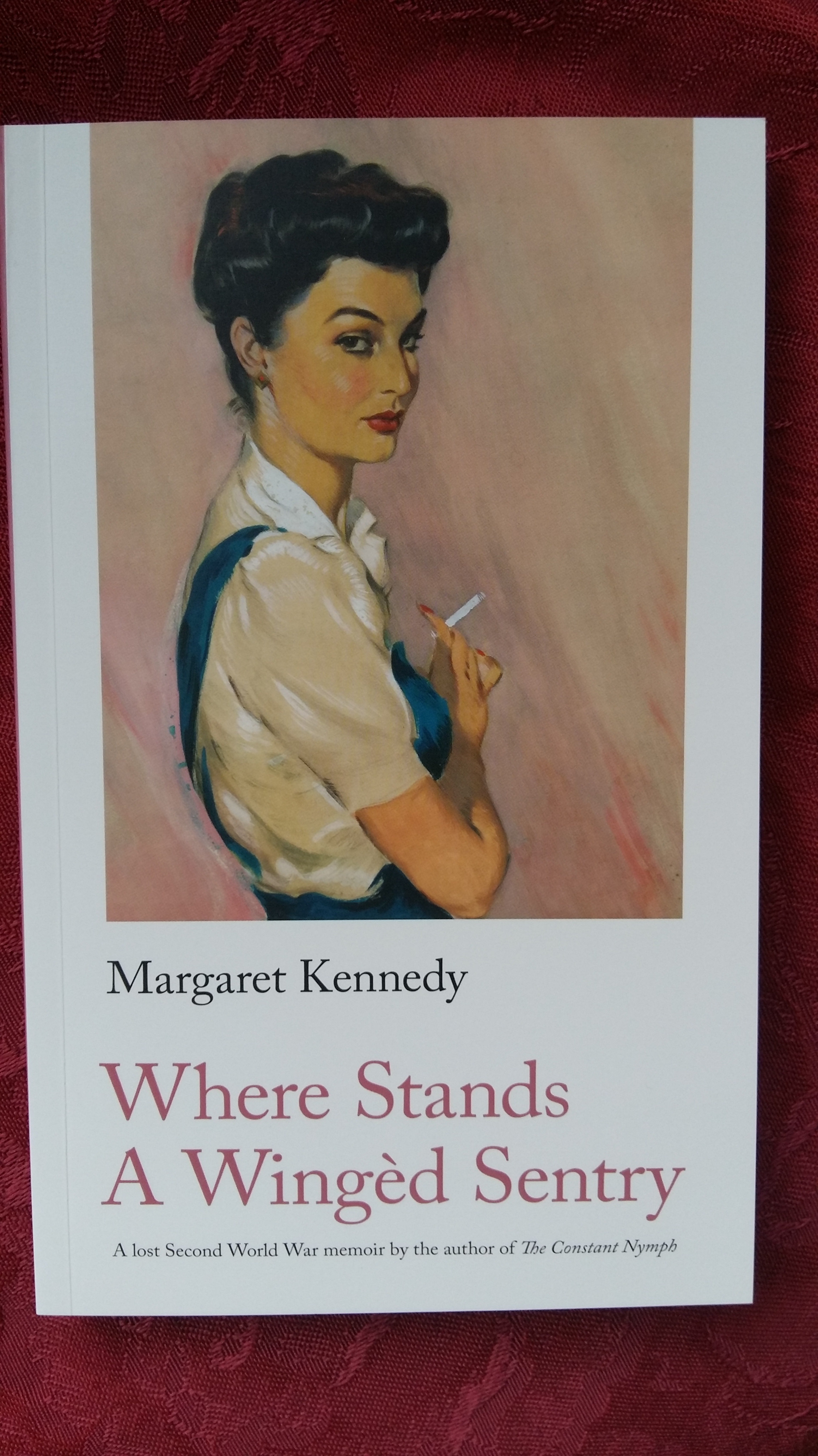
Where Stands A Wingèd Sentry by Margaret Kennedy
Blood Runs Thicker (A Bradecote and Catchpoll Investigation #8) by Sarah Hawkswood
The Spanish Girl by Jules Hayes
You Let Me Go by Eliza Graham (eARC, courtesy of Lake Union Publishing and Rachel’s Random Resources)
The Consequences of Fear (Maisie Dobbs #16) by Jacqueline Winspear
September 1941. While on a delivery, young Freddie Hackett, a message runner for a government office, witnesses an argument that ends in murder. Crouching in the doorway of a bombed-out house, Freddie waits until the coast is clear. But when he arrives at the delivery address, he’s shocked to come face to face with the killer.
Dismissed by the police when he attempts to report the crime, Freddie goes in search of a woman he once met when delivering a message: Maisie Dobbs. While Maisie believes the boy and wants to help, she must maintain extreme caution: she’s working secretly for the Special Operations Executive, assessing candidates for crucial work with the French resistance. Her two worlds collide when she spots the killer in a place she least expects. She soon realizes she’s been pulled into the orbit of a man who has his own reasons to kill – reasons that go back to the last war.
As Maisie becomes entangled in a power struggle between Britain’s intelligence efforts in France and the work of Free French agents operating across Europe, she must also contend with the lingering question of Freddie Hackett’s state of mind. What she uncovers could hold disastrous consequences for all involved. (Review to follow for blog tour)
The Rose Code by Kate Quinn
1940. As England prepares to fight the Nazis, three very different women answer the call to mysterious country estate Bletchley Park, where the best minds in Britain train to break German military codes. Vivacious debutante Osla is the girl who has everything – beauty, wealth, and the dashing Prince Philip of Greece sending her roses – but she burns to prove herself as more than a society girl, and puts her fluent German to use as a translator of decoded enemy secrets. Imperious self-made Mab, product of east-end London poverty, works the legendary codebreaking machines as she conceals old wounds and looks for a socially advantageous husband. Both Osla and Mab are quick to see the potential in local village spinster Beth, whose shyness conceals a brilliant facility with puzzles, and soon Beth spreads her wings as one of the Park’s few female cryptanalysts. But war, loss, and the impossible pressure of secrecy will tear the three apart.
1947. As the royal wedding of Princess Elizabeth and Prince Philip whips post-war Britain into a fever, three friends-turned-enemies are reunited by a mysterious encrypted letter – the key to which lies buried in the long-ago betrayal that destroyed their friendship and left one of them confined to an asylum. A mysterious traitor has emerged from the shadows of their Bletchley Park past, and now Osla, Mab, and Beth must resurrect their old alliance and crack one last code together. But each petal they remove from the rose code brings danger – and their true enemy – closer… (Review to follow for blog tour)


What Cathy (will) Read Next
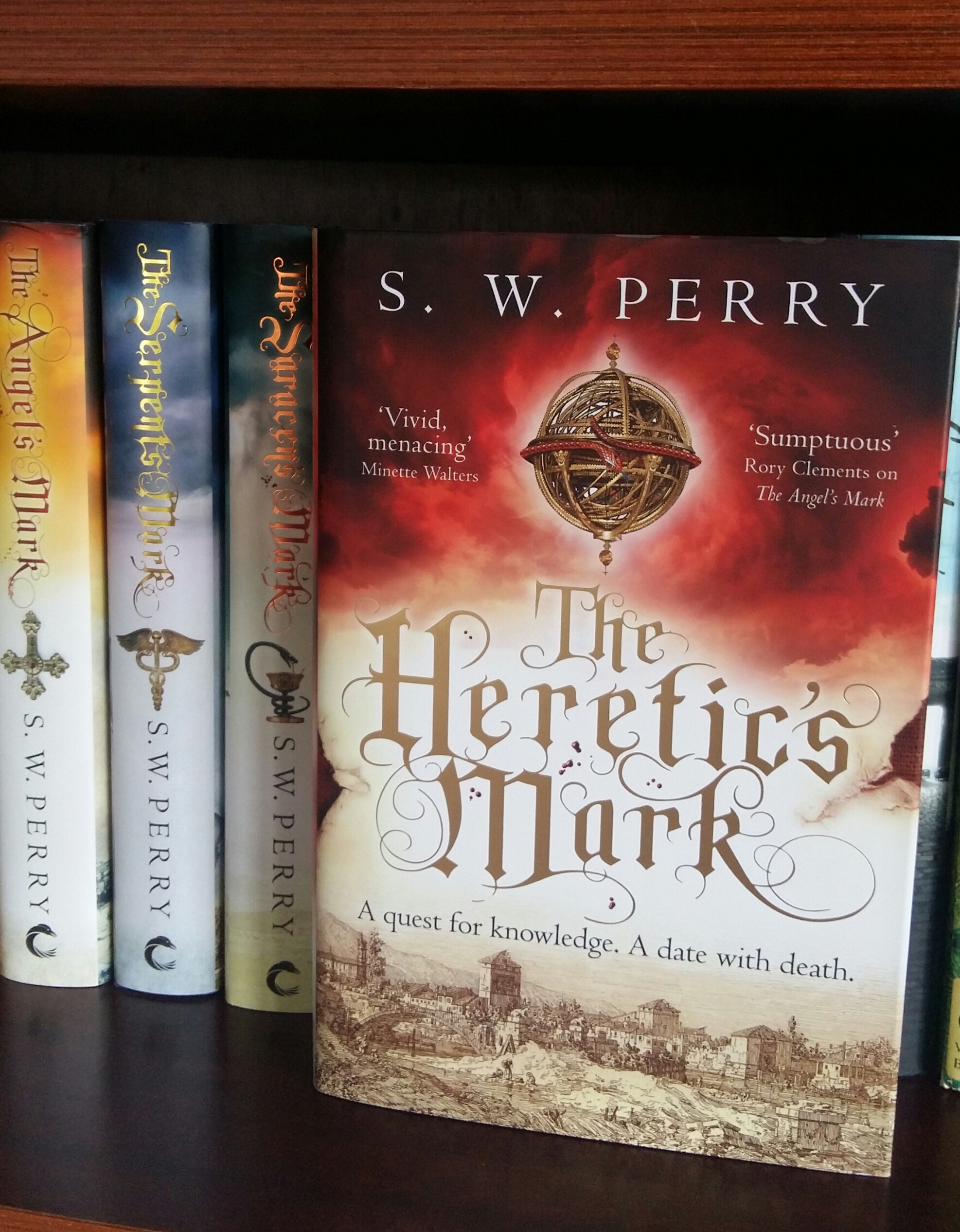 The Heretic’s Mark (Jackdaw Mysteries #4) by S. W. Perry (ARC, courtesy of Corvus and Readers First)
The Elizabethan world is in flux. Radical new ideas are challenging the old. But the quest for knowledge can lead down dangerous paths.
London, 1594. The Queen’s physician has been executed for treason, and conspiracy theories flood the streets. When Nicholas Shelby, unorthodox physician and unwilling associate of spymaster Robert Cecil, is accused of being part of the plot, he and his new wife Bianca must flee for their lives.
With agents of the Crown on their tail, they make for Padua, following the ancient pilgrimage route, the Via Francigena. But the pursuing English aren’t the only threat Nicholas and Bianca face. Hella, a strange and fervently religious young woman, has joined them on their journey. When the trio finally reach relative safety, they become embroiled in a radical and dangerous scheme to shatter the old world’s limits of knowledge. But Hella’s dire predictions of an impending apocalypse, and the brutal murder of a friend of Bianca’s forces them to wonder: who is this troublingly pious woman? And what does she want?

 About the Book
 About the Author

