#WWWWednesday – 17th September 2025

Hosted by Taking on a World of Words, this meme is all about the three Ws:

  • What are you currently reading?
  • What did you recently finish reading?
  • What do you think you’ll read next?

Why not join in too?  Leave a comment with your link at Taking on a World of Words and then go blog hopping!


I’m reading Venetian Vespers on my Kindle, a physical copy of The Story of a Heart for my book club and (still) listening to the audiobook of Tombland.
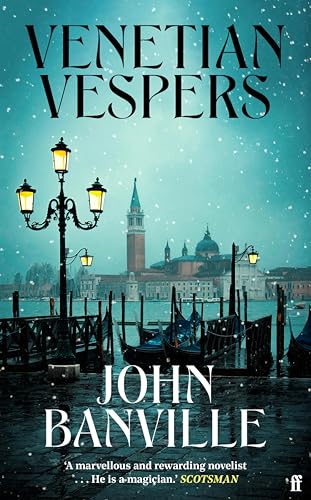
Venetian Vespers by John Banville (Faber & Faber via NetGalley)

Everything was a puzzle, everything a trap set to mystify and hinder me. . .

Winter 1899, and strange things are afoot. As the new century approaches, English hack writer Evelyn Dolman marries Laura Rensselaer, the daughter of a wealthy American plutocrat. But in the midst of a rift between Laura and her father, Evelyn’s plans for a substantial inheritance look to be dashed.

Arriving in Venice for their belated honeymoon at Palazzo Dioscuri – the ancestral home of the charming but treacherous Count Barbarigo – the couple are met by a series of seemingly
otherworldly occurrences, which exacerbate Evelyn’s already frayed nerves. Is it just the sea mist blanketing the floating city, or is he really losing his mind?

The Story of a Heart by Rachel Clarke (Abacus)

The first of our organs to form, the last to die, the heart is both a simple pump and the symbol of all that makes us human: as long as it continues to beat, we hope.

One summer day, nine-year-old Keira suffered catastrophic injuries in a car accident. Though her brain and the rest of her body began to shut down, her heart continued to beat. In an act of extraordinary generosity, Keira’s parents and siblings agreed that she would have wanted to be an organ donor. Meanwhile nine-year-old Max had been hospitalised for nearly a year with a virus that was causing his young heart to fail. When Max’s parents received the call they had been hoping for, they knew it came at a terrible cost to another family.

This is the unforgettable story of how one family’s grief transformed into a lifesaving gift. With tremendous compassion and clarity, Dr Rachel Clarke relates the urgent journey of a young girl’s heart and explores a history of remarkable medical innovations , stretching back over a century and involving the knowledge and dedication not just of surgeons but of countless physicians, immunologists, nurses and scientists.
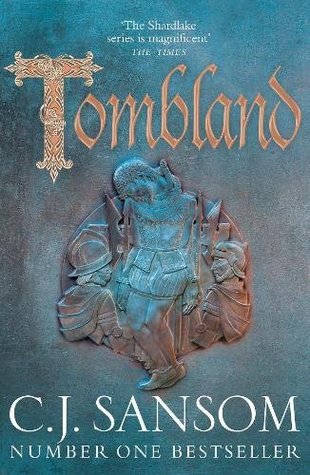
Tombland by C. J. Sansom (Mantle)

Spring, 1549. Two years after the death of Henry VIII, England is sliding into chaos.

The nominal king, Edward VI, is 11 years old. His uncle, Edward Seymour, Lord Hertford, rules as Edward’s regent and Protector. In the kingdom, radical Protestants are driving the old religion into extinction, while the Protector’s prolonged war with Scotland has led to hyperinflation and economic collapse. Rebellion is stirring among the peasantry.

Matthew Shardlake has been working as a lawyer in the service of Henry’s younger daughter, the lady Elizabeth. The gruesome murder of one of Elizabeth’s distant relations, rumored to be politically murdered, draws Shardlake and his companion Nicholas to the lady’s summer estate, where a second murder is committed.

As the kingdom explodes into rebellion, Nicholas is imprisoned for his loyalty, and Shardlake must decide where his loyalties lie – with his kingdom, or with his lady?

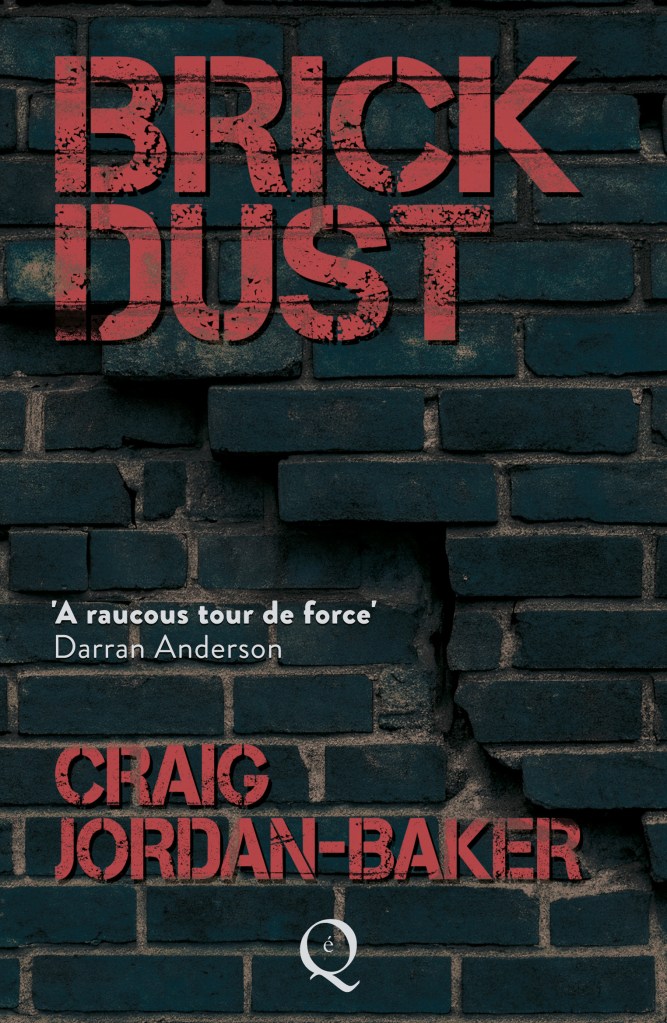
Brick Dust by Craig Jordan-Baker (epoque press)

All the Lives We Never Lived by Anuradha Roy (MacLehose)

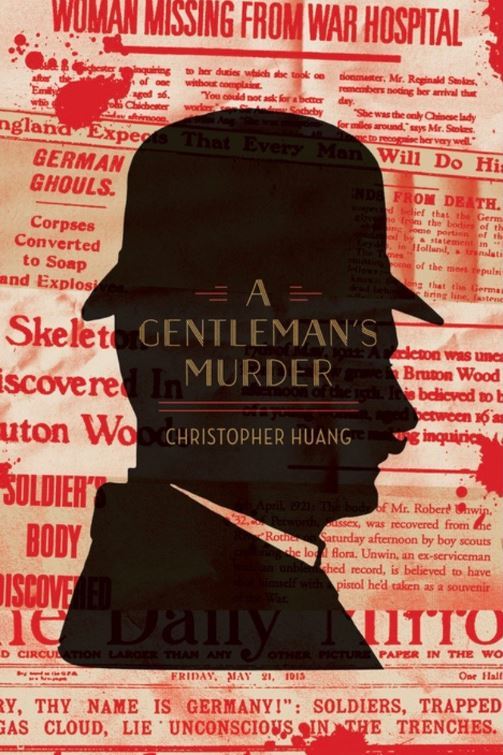
A Gentleman’s Murder by Christopher Huang (Inkshares)
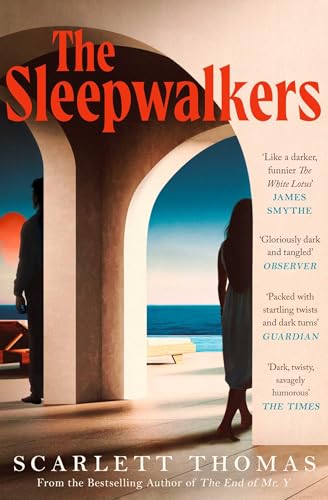
The Sleepwalkers by Scarlett Thomas (Scribner)

Still reeling from the chaos of their wedding, Evelyn and Richard arrive on an idyllic Greek island for their honeymoon. It’s the end of the season and out at sea a storm is brewing.

They check in to an exclusive hotel, the Villa Rosa, where the proprietor Isabella flirts outrageously with Richard while treating Evelyn with a rudeness bordering on contempt. Isabella tells them the story of ‘the sleepwalkers’: a couple who stayed at the hotel the year before and drowned in a tragic and unexplained accident. It starts to feel like the entire island is obsessed with ‘the sleepwalkers’, but what at first seems like a fun tale to tell before bed quickly evolves into a living nightmare.

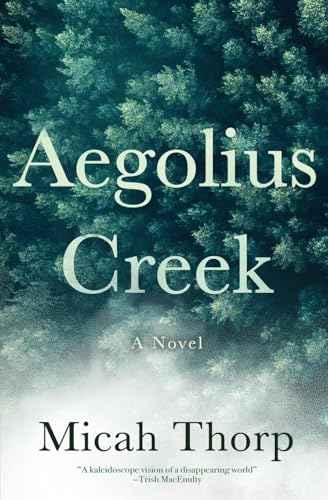
A publication day interview with Micah Thorp, author of Aegolius Creek @TypeEighteenBks

My guest today is Micah Thorp whose novel, Aegolius Creek is published today by Type Eighteen Books. Congratulations, Micah! Read on as I chat with Micah about Aegolius Creek and the inspiration behind it.


About the Book

Don Karlsson has lived on his family’s Oregon homestead for most of his life. The timber on his land is his greatest asset—planted and replenished by his hand, maintained with his labor and sweat, and harvested for income at his discretion.

After a new species of voles is discovered living in those trees, authorities step in to protect the creatures, and Karlsson fights back. No one can tell him what to do with his property. He enlists the help of his children: Billy, a local who understands his father’s connection to the land; Stacy, a fierce attorney from Boston determined to represent her father’s interests—even if they go against her own; and the beloved and sensitive youngest, Zeke, who organizes local environmentalists to make sure his father does not win.

The impending confrontation engulfs the community and competing interests—local businesses and political groups, infiltrators seeking profit—with the Karlsson family at the center, still trying to reconcile the loss of Don’s wife and their mother, Marlene. Tempers flare, desperate acts are taken, and the courtroom battle spills over into protests and riots, leading to a riveting and stunning conclusion.

Format: Paperback (198 pages) Publisher: Type Eighteen Books
Publication date: 16th September 2025 Genre: Contemporary Fiction

Find Aegolius Creek on Goodreads

Purchase Aegolius Creek from Amazon UK or Type Eighteen Books


Interview with Micah Thorp, author of Aegolius Creek

What was the inspiration for the story?

The most famous book about western Oregon, Sometimes a Great Notion, was written by Ken Kesey in the 1960s. He was well known for One Flew Over a Cuckoo’s Nest (and a rather eccentric bus ride he took with the Grateful Dead), but Sometimes a Great Notion is considered by many to be his best work. It’s a story about a rural Oregon family running a small timber company in the mid twentieth century.

I grew up not far from where Kesey lived and had relatives in the area described by his Oregon novel. There was a certain culture that existed in the mid twentieth century in rural western Oregon; rugged and very independent, that I understood well. During my youth that culture dramatically changed. Conflict over harvesting timber on public lands pitted the environmental community against local blue-collar workers. The subsequent changes led to the dismantling of much of the industry. I wanted to write about the effect those changes had on the people and communities that went through them.

Why did you particularly want to explore the conflict between individual rights and environmental concerns?

Aside from the conflict that surrounded my upbringing, I think the topic is prescient. We are in the midst of a period in which concerns about climate change are going to be confronted by groups that must give something up to slow global warming. Understanding and resolving these conflicts is necessary to bring about change.

A central problem in these confrontations is a level of certainty that pervades different groups which often undermines the very position they advocate. In Aegolius Creek I tried to carefully balance the differing points of view and let the reader empathize with all of them. This particular conflict (land rights vs environment protection) isn’t particularly unique in the sense that the problem is complicated, while the arguments about it are simplistic. Only when you dig into the details are you confronted by implications of completely adopting one point of view – which is generally destructive. Dialectical thinking isn’t easily adapted by most, but it makes great fodder for a writer.

How important to the story is the book’s setting?

Very. The book is about place, both as a concept and a reality. Aegolius Creek is a fictional place, but quite similar to a number of different rural areas up and down the Willamette Valley. In order to make Aegolius Creek feel real, I devoted a short soliloquy about the Aegolius Creek Valley at the beginning of each chapter, a number of which are based on the real characteristics of real communities.

How did you go about creating your main character, Don Karlsson?

I had family members that could be a pretty easily substitute for Don – hard working, intense and remarkably reflective. He doesn’t change much through the course of the book – he’s an anchor for the story and the other characters revolve around him.

One of the important things I knew I needed to do with Don was detail the complexities of his point of view. It would be hard to empathize with him without his backstory or appreciating his point of view in some detail. With a pretty quiet, austere personality it was important to get inside his head a bit.

Were there any scenes that were particularly challenging to write? If so why?

The climactic scene in the book (which I won’t spoil) was difficult because I wanted to write it from a number of different perspectives all at once without losing any of the emotional punch. It made the sequencing difficult.

One of the things I was aware of as I was writing was juxtaposing point of view and tense. The prologue and epilogue are in first person past tense, from the point of view of a character that isn’t in the rest of the book. In the body of the story I primarily use third person present tense, but there are places where Don’s point of view is italicized in first person present or past tense.

The book has been described as ‘a vision of a disappearing world’. Do you agree with this assessment?

Yes and no….

There were a number of changes that occurred between the 1970s and 2000’s that affected the timber industry and all the communities built around it. The inability to cut timber on public lands obviously had an effect as did the subsidizing of Canadian logging. Automation reduced the number of loggers and millworkers needed. The lost tax revenues timber communities needed to support their public services were initially offset by funding from the federal government, but eventually the lack of jobs led to their decline.

With all these difficulties, the timber industry is still alive, if only a shell of its former self. At its peak Oregon timber harvests were around 10 billion board feet a year. By 2010 they had declined to less than a quarter of that.

Timber communities haven’t gone away, but many are a shell of what they once were.

Thank you, Micah, for such fascinating answers to my questions.


About the Author

Micah Thorp is a physician, writer, and lifelong Oregonian. His research has been published in numerous medical journals, and his short fiction has appeared in various literary journals. His first novel, Uncle Joe’s Muse, won a 2022 Next Generation Indie Book Award and a Foreword Indies Book of the Year Award. His sequel, Uncle Joe’s Senpai, was a finalist for the Foreword Indies Book of the Year Award. Micah’s novel, Aegolius Creek, is the recipient of a 2025 IPPY Independent Publisher Book Award: West-Pacific Best Regional Fiction.

Connect with Micah
Website | Instagram | Goodreads