#BookReview The Redeemed by Tim Pears

The RedeemedAbout the Book

It is 1916. The world has gone to war, and young Leo Sercombe, hauling coal aboard the HMS Queen Mary, is a long way from home. The wild, unchanging West Country roads of his boyhood seem very far away from life aboard a battle cruiser, a universe of well-oiled steel, of smoke and spray and sweat, where death seems never more than a heartbeat away.

Skimming through those West Country roads on her motorcycle, Lottie Prideaux defies the expectations of her class and sex as she covertly studies to be a vet. But the steady rhythms of Lottie’s practice, her comings and goings between her neighbours and their animals, will be blown apart by a violent act of betrayal, and a devastating loss.

In a world torn asunder by war, everything dances in flux: how can the old ways life survive, and how can the future be imagined, in the face of such unimaginable change? How can Leo, lost and wandering in the strange and brave new world, ever hope to find his way home?

Format: Paperback (400 pages)    Publisher: Bloomsbury
Publication date: 13th June 2019 Genre: Historical Fiction

Find The Redeemed on Goodreads

Purchase links
Bookshop.org
Disclosure: If you buy a book via the above link, I may earn a commission from Bookshop.org, whose fees support independent bookshops

Hive | Amazon UK
Links provided for convenience only, not as part of an affiliate programme


My Review

Shortlisted for The Walter Scott Prize for Historical Fiction 2020, The Redeemed is the final book in Tim Pears’s West Country trilogy. The first two books in the trilogy – The Horseman and The Wanderers – made the longlists for The Walter Scott Prize in 2018 and 2019 respectively.  The Redeemed continues the stories of Leo Sercombe and Lottie Prideaux from the previous two books; the events in their lives being told in parallel and only converging at the end of the book.

Part one of the book recounts Leo’s experiences serving in the Navy aboard a coal-powered battle cruiser, during which he witnesses the Battle of Jutland and its deadly aftermath. Meanwhile Lottie, much to the dismay of her father’s new wife, has become assistant to the local vet, learning how to treat sick farm and domestic animals. It’s a changing world in which conscription has robbed estates, like those owned by Lottie’s father, of farm workers but there is also the possibility of new opportunities for women. Lottie’s ambition is to study veterinary science but all that is put at risk by a violent act from a quite unexpected quarter.

In the mistaken belief that his future lies elsewhere, part three of the book sees Leo, now a qualified diver, employed in a bold scheme to raise the battleships scuttled by the German navy in Scapa Flow at the end of the war. Leo undertakes this dangerous work to pursue his dream of earning enough money to purchase a piece of land where he can return to his first love, working with horses. Despite everything, he keeps alive the hope that he will be able to fulfil a promise made long ago.

Each part of the book contains an immense amount of detail: about daily life aboard a battleship, the care of horses and cattle, or the steps needed to float a submerged ship. Flowing throughout the book, however, is a deep sense of the natural world.  Eventually, the stories of Leo and Lottie converge and what follows is touching and intensely moving both for its intensity and its transcience.

The Redeemed is like a long train journey where, whilst you’re keen to reach your destination, there’s also immense joy to be found in watching the beautiful scenery go by.

In three words: Lyrical, moving, immersive

Try something similar: The Winter Soldier by Daniel Mason


Time Pears authorAbout the Author

Born in 1956, Tim Pears grew up in Devon and left school at sixteen. He worked in a wide variety of unskilled jobs: trainee welder, assistant librarian, trainee reporter, archaeological worker, fruit picker, nursing assistant in a psychiatric ward, groundsman in a hotel & caravan park, fencer, driver, sorter of mail, builder, painter & decorator, night porter, community video maker and art gallery manager in Devon, Wales, France, Norfolk and Oxford.

Always he was writing, and in time making short films. He took the Directing course at the National Film and Television School, graduating in the same month that his first novel, In the Place of Fallen Leaves, was published, in 1993. In the Place of Fallen Leaves was awarded the Hawthornden Prize and the Ruth Hadden Memorial Award.

Tim’s second novel, In a Land of Plenty, was made into a ten-part drama series for the BBC broadcast in 2001. Other novels include  A Revolution of the Sun, Wake Up, Blenheim Orchard, Landed and Disputed Land. Landed was given the MJA Open Book Award and was shortlisted for the Royal Society of Literature Ondaatje Prize and the IMPAC Dublin Literary Award.

In the Light of Morning was a departure, set in Yugoslavia in the Second World War. Tim then embarked on his most ambitious work, a trilogy of novels (The Horseman, The Wanderers and The Redeemed) set before, during and in the aftermath of the First World War.

Tim is a Fellow of the Royal Society of Literature. (Bio credit: Author website/Photo credit: Goodreads author page)

Connect with Tim
Website | Goodreads

#WWWWednesday – 29th September 2021

WWWWednesdays

Hosted by Taking on a World of Words, this meme is all about the three Ws:

  • What are you currently reading?
  • What did you recently finish reading?
  • What do you think you’ll read next?

Why not join in too?  Leave a comment with your link at Taking on a World of Words and then go blog hopping!


Currently reading

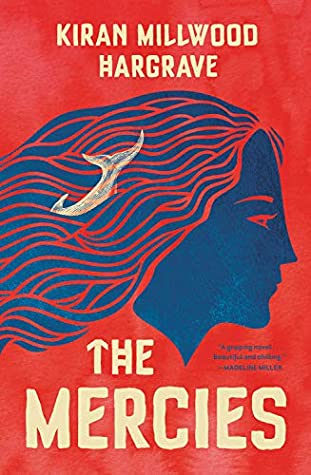
The Mercies AudioThe Mercies by Kiran Millwood Hargrave (audiobook, Little Brown)

Finnmark, Norway, 1617. Twenty-year-old Maren Bergensdatter stands on the craggy coast, watching the sea break into a sudden and reckless storm. Forty fishermen, including her brother and father, are drowned and left broken on the rocks below. With the menfolk wiped out, the women of the tiny Northern town of Vardø must fend for themselves.

Three years later, a sinister figure arrives. Absalom Cornet comes from Scotland, where he burned witches in the northern isles. He brings with him his young Norwegian wife, Ursa, who is both heady with her husband’s authority and terrified by it. In Vardø, and in Maren, Ursa sees something she has never seen before: independent women. But Absalom sees only a place untouched by God and flooded with a mighty evil.

As Maren and Ursa are pushed together and are drawn to one another in ways that surprise them both, the island begins to close in on them with Absalom’s iron rule threatening Vardø’s very existence.

A Woman Made of SnowA Woman Made of Snow by Elisabeth Gifford (eARC, Corvus)

Scotland, 1949: Caroline Gillan and her new husband Alasdair have moved back to Kelly Castle, his dilapidated family estate in the middle of nowhere. Stuck caring for their tiny baby, and trying to find her way with an opinionated mother-in-law, Caroline feels adrift, alone and unwelcome.

But when she is tasked with sorting out the family archives, Caroline discovers a century-old mystery that sparks her back to life. There is one Gillan bride who is completely unknown – no photos exist, no records have been kept – the only thing that is certain is that she had a legitimate child. Alasdair’s grandmother.

As Caroline uncovers a strange story that stretches as far as the Arctic circle, her desire to find the truth turns obsessive. And when a body is found in the grounds of the castle, her hunt becomes more than just a case of curiosity. What happened all those years ago? Who was the bride? And who is the body…?

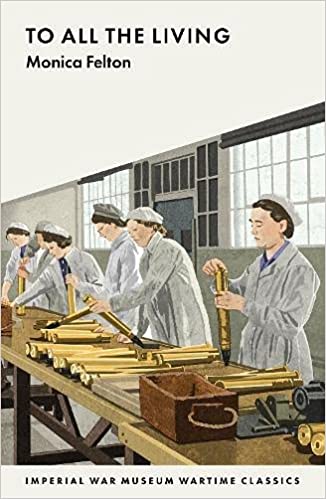
To All The LivingTo All the Living by Monica Felton (ARC, Imperial War Museum)

In January 1941 Griselda Green arrives at Blimpton, a place ‘so far from anywhere as to be, for all practical purposes, nowhere.’

Monica Felton’s 1945 novel gives a lively account of the experiences of a group of men and women working in a munitions factory during the Second World War. Wide-ranging in the themes it touches on, including class, sexism, socialism, fear of communism, workers’ rights, anti-semitism, and xenophobia, the novel gives a vivid portrayal of factory life and details the challenges, triumphs and tragedies of a diverse list of characters. Adding another crucial female voice to the Wartime Classics series, To All the Living provides a fascinating insight into a vital aspect of Britain’s home front.

Small PleasuresSmall Pleasures by Clare Chambers (Weidenfeld & Nicolson) 

1957, south-east suburbs of London. Jean Swinney is a feature writer on a local paper, disappointed in love and — on the brink of forty — living a limited existence with her truculent mother: a small life from which there is no likelihood of escape. When a young Swiss woman, Gretchen Tilbury, contacts the paper to claim that her daughter is the result of a virgin birth, it is down to Jean to discover whether she is a miracle or a fraud.

But the more Jean investigates, the more her life becomes strangely (and not unpleasantly) intertwined with that of the Tilburys: Gretchen is now a friend, and her quirky and charming daughter Margaret a sort of surrogate child. And Jean doesn’t mean to fall in love with Gretchen’s husband, Howard, but Howard surprises her with his dry wit, his intelligence and his kindness — and when she does fall, she falls hard. But he is married, and to her friend — who is also the subject of the story she is researching for the newspaper, a story that increasingly seems to be causing dark ripples across all their lives. And yet Jean cannot bring herself to discard the chance of finally having a taste of happiness…

But there will be a price to pay, and it will be unbearable. 


Recently finished

Splinter on the Tide by Phillip Parotti (Casemate Publishing)

The Tale of the Tailor and the Three Dead Kings by Dan Jones (Head of Zeus)

House of Beauty by Melba Escobar, translated by Elizabeth Bryer (4th Estate)

The Redeemed (West Country Trilogy #3) by Tim Pears, narrated by Jonathan Keeble (Isis Audio)


What Cathy (will) Read Next

An Extra Pair of HandsAn Extra Pair of Hands by Kate Mosse (Profile Books)

As our population ages, more and more of us find ourselves caring for parents and loved ones – some 8.8 million people in the UK. An invisible army of carers holding families together.

Here, Kate Mosse tells her own personal story of finding herself a carer in middle age: first, helping her heroic mother care for her beloved father through Parkinson’s, then supporting her mother in widowhood, and finally as ‘an extra pair of hands’ for her 90-year-old mother-in-law.

This is a story about the gentle heroism of our carers, about small everyday acts of tenderness, and finding joy in times of crisis. It’s about juggling priorities, mind-numbing repetition, about guilt and powerlessness, about grief, and the solace of nature when we’re exhausted or at a loss. It is also about celebrating older people, about learning to live differently – and think differently about ageing.

But most of all, it’s a story about love.