My Week in Books – 21st November 2021

MyWeekinBooks

On What Cathy Read Next last week

Monday – As part of NetGalley November, I published my review of Now We Shall Be Entirely Free by Andrew Miller.

Tuesday – I shared my review of historical crime mystery, The Custard Corpses by M J Porter, as part of the blog tour.

Wednesday – WWW Wednesday is the opportunity to share what I’ve just read, what I’m currently reading and what I plan to read next… and to have a good nose around what others are reading. 

Thursday – I shared my publication day review of The Red Monarch by Bella Ellis.

Friday – As part of NetGalley November, I published my review of what was my oldest approval –Eureka by Anthony Quinn. 

Saturday – I published a spotlight feature on the forthcoming book, Christmas Past by John Adcox.

Sunday – I published my review of White Dog by Rupert Whewell as part of the blog tour.

As always, thanks to everyone who has liked, commented on or shared my blog posts on social media.


New arrivals

Make yourself comfortable…
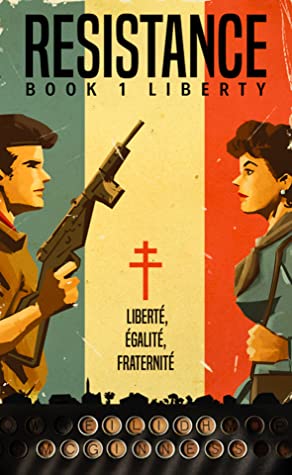
ResistanceResistance by Eilidh Mcginness (eARC)

Bravery, courage, fear, treachery and love in a time of war.

A chance meeting draws Sabine Faure into the shadowy world of the French Resistance where she meets the charismatic Hérisson and his intriguing comrade Loup. Set in Dordogne in South-west France during World War II, the friends’ relationships and strengths are tested to the very limits as life changes in unbelievably horrific ways.

The friends find themselves facing frightening situations and responding in ways they never thought possible as bravery and resistance take different forms in each of their actions.
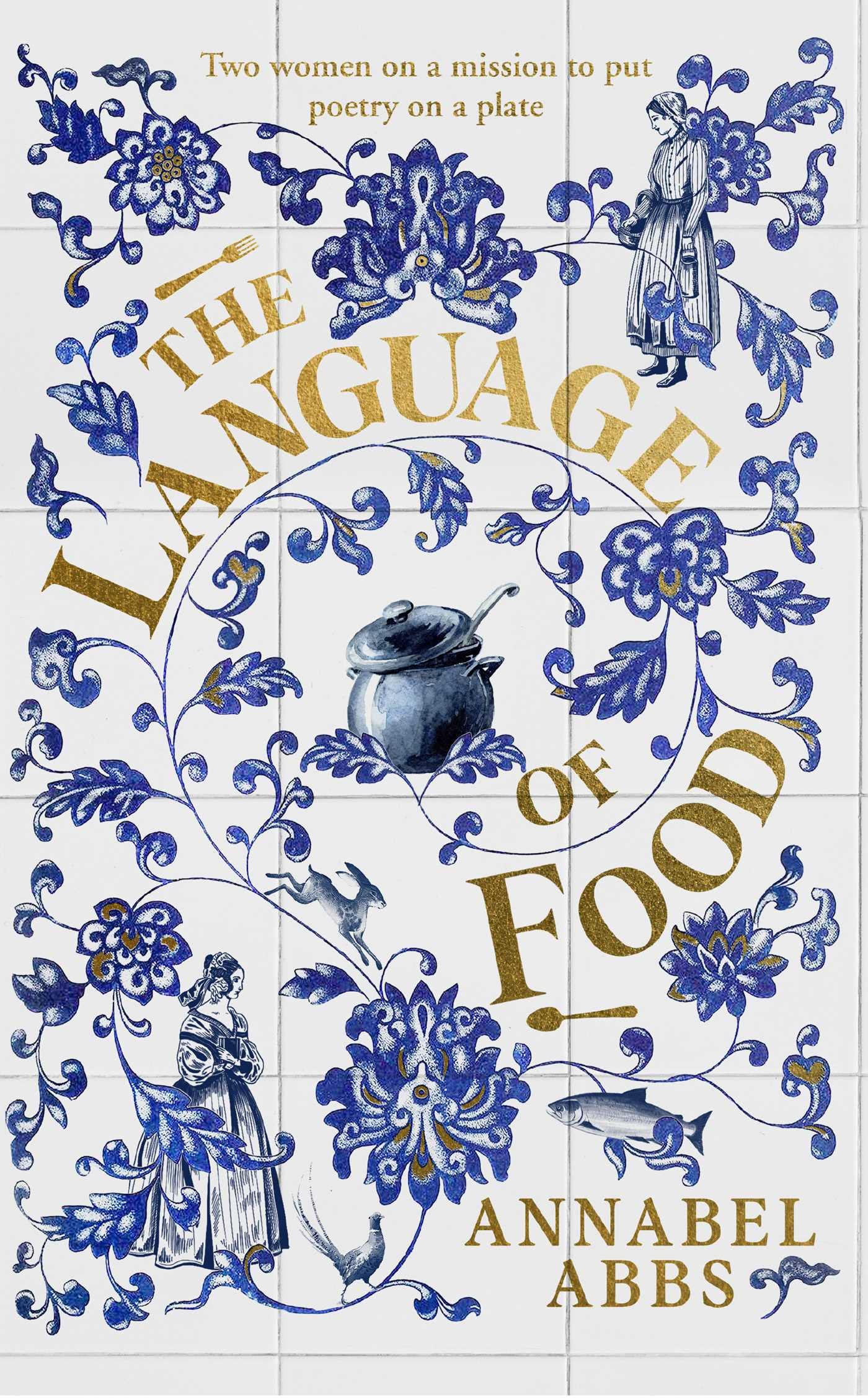
The Language of Food CoverThe Language of Food by Annabel Abbs (eARC, Simon & Schuster)

England 1837. Eliza Acton is a poet who dreams of seeing her words in print. But when she takes her new manuscript to a publisher, she’s told that ‘poetry is not the business of a lady’. Instead, they want her to write a cookery book. England is awash with exciting new ingredients, from spices to exotic fruits. That’s what readers really want from women.

Eliza leaves the offices appalled. But when her father is forced to flee the country for bankruptcy, she has no choice but to consider the proposal. Never having cooked before in her life, she is determined to learn and to discover, if she can, the poetry in recipe writing. To assist her, she hires seventeen-year-old Ann Kirby, the impoverished daughter of a war-crippled father and a mother with dementia.

Over the course of ten years, Eliza and Ann developed an unusual friendship – one that crossed social classes and divides – and, together, they broke the mould of traditional cookbooks and changed the course of cookery writing forever.
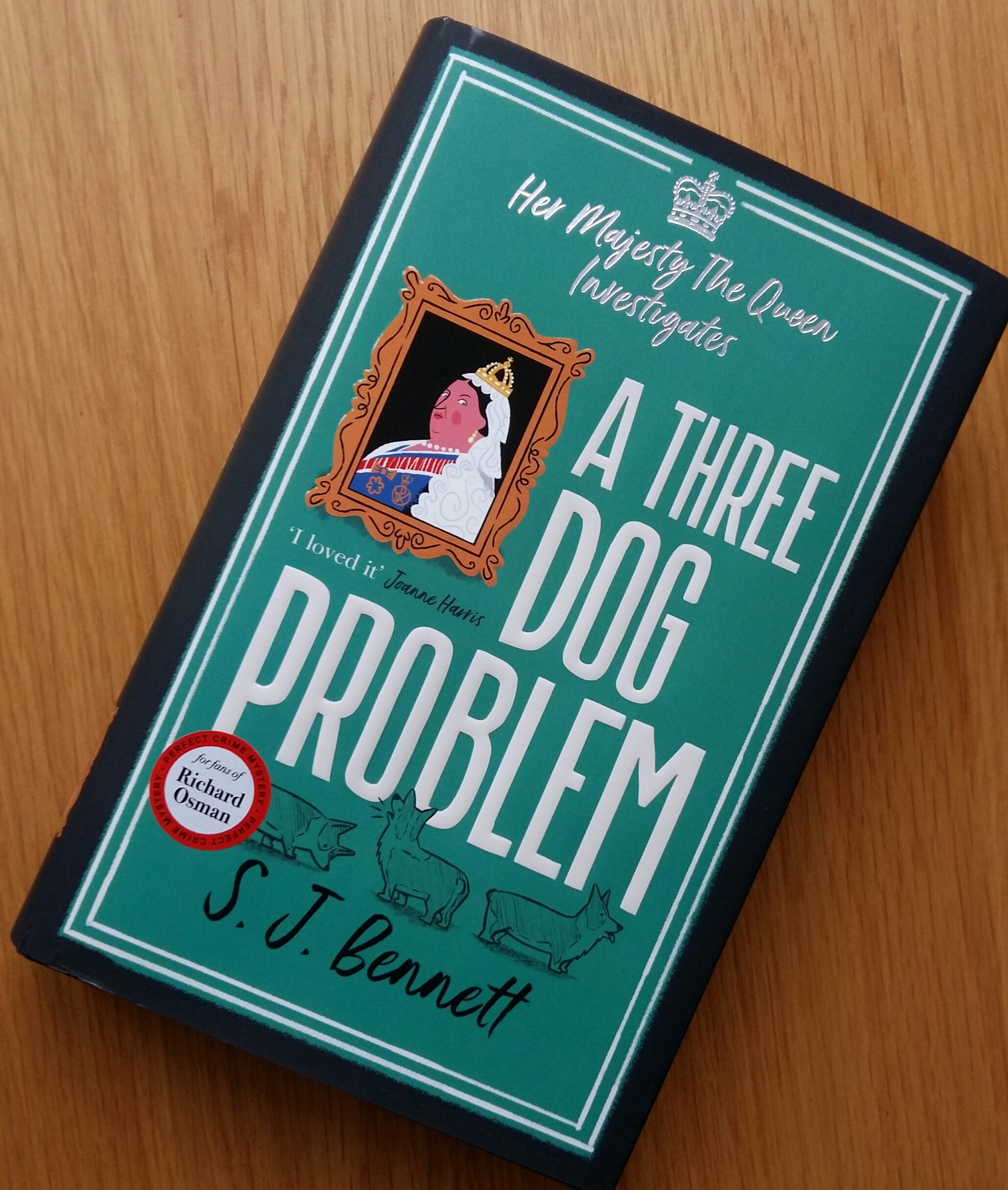
A Three Dog ProblemA Three Dog Problem by S. J. Bennett (eARC, Zaffre via Readers First)

In the wake of a referendum which has divided the nation, the last thing the Queen needs is any more problems to worry about. But when an oil painting of the Royal Yacht Britannia – first given to the Queen in the 1960s – shows up unexpectedly in a Royal Navy exhibition, she begins to realise that something is up.

When a body is found in the Palace swimming pool, she finds herself once again in the middle of an investigation which has more twists and turns than she could ever have suspected. With her trusted secretary Rozie by her side, the Queen is determined to solve the case. But will she be able to do it before the murderer strikes again?

StorytellersStorytellers by Bjørn Larssen (eARC)

In March 1920 Icelandic days are short and cold, but the nights are long. For most, on those nights, funny, sad, and dramatic stories are told around the fire. But there is nothing dramatic about Gunnar, a hermit blacksmith who barely manages to make ends meet. He knows nobody will remember his existence – they already don’t. All he wants is peace, the company of his animals, and a steady supply of his medication. Sometimes he wonders what it would feel like to have a story of his own. He’s about to find out.

Sigurd – a man with a plan, a broken ankle, and shocking amounts of money – won’t talk about himself, but is happy to tell a story that just might get Gunnar killed. The blacksmith’s other “friends” are just as eager to write him into stories of their own – from Brynhildur who wants to fix Gunnar, then marry him, his doctor who is on the precipice of calling for an intervention, The Conservative Women of Iceland who want to rehabilitate Gunnar’s “heathen ways” – even that wicked elf has plans for the blacksmith.

As his defenses begin to crumble, Gunnar decides that perhaps his life is due for a change – on his own terms. But can he avoid the endings others have in mind for him, and forge his own?
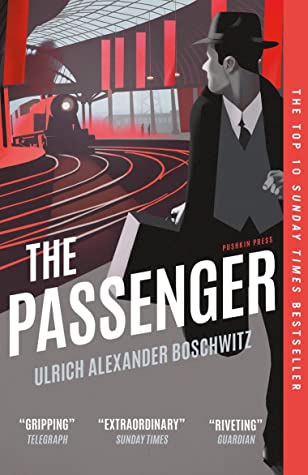
The PassengerThe Passenger by Ulrich Alexander Boschwitz

Berlin, November 1938. With storm troopers battering against his door, Otto Silbermann must flee out the back of his own home. He emerges onto streets thrumming with violence: it is Kristallnacht, and synagogues are being burnt, Jews rounded up and their businesses destroyed.

Turned away from establishments he had long patronised, betrayed by friends and colleagues, Otto finds his life as a respected businessman has dissolved overnight. Desperately trying to conceal his Jewish identity, he takes train after train across Germany in a race to escape this homeland that is no longer home.

BetrayalBetrayal (The Englishman #2) by David Gilman (ARC, Head of Zeus)

Someone’s going to start a war. And Raglan’s just walked into the kill zone.

It has been many years since Dan Raglan served in the French Foreign Legion, but the bonds forged in adversity are unbreakable and when one of his comrades calls for help, Raglan is duty-bound to answer.

An ex-legionnaire, now an intelligence officer at the Pentagon, disappears. He leaves only this message: should he ever go missing, contact Raglan. But Raglan’s not the only one looking for the missing man. From the backstreets of Marseilles, Raglan finds himself following a trail of death that will lead him to Florida, to the camaraderie of a Vietnam vet in Washington D.C., and into the heart of a bitter battle in the upper echelons of the US intelligence community.

Pursued by both the CIA and a rogue female FBI agent, Raglan’s search will place him in the cross hairs of an altogether more lethal organisation. Tracking his old comrade, he finds himself in the midst of deadly conspiracy, and on a journey to a fatal confrontation deep in the Honduran rainforest.
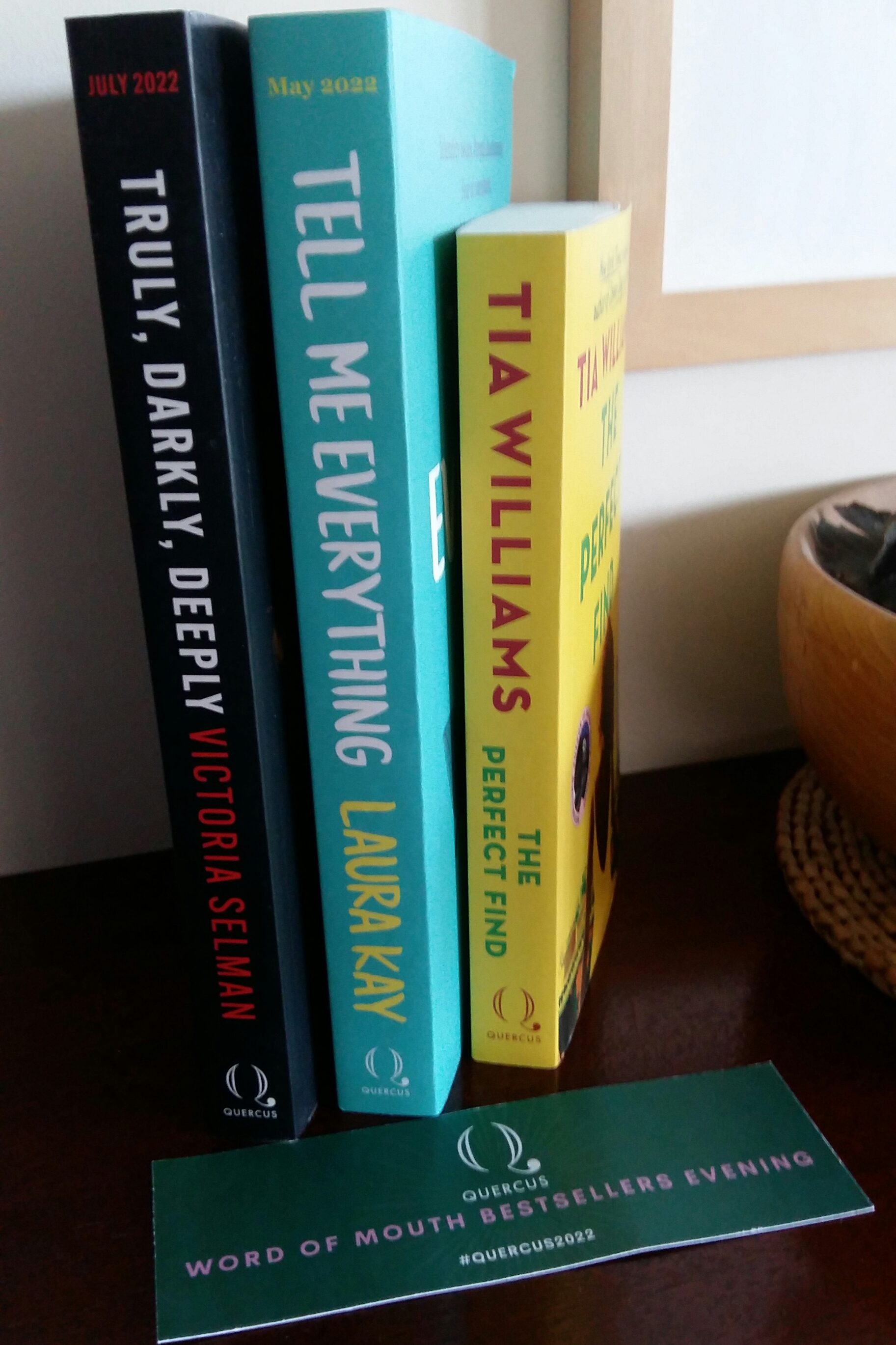
The Perfect Find Tell Me Everything Truly Darkly DeeplyThe Perfect Find by Tia Williams
 Tell Me Everything by Laura Kay
Truly, Darkly, Deeply by Victoria Selman (Proof copies, courtesy of Quercus)

Small Things Like TheseSmall Things Like These by Claire Keegan 

It is 1985, in an Irish town.

During the weeks leading up to Christmas, Bill Furlong, a coal and timber merchant, faces into his busiest season.

As he does the rounds, he feels the past rising up to meet him – and encounters the complicit silences of a people controlled by the Church.


On What Cathy Read Next this week

Currently reading

Planned posts

  • Blog Tour/Book Review: The Dublin Railway Murder by Thomas Morris
  • Book Review: No Way To Die by Tony Kent 
  • Blog Tour/Book Review: The Bookseller’s Secret by Michelle Gable
  • Book Review: Violets by Alex Hyde
  • Book Review: Girl A by Abigail Dean

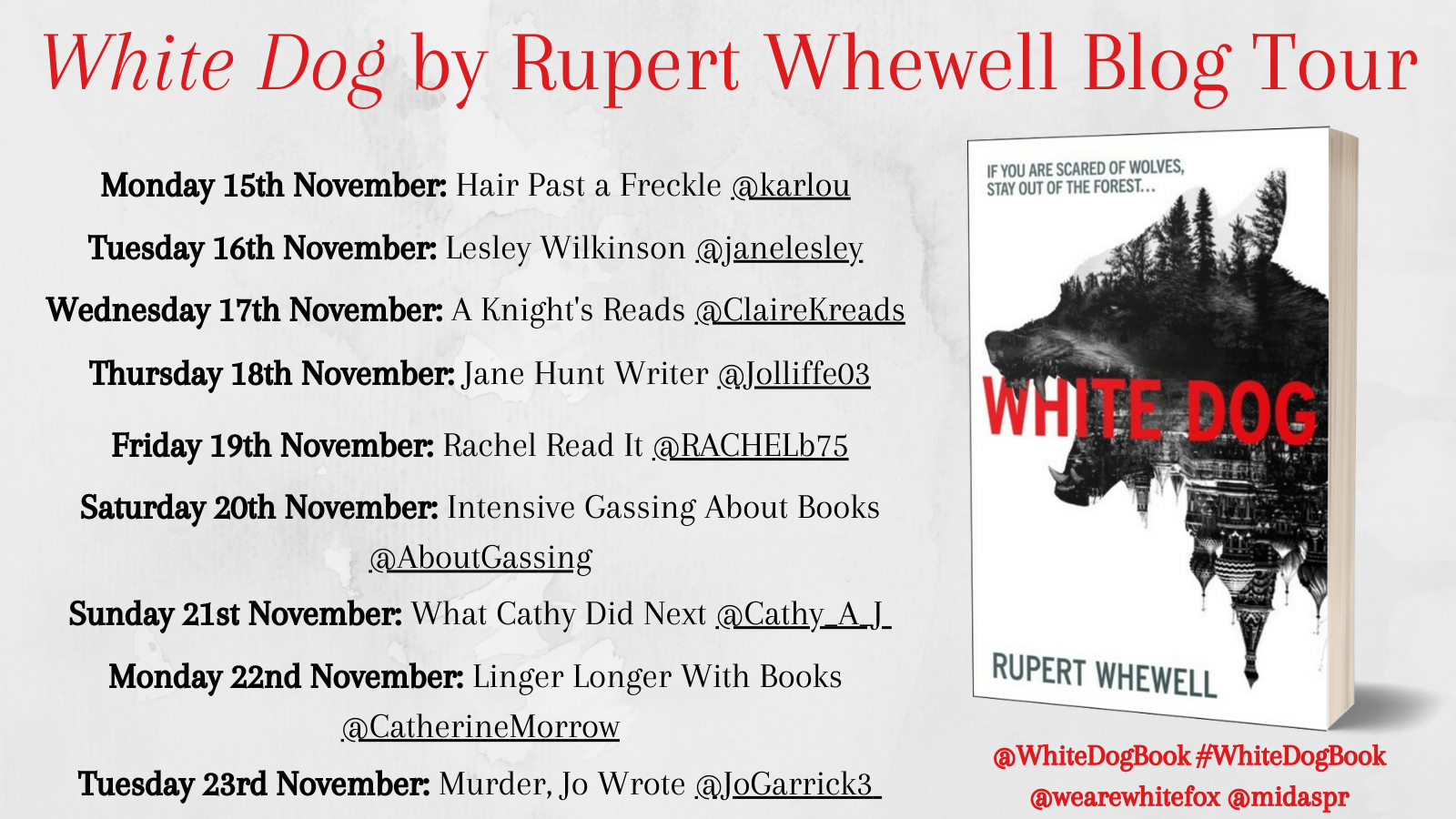
#BlogTour #BookReview White Dog by Rupert Whewell @WhiteDogBook @wearewhitefox

WHITE DOG by Rupert Whewell Blog Tour

Welcome to today’s stop on the blog tour for White Dog by Rupert Whewell. My thanks to Hannah at Midas PR for inviting me to take part in the tour and for my review copy.

White Dog is the only novel from budding author Rupert Whewell, who sadly lost his life in a tragic climbing accident in the Nanda Devi region of the Himalayas. At the time of his death, the manuscript of White Dog was incomplete, with Rupert’s plans for the book’s ending remaining a mystery. As a tribute to her brother and his love of words, Rupert’s sister Lisa Anson worked closely with renowned author John McDonald to complete White Dog, allowing her to come to terms with Rupert’s unexpected passing.

Lisa says: “This book has been a long time in the making. Rupert always loved writing and talked often about his desire to write a book. Distracted by a full life and being present with his family and friends, it remained in the background, referenced, and variously started without real progress. In his late forties, he started to put pen to paper in earnest and White Dog was born. Rupert was a very special person; not just to me – as a lifelong presence – but to his many friends. His tragic death is something I will never get over and will never forget.

I have taken on the task of finishing and publishing his book, which he left 80 percent complete. It was important to me to see his story through and share his writing. It brought me closer to Rupert and I hope it will keep his memory alive for those that knew him and will entertain others who did not.”


White DogAbout the Book

White Dog follows the fortunes of Ryder, a cynical art dealer who aspires to the heights, yet despises the people who populate those realms.

On his way to the top, back down, and back up again, Ryder encounters a picaresque collection of characters and gets drawn into a web of intrigue that involves murder, money-laundering and materialism. But can his new-found fame and fortune ever make up for the loss of the one thing he ever really valued in life?

White Dog will take you on a roller-coaster ride of sex, drugs and art – of violence, blackmail, hedonism and dark politics.

Are you ready to face the wolves?

Format: Paperback (338 pages)              Publisher: Whitefox
Publication date: 18th November 2021 Genre: Contemporary Fiction, Thriller

Find White Dog on Goodreads

Purchase links 
Hive | Amazon UK
Links provided for convenience only, not as part of an affiliate programme


My Review

White Dog is described as ‘a literary thriller set against the backdrop of the contemporary art world’. In the book, the author forensically dissects the often superficial nature of the art world and explores the role of art. Should a piece of art be considered an ‘expression of the artist’s soul’ or as ‘a type of currency for the wealthy to manipulate’? It’s question that runs throughout the book.  The thriller element is not the predominant aspect of the book – which I’d characterise as more of a mystery – it’s drip-fed and only really comes to the fore in the closing chapters (which cleverly references the opening chapter).

The book’s main character, referred to only as Ryder, is not always an easy person to like – but he’s never boring. He’s clearly – very clearly – attractive to women, having more than his fair share of sexual conquests, and he seems to have inexhaustible appetite for alcohol and illegal substances. However, just occasionally the very observant are able to detect there is more than one side to his personality. ‘To her, he was a forgiveable reprobate spaniel, whereas to most people, he was an opportunistic hyena.’ And in one section of the book, he forms a relationship that contains a rare element of tenderness, one which Ryder acknowledges himself is a pairing of ‘a cynical, self-obsessed art dealer and a fey, mercurial gypsy’.  However, this relationship is short-lived through his own failure to control his appetites.

Ryder comes across as someone who likes to bask in his own cleverness, with a liking for literary allusions. For example, his rather free rendering of a line from Shakespeare’s Henry V, ‘We few, we happy few – and gentlemen in England still abed shall think themselves lazy bastards’.  And he’s never happier than when getting one over on someone else, especially when it comes to art or antique furniture, such as spotting an item potentially more valuable than advertised. ‘Ryder loved a misattribution… Pretension was found out and superior knowledge rewarded.’

Despite – or perhaps because of – being part of it, Ryder has a cynical view of the contemporary art world seeing it as having become a cesspit of commercialism and materialism, that buying art has often become just a cover for laundering dirty money or an act of mindless acquistiveness. He’s similarly dismissive of the motives of those who become benefactors of galleries. ‘They all had their own reasons – to get onto the rungs of the altruistic ladder; to see their name on benefit-dinner guest lists; to rub shoulders with the righteous; to reinvent themselves as Ryder had; to have access to wealth and power; to showcase themselves; to repay some of what they’d stolen.’ As an afterthought he concedes, ‘Of course, there were a few who did it for the love of art’.

The blurb mentions a ‘picaresque collection of characters’ and the book certainly has those in abundance. Ryder often encounters them in ultra-fashionable but rather outlandish clubs in which the clientele represent ‘a splicing together of the profane and the insane – a playpen for the bastard offspring of Hieronymous Bosch and Divine the Drag Queen.’ The word hedonism is almost an understatement for the world Ryder inhabits. Sex and drugs and Rothko, as it were.

In her foreword, Rupert’s sister Lisa writes that her brother had a reputation for being ‘vocabulous’, a word his friends invented to describe his fabulous vocabulary. That fabulous vocabulary is admirably displayed in the book with many words I’d never come across before – neoteric, titubation, eschatological, euphuistic, cynosure – and whose meaning I had to look up. (To save you reaching for the dictionary, you can find definitions at the end of this review.)

The author’s prose style is clearly that of someone with a love of words, who likes to play with them and search for exactly the right one for any situation. Like Ryder, he loves alliteration. And there are some fabulous turns of phrase and striking images. For example, the increasing proliferation of buildings housing financial institutions in London’s Square Mile is likened to the march of ‘obscene chess-men – looming bishops and squared-off rooks and gherkin pawns and shard knights, all clustering around the squat and immobile queen, the old lady of Threadneedle Street’.

I wasn’t expecting to like White Dog as much as I did but I thought it was terrific and a work of someone with a real talent for writing. It’s sad to think there will be no more books from Rupert Whewell but I can safely say his sister’s wish that White Dog would entertain those who did not know him has definitely been fulfilled, for this reader at least.

(For those hoping to become ‘vocabulous’: neoteric – new, modern or recent; titubation – nodding movement of the head or body; eschatological – relating to death, judgement, and the final destiny of the soul and of humankind; euphuistic – an affectedly elegant literary style; cynosure – a person or thing that is the centre of admiration or attention)

In three words: Satirical, witty, provocative

Try something similar: Eureka by Anthony Quinn

Follow this blog via Bloglovin


Rupert WhewellAbout the Author

Rupert Whewell was born in Buckinghamshire in 1969. He graduated with a degree in English Literature from Downing College, Cambridge, before working in advertising in Hong Kong and later as a recruitment consultant. He established his own firm, Bateman Gray – named after the respected names of his two favourite novels – in London, specialising in placing bankers. A keen adventurer, Rupert loved hillwalking, climbing and skiing, counting skiing down Mont Blanc as one of his greatest triumphs.

With his fiftieth birthday looming, he joined a group setting out to climb peaks in the Nanda Devi area of India in May 2019. An avalanche brought about his early death in the Himalayas, together with the loss of his seven climbing companions. He is survived by his mother Elaine, brother Andrew and sister Lisa, having no children of his own. White Dog is his first novel, published posthumously.