Throwback Thursday: A Man Called Ove by Fredrik Backman

ThrowbackThursday

Throwback Thursday is a weekly meme hosted by Renee at It’s Book Talk. It’s designed as an opportunity to share old favourites as well as books that we’ve finally got around to reading that were published over a year ago. If you decide to take part, please link back to It’s Book Talk.

There are some books I feel as if I must be the last person in the world to read.  This week’s book – A Man Called Ove by Fredrik Backman – is a case in point. Published in 2012, it was an international best-seller.  My impetus for reading it now is that it forms part of my From Page to Screen reading challenge. The Swedish adaptation* of the book was shown recently at my local independent cinema, Reading Film Theatre.  I shall be reviewing the film adaptation and comparing the two in a separate post.

*A Hollywood version produced by and starring Tom Hanks has recently been announced

AManCalledOveAbout the Book

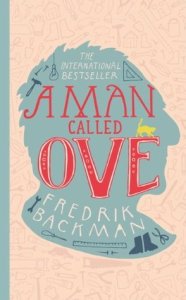
A grumpy yet loveable man finds his solitary world turned on its head when a boisterous young family moves in next door. Meet Ove. He’s a curmudgeon, the kind of man who points at people he dislikes as if they were burglars caught outside his bedroom window. He has staunch principles, strict routines, and a short fuse. People call him the bitter neighbour from hell, but must Ove be bitter just because he doesn’t walk around with a smile plastered to his face all the time? Behind the cranky exterior there is a story and sadness. So when one November morning a chatty young couple with two chatty young daughters move in next door and accidentally flatten Ove’s mailbox, it is the lead-in to a comical and heart-warming tale of unkempt cats, unexpected friendship, and the ancient art of backing up a U-Haul. All of which will change one cranky old man and a local residents’ association to their very foundations.

Format: ebook (304 pp.)            Publisher: Sceptre
Published: 3rd July 2014             Genre: Fiction

Purchase Links*
Amazon.co.uk ǀ Amazon.com ǀ Barnes & Noble
*links provided for convenience, not as part of any affiliate programme

Find A Man Called Ove on Goodreads


My Review

I’m always a little anxious when I start reading a much-lauded, and more importantly, a much loved book.  In fact, I’m aware many people cite A Man Called Ove as one of their favourite books ever. While I liked a lot about A Man Called Ove – I found parts of it moving, funny and quirky – I can’t say I loved it wholeheartedly. I’m going to start by talking about the elements I did really like and then move on to explain my reservations.

I loved the strange and beautiful love story of Ove and Sonja – ‘He was a man of black and white. And she was colour. All the colour he had.’  I thought the picture we get of Ove through Sonja’s love for him and his devotion to her, is the most moving part of the book.  Sonja could see beneath the exterior of the shy rather awkward young man she met on a train to the truthful, loyal, heroic and resilient person beneath. If other words, she could see the colour in Ove that others couldn’t. Despite the contrasts between them, they fitted together like two pieces of a jigsaw puzzle to produce a complete picture.

There are beautiful lines, such as:
‘But if anyone had asked, he would have told them that he had never lived before he met her.’
‘He knew better to speak ill of what she loved; after all, he understood very keenly how it was to receive her love when no one else could understand why he was worthy of it.’

Really, I simply loved Sonja and who wouldn’t? She loves books, she loves to laugh, she’s a teacher, she fights for her pupils and inspires them to achieve more than they think they can. In a way, Ove is her most ambitious project and the saddest aspect of the book is that we never get to see what she could have achieved.

So what were the aspects I was less enthusiastic about? Well, I got a little bored with all the Saab references and jokes. Perhaps you have to be Swedish or a car owner (and I’m neither) to appreciate them. And although the book was really funny in parts, at times I found the humour rather predictable and the visual and verbal punch lines easy to see coming.

However, my main reservation was about the development of the character of Ove himself. The author didn’t completely convince me how the socially awkward but essentially decent and likeable young man that Sonja fell in love with became the anti-social, sexist curmudgeon that we meet at the beginning of the book. I appreciate we learn about tragic events in Ove’s life but they didn’t seem to me to sufficiently explain such a change in his character.

Having said this, the author is a skilful writer and although one may not like Ove – and you definitely wouldn’t want to have him as a neighbour – the author makes you care about him. And, in the end, any imperfections in the portrayal of Ove’s character were redeemed for me by the portrait painted of Sonja and their emotional story. That love story, for me, is the beautiful heart of the book.

Follow my blog with Bloglovin

In three words: Charming, moving, amusing

Try something similar…600 Hours of Edward by Craig Lancaster


FredrikBackmanAbout the Author

Fredrik Backman is a well-known Swedish blogger and columnist. His debut novel’s protagonist was born on his blog, where over 1,000 readers voted for Backman to write a novel about Ove. In 2011, he became an overnight success when one of his blog entries, ‘Personal message to stressed blond woman in Volkswagen’, about reckless driving and parental love, became the most linked entry on Facebook ever, with 60,000 shares.

Connect with Fredrik

Website ǀ Twitter ǀ Goodreads


Event Review: Anne O’Brien & Rory Clements at Henley Literary Festival

Despite being in its 11th year and the fact I don’t live far away, yesterday was my first visit to Henley Literary Festival. Having enjoyed browsing in some of the town’s excellent bookshops, for my first event of the day, I joined a keen crowd taking their seats in the wood-paneled chamber of Henley Town Hall. We were there to hear best-selling historical fiction writers, Anne O’Brien and Rory Clements, in conversation with writer and presenter, Hephzibah Anderson.

The discussion started with both writers talking about what first drew them to historical fiction.

In Anne’s case, she explained it was her compulsion to write about aristocratic medieval women. Here were well-educated women, involved in important political events of the day through their husbands or family but about which history was largely silent. She felt these women had a lot to say and wanted to give them a voice. Asked if her research into these women’s lives had changed her view of the medieval period, Anne said it had brought home to her that these women lived very different lives to ours today. They were subject to much stricter rules of behavior and, if they had ambition, this had to be pursued in what was a man’s world. Being seen to live a good life was essential because it was easy for women, regarded as ‘Daughters of Eve’, to get the blame for every misfortune.

For Rory, historical fiction is part of our cultural heritage. After all, as he pointed out, Shakespeare made up the words of English Kings and Roman Emperors and writers have always imagined themselves into events in history that weren’t recorded.   Reading about the life of Robert Southwell and coming across the character of Richard Topcliffe – in Rory’s words, ‘a seriously horrible man’ – sparked his interest in the 16th century and was the inspiration behind setting series of thrillers in that period.  Rory was asked if he was sad to be leaving this period behind for his new three-part series set in the 1930s (the first of which is Corpus). Rory said it was fun to research a new period and since his protagonist, Tom Wilde, is an expert on the Elizabethan secret service, he hadn’t completely left it behind.   Rory reassured fans of John Shakespeare (of which I count myself one) that he will return in future books.

Both writers than spoke about what draws them to a period of history – is it a particular character or the time itself? For Anne, it’s definitely the characters. As she put it, ‘people pop up’ as she undertakes her research. Sometimes they may start on the periphery but subsequently move centre stage. For instance, Joan of Kent, the subject of Anne’s latest book The Shadow Queen, has made cameo appearances in several of her previous novels.   At times, Anne said, it’s as if the characters are sitting on her shoulder whispering ‘write about me’ until she eventually gives in! Anne made the very interesting point that, unlike other genres, with historical fiction we know the end, we know how events will turn out. The challenge for her and other writers of historical fiction is to keep the reader reading in spite of this by trying to communicate the motivation of the characters and fill in the gaps between recorded events.

For Rory it’s more likely to be a particular period that attracts him or, as an ex-journalist, his instinct for a story and questioning the facts behind reported events. He gave the example of reading that Phillip II of Spain had taken out a contract against Sir Francis Drake before the Armada – this became the starting point for the plot of his first John Shakespeare novel, Martyr.

The discussion moved on to what both authors find the hardest part of bringing history to life.

Anne said, in a way, it was her own deliberate decision to write in the first person, her desire to provide a woman’s view of the period and explore the motivation of her characters. Clearly, because of their role in society, women would not have witnessed certain events first hand, so her challenge was always to think up creative ways to introduce information about external events.   Rory mentioned slow communication and transport as one of the challenges for a writer constructing a story based in the 16th century. However, he had actually found the 1930s harder. Not only are the events better documented but they are still in the living memory of some people. His greatest, however, was not succumbing to the benefit of hindsight but representing the views of people as they were held at the time.   Reading diaries was the best way to get in tune these because of their immediacy.

Finally, Anne and Rory were asked how they decide when it’s time to stop research and start writing, or if these happen in parallel. Anne said that, for her, it’s when the characters start to ‘speak’ to her, as it were – it can be like flicking a switch. Rory enjoys the process of research and goes to great lengths to get historical detail right. But, in the end, he’s writing a novel not straight history and it’s the story that’s important.


As you can tell from above, this was an absolutely fascinating discussion by two authors at the top of their game when it comes to historical fiction. After the talk, there was an opportunity to purchase Anne’s and Rory’s books and get them signed by the authors. I was thrilled to get Rory to sign my copy of Corpus.   I haven’t read any of Anne O’Brien’s books but I thoroughly enjoyed listening to her talk about her craft. Her passion for history is infectious. I wish she had been my history teacher! Her latest book, The Shadow Queen, is going on my Christmas list.

I shall be writing separately about the second event I attended yesterday, featuring author, Rachel Joyce.

Please note, this review is based on notes I took during the event and my own recollection.  Any errors in recording views expressed during the discussion are my own.


AnneO'BrienAbout Anne O’Brien

Anne was born in the West Riding of Yorkshire. After gaining a B.A. Honours degree in History at Manchester University, a PGCE at Leeds University and a Masters degree in Education at Hull University, she worked as a teacher of history. Always a prolific reader, she enjoyed historical fiction and was encouraged to try her hand at writing. Success in short story competitions spurred her on.  She has written many books including The Queen’s Choice about Joanna of Navarre, The Forbidden Queen about Katherine de Valois and her latest The Shadow Queen about Joan of Kent, mother of Richard II.

Website ǀ Facebook ǀ Twitter ǀ Goodreads


RoryClementsAbout Rory Clements

Rory Clements has had a long and successful newspaper career, including being features editor and associate editor of Today, editor of the Daily Mail’s Good Health Pages, and editor of the health section at the Evening Standard. He now writes full-time in an idyllic corner of Norfolk, England. He is the best-selling author of the John Shakespeare series of historical mysteries. His latest book, Corpus, the first in a new series, is set in 1936.

Website ǀ Goodreads


About Henley Literary Festival

The Henley Literary Festival was founded in 2007 and has established itself as one of the UK’s most popular literary festivals, bringing people from far and wide in an annual meeting-of-minds set across its stunning riverside hometown. The 2017 Festival takes place from October 2-8 at venues across Henley-on-Thames with over 150 talks, Q&As, workshops and performances for adults and children.

Website ǀ Facebook ǀ Twitter