Interview: Zenka by Alison Brodie

In advance of the publication of Zenka on 6th November, I’d hoped to bring you an interview with the lady herself, surely now the most famous Hungarian pole-dancer on the planet. Unfortunately, she declined to be interviewed as did gangland boss, Jack Murray. Luckily, Alison Brodie (who has some influence in these matters) was able to intercede and I’m pleased to say Trevor Stockman, Jack’s accountant and right-hand man, has agreed to give us the unvarnished truth about Zenka.

You can read his exclusive interview below.
Follow my blog with Bloglovin


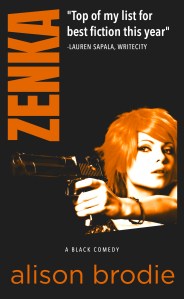
Zenka_FinalAbout the Book

Ruthless, stubborn and loyal. Zenka is a Hungarian pole-dancer with a dark past.

When cranky London mob boss, Jack Murray, saves her life she vows to become his guardian angel – whether he likes it or not. Happily, she now has easy access to pistols, knuckle-dusters and shotguns.

Jack learns he has a son, Nicholas, a community nurse with a heart of gold. Problem is, Nicholas is a wimp. Zenka takes charge. Using her feminine wiles and gangland contacts, she aims to turn Nicholas into a son any self-respecting crime boss would be proud of. And she succeeds! Nicholas transforms from pussycat to mad dog, falls in love with Zenka, and finds out where the bodies are buried – because he buries them. He’s learning fast that sometimes you have to kill, or be killed.

As his life becomes more terrifying, questions have to be asked: How do you tell a crime boss you don’t want to be his son? And is Zenka really who she says she is?

Praise for Zenka:
‘A riveting read. Powerful. Spicy.’ Midwest Book Review
5* ‘To say I loved this story would be a massive understatement’ Bloggers from Down Under
5* ‘Will warm your heart and chill your bones’ Tome Tender BlogSpot
5* ‘Top of my list for best fiction this year’ Lauren Sapala, WriteCity
5* ‘You won’t be able to put this book down’ Laura Reading
5* ‘Brodie nails it again. Intelligent wit and outstanding writing’ Charlie Elliott, author of Life Unbothered

Format: eBook (299 pp.)                Publisher:
Published: 6th November 2017    Genre: Suspense, Crime, Comedy

Pre-order/Purchase Links*
Amazon.co.uk ǀ Amazon.com
*links provided for convenience, not as part of any affiliate programme

Find Zenka on Goodreads


Interview with Trevor Stockman (as told to Alison Brodie)

Welcome, Trevor. How would you describe the relationship between Jack and Zenka?

Explosive.

Could you elaborate?

They are equally hot-headed and tend to whip each other up into a state of Shakespearian melodrama. When they reach boiling point they slip into their native tongue. Luckily Jack cannot understand Hungarian, and Zenka cannot understand Cockney, or there would be tragedy.

I’m surprised that Jack wanted to be in her company if they were always arguing.

He admires the way she stands up to him. There is no-one else in his life who would dare argue with him. He also takes her advice. He wore rainbow-striped ties until she told him he looked like a pimp. But they also laugh together. I have found them in near hysterics, clutching their stomachs with tears streaming down their faces. Jack makes this strange hooting noise; Zenka squeals. Rather amusing to watch.

Jack was a father figure to Zenka, is that right?

Yes. Zenka made sexual overtures but Jack ignored them. He prefers woman closer to his own age.

How did Jack and Zenka meet?

Zenka’s neighbour sold her to the Romanians.   Jack hates the Romanians and the terrible things they do to girls. When he heard there was a new shipment in, he stormed the place and rescued ten girls, including Zenka.   Jack found jobs for the girls in supermarkets and bakeries. Zenka, though, would not leave Jack’s side and told him she would be his guardian angel.

What was Jack’s response?

He laughed and said to her: “You are only five foot two. How can you guard me?” She replied: “I might be small, but a grenade is also small.”

How would you describe Zenka?

She is the typical stereotype of a Slav. Driven to suicide one moment, deliriously happy the next. And, of course, passionate.

Where did Zenka learn to pole-dance?

She didn’t.

She claims she is the star performer in the Gentlemen’s Room?

She isn’t.

She wears wigs on stage, is that correct?

Yes. She has an inexhaustible supply, all in the most bizarre colours.

She plays the violin. That must be wonderful, listening to all those passionate Hungarian folk tunes.

No comment.

Why do you think Jack and Zenka refused to be interviewed today?

I think they must have had a falling out. But I don’t know why.

Well, that’s it from me. Thank you for coming in, Trevor.


AlisonBrodieAbout the Author

Alison Brodie is a Scot, with French Huguenot ancestors on her mother’s side. She is a writer and animal rights activist. Her books have been published in hardback and paperback by Hodder & Stoughton (UK), Heyne (Germany) and Unieboek (Holland). Alison is now a self-publisher.

Connect with Alison

Website ǀ Facebook ǀ Twitter ǀ Goodreads

Interview: Tom Ward, author of Fires

Today’s guest on What Cathy Read Next is Tom Ward, author of Fires. In advance of the publication of Fires on 2nd November, I’m delighted that Tom has agreed to talk about the book, its inspiration and his writing journey.

Follow my blog with Bloglovin


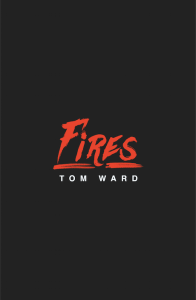
Fires CoverAbout the Book

There’s a fire on the horizon. For Guy, a fireman, it means the death of his wife and daughter. For 19-year-old Nathan and Alexa it means a chance to fight back against austerity and abandonment. While the teenagers turn to arson, Guy searches for meaning behind his family’s deaths, battling corruption and a lost underclass, intent on fiery revolution.

For all three, their actions will lead them to the precipice of disaster.

Format: eBook (263 pp.), Paperback (262 pp.)  Publisher: Crooked Cat Books
Published: 2nd November 2017                            Genre: Fiction

Purchase Links*
Amazon.co.uk ǀ Amazon.com
*links provided for convenience, not as part of any affiliate programme


Find Fires on Goodreads


Interview: Tom Ward, author of Fires

Without giving too much away, can you tell us a bit about Fires?

On the face of it, Fires is a thriller about a fireman searching for answers after his family are killed, while, at the same time, a disaffected young man takes his frustrations out on his city through a campaign of arson. Simmering away beneath the surface, it’s about austerity and decline and the anger – often hopeless – this breeds, and the violent ways that people lash out. It’s also about greed, and love. It’s also, I hope, a lot funnier in parts than that description makes out.

What was your inspiration for the book?

I wrote one of the early chapters as a short story about 8 years ago, and it’s always stayed in the back of my mind. I’m from Scunthorpe, an industrial town in the North East of England. There’s a lot of unemployment (I’ve been on benefits there myself, twice) and not much hope for a lot of people. It really grew from my anger at the systems that made it so, and empty promises to change things. Now, more than ever, I think this sort of frustration can be felt across the UK, and the US. But, there’s also a lesson in it, I hope, that lashing out is rarely the best way to solve things, or improve your situation.

You’re a journalist who’s also published a short story collection (Dead Dogs & Splintered Hearts) and now two novels (A Departure and Fires). Do you enjoy experimenting with different writing formats?

That’s right. My first novel came out in 2013 and I was lucky enough to receive a great review from Tony Parsons (author of Man & Boy and the Max Wolfe thrillers) and the short story collection, that came out last year, and I was pretty proud of that too as it collected 19 or so things I’d been working on for a long time.

I think journalism and fiction inform each other to some degree – both are essentially telling stories and I’ve done some great stories for everywhere from Men’s Health to the Guardian on serial killers, taking LSD at work, eating insects, mental health and more.

Fiction, however, is my preference. I’ve two more novels and half a short story collection in the works. And two film scripts I want to have a go at writing simply because I love films. I want to keep experimenting with fiction in various forms, and see how far I can push it.

Australian TV presenter and journalist, Tony Jones, recently stated that, ‘Fiction frees you from the constraints of journalism’ (The Guardian). Is that something you can identify with?

Yes, with journalism you’re writing about real people who’re probably going to read what you write, and you don’t want to misrepresent them, or what they believe in, so there’s a different sort of care you apply when writing, researching and editing journalism.

Literature is more freeing as, obviously, it all comes from your mind. You’re free to turn a few real people into one character, or draw bits from one person or another. The same with places and events. The key difference is with one you’re trying to represent the world as most people see it, but offer a new insight, and with the other you’re trying to get people interested on your take on their very real world.

You won the GQ Norman Mailer Student Writing Award in 2012. What impact has this has had on your career as a writer? (By the way, I understand you can do some serious name-dropping from the Awards dinner…)  

Yes, it did help, I think. This and being shortlisted for two awards for A Departure, and winning a journalism award this year are encouraging more than anything. And I can’t believe I’ve won any of them. If people are interested in me as a writer because of that, then great.

And yeah, there were a few people at the awards ceremony. Joyce Carol Oates accepted an award and gave a great speech. Alec Baldwin was presenting, and I was introduced for about 12.3 seconds. Muhammad Ali was the guest of honour (it was the Norman Mailer Awards 2012, and Mailer famously wrote about Ali in The Fight). I had a picture taken with him, which still doesn’t feel real, even though it’s up on Google, forever. It was spectacular to meet him, and I feel very lucky to have done so. Also, Oliver Stone, the director, asked me to send him some writing, and he gave me feedback in a story in my Dead Dogs collection. I’m waiting to hear if he wants me to write him a film. It has been about 5 years now, though…

Both A Departure and Fires depict the breakdown of society. What is it about this that interests you as a writer?

Because I’m not really happy with the way things are. I’m now a journalist, living in London, so I haven’t really got anything to complain about myself anymore, but generally I think things could be better for a lot of people. And I don’t think that’s likely to change any time soon. I’m potentially quite a miserable person, as you can probably tell. As a result of all of this, A Departure is about wanting to escape and Fires is about the anger that comes from being stuck somewhere. I think everyone can relate to that.

Do you have a favourite scene in Fires and, if so, why?

Ha, I have a lot I like, but the one that comes to mind is the first fire the arsonists light, and it’s like a celebration of what’s about to come, and a positive, hopeful scene, before it all goes wrong.

Which other writers do you admire?

Far too many to list: Angela Carter, J G Ballard, Graham Greene, Evelyn Waugh. But more and more I’m trying to read new books. Thirst by Benjamin Warner is great. Septembers by Christopher Prendergast is good, as is Alison Moore at Salt Publishing. Harry Gallon has published some great books with Dead Ink Books in the north of England. And Heinz Helle, a German author is as dry and dark as they come. And Hings by Chris McQueer, from what I’ve read, is one of the funniest and most eye-opening books of the year.

What’s the best piece of advice you’ve been given about writing?

Henry Miller’s 11 commandments are great. Especially “When you can’t create you can work” and “Don’t be nervous. Work calmly, joyously, recklessly on whatever is in hand.”

What are you working on next?

I’m editing a third novel, then after that I’ll go back over the first draft of my fourth. Then I’ll try and write the two film scripts, then hopefully polish up and publish a second book of short stories. I enjoy it, and I try and write every story as though no one else will ever read it, and just have fun with it myself. If someone else likes it too, that’s amazing.

Thank you, Tom, for those fascinating and insightful answers. I’m really looking forward to reading Fires and sharing my review.


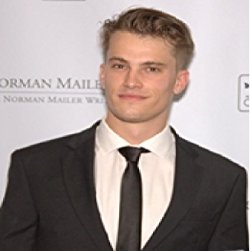
TomWardAbout the Author

Tom Ward is an author and freelance journalist. He has written for Esquire, Men’s Health, GQ, the Guardian and more, and won the PPA New Consumer Magazine Journalist of the Year Award 2017. He is also the recipient of the GQ Norman Mailer Award 2012. His first novel, A Departure, was shortlisted for the People’s Book Prize and the Beryl Bainbridge Award. His short story collection, Dead Dogs And Splintered Hearts is available now. His second novel, Fires, will be released on November 2nd, 2017. Tom has been described as ‘Quite possibly the best young writer in the country’ by best-selling author Tony Parsons. Tom lives in London.

Connect with Tom

Website ǀ Twitter ǀ Goodreads