
Top Ten Tuesday: Fictional Couples’ First Encounters

TTT-Big2

Top Ten Tuesday is a weekly meme created by The Broke and the Bookish and now hosted by Jana at That Artsy Reader Girl.

The rules are simple:

  • Each Tuesday, Jana assigns a new topic. Create your own Top Ten list that fits that topic – putting your unique spin on it if you want.
  • Everyone is welcome to join but please link back to The Artsy Reader Girl in your own Top Ten Tuesday post.
  • Add your name to the Linky widget on that day’s post so that everyone can check out other bloggers’ lists.
  • Or if you don’t have a blog, just post your answers as a comment.

This week’s topic is Love Freebie.  I’ve chosen to pick out the first meetings of some fictional couples.  Spoiler Alert: If you’re not familiar with the books and don’t want to know that these characters become couples, read no further. Click on the highlighted titles to read my review of the book in which the couples appear.

JohnBuchanThrillersRichard Hannay and Mary Lamington from Mr Standfast by John Buchan

Hannay first encounters Mary whilst visiting a comrade recovering in hospital. ‘Someone put a tea tray on the table beside us and I looked up to see the very prettiest girl I ever set eyes on… I stared after her as she walked across the lawn, and I remember noticing that she moved with the free grace of an athletic boy.’

Miss Boston and Miss Hargreaves PbackElsie Boston and Rene Hargreaves from Miss Boston and Miss Hargreaves by Rachel Malik

Rene and Elsie meet when Rene arrives at Starlight Farm to work as a landgirl. She feels an immediate unspoken connection with Elsie. ‘She had offered her hand to Elsie, and Elsie had reached out hers but it wasn’t a greeting – Elsie had reached out as if she were trapped and needed to be pulled out, pulled free’.

Carol BloomsburyCarol Aird and Therese Belivet from Carol by Patricia Highsmith

Therese is working in a New York department store as a sales assistant in the toy section when a woman in her thirties walks up to her counter.  Therese’s first glimpse of Carol is life-changing; it awakens an overwhelming but quite unexpected attraction to this cool, stylish, beautiful woman.

 

AManCalledOveOve and Sonja from A Man Called Ove by Fredrik Backman

Whilst working as a train cleaner, Ove spots Sonja on a railway station platform ‘with all her auburn hair and her blue eyes and all her effervescent laughter.’ When she boards the train he does too and goes to sit by her. ‘It was the single best decision he would ever make.’

ShelterFinalCoverConnie and Seppe from Shelter by Sarah Franklin

They meet in wartime in The Forest of Dean; a serendipitous meeting for both of them. Seppe, an Italian POW, is desperate to get work that will take him outside the prison camp. Connie, a lumberjill, is desperate to remain in the forest for reasons of her own. “Look at that for a turn up, Frank. You’ve got yourself a new tree-felling team.”

Jane and Mr Rochester in Jane Eyre by Charlotte Bronte

A country road at dusk, the sound of a horse and rider approaching, preceded by a huge hound. A patch of ice and the horse and rider are down. Jane approaches the fallen rider. ‘”Are you injured, sir?” I think he was swearing, but am not certain; however, he was pronouncing some formula which prevented him from replying to me directly. “Can I do anything?” I asked again.”You must just stand on one side,” he answered as he rose, first to his knees, and then to his feet.’

Cathy and Heathcliff in Wuthering Heights by Emily Bronte

An inauspicious beginning. Cathy’s father brings a strange urchin back with him from his travels, forgetting the present he had promised her. ‘When she learned the master had lost her whip in attending on the stranger, showed her humour by grinning and spitting at the stupid little thing.’

Elizabeth Bennett and Mr Darcy in Pride and Prejudice by Jane Austen

The scene is the Meryton ball. Bingley has been dancing with Elizabeth’s sister, Jane, and is seeking to encourage his friend, Darcy, to take to the floor, suggesting Elizabeth as a suitable dance partner. Elizabeth overhears Darcy respond: “She is tolerable; but not handsome enough to tempt me; and I am in no humour at present to give consequence to young ladies who are slighted by other men. You had better return to your partner and enjoy her smiles, for you are wasting your time with me.” First impressions, eh?

Dr John Watson and Mary Morstan in The Sign of Four by Sir Arthur Conan Doyle

Sherlock Holmes’ room at 221B Baker Street and a new client, Mary Morstan, arrives to consult the famous detective. Dr. Watson observes: ‘She was a blonde young lady, small, dainty, well gloved, and dressed in the most perfect taste. Her face had neither regularity of feature nor beauty of complexion, but her expression was sweet and amiable, and her large blue eyes were singularly spiritual and sympathetic.’
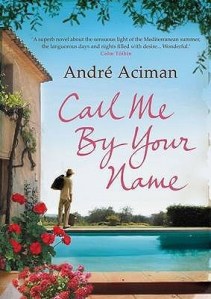
Call Me By Your NameElio and Oliver in Call Me By Your Name by Andre Aciman

‘I’m back in Italy, so many years ago, walking down the tree-lined driveway, watching him step out of the cab, billowy blue shirt, wide-open collar, sunglasses, straw hat, skin everywhere.’

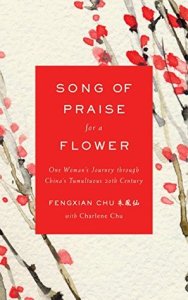


Song of Praise for a Flower by Fengxian Chu and Charlene Chu

When an author or publicist contacts you about reviewing a book and the description sounds enticing, it’s frustrating to know it’s going to be several months before you’ll be able to get around to reading and reviewing the book.  Such is the case when Penny at Author Marketing Experts contacted me about Song of Praise for A Flower by Fengxian Chu and Charlene Chu.  I remember loving Wild Swans by Jung Chang when I read it some years ago and I have recently read The Good Earth by Pearl S. Buck.  Therefore, I was interested in reading more about the history of China, especially testimony that focuses on women’s experiences.

However, although it’s going to be a while until I get to read Song of Praise for a Flower, that doesn’t mean I should hide it away from followers of my blog who may not have such large review piles as me.   I’m pleased to say I have an extract from the book below.  If the sound of it excites you as much as it did me, you can find purchase links below.

Follow my blog with Bloglovin


Song of Praise for a FlowerAbout the Book

For nearly two decades, this manuscript lay hidden in a Chinese bank vault until a long-lost cousin from America inspired 92-year-old author Fengxian Chu to unearth it.

Song of Praise for a Flower traces a century of Chinese history through the experiences of one woman and her family, from the dark years of World War II and China’s civil war to the tragic Great Leap Forward, Cultural Revolution, and beyond. It is a window into a faraway world, a sweeping epic about China’s tumultuous transformation and a harrowing yet ultimately uplifting story of a remarkable woman who survives it all and finally finds peace and tranquillity.

Chu’s story begins in the 1920s in an idyllic home in the heart of China’s rice country. Her life is a struggle from the start. At a young age, she defies foot-binding and an arranged marriage and sneaks away from home to attend school. Her young adulthood is thrown into turmoil when the Japanese invade and ransack her village. Later her family is driven to starvation when Mao Zedong’s Communist Party seizes power and her husband is branded a ‘bad element.’  After Mao’s death in the 1970s, as China picks up the pieces and moves in a new direction, Chu eventually finds herself in a glittering city on the sea adjacent to Hong Kong, worlds away in both culture and time from the place she came from.

Praise for Song of Praise for a Flower

“Fengxian Chu’s first-person account of growing up female in feudal rural China is ultimately as uplifting as it is heart wrenching. Beautiful and bravely written. Bravo.” [Michael J. Totten, author of Where the West Ends]

Format: eBook, paperback (488 pp.)                    Publisher:
Published: 21st November 2017                            Genre: Memoir, History, Non-Fiction

Purchase Links*
Amazon.co.uk  ǀ  Amazon.com
*links provided for convenience, not as part of any affiliate programme

Find Song of Praise for a Flower on Goodreads


Extract from Song of Praise for a Flower by Fengxian Chu and Charlene Chu

PART ONE

The Xiang River

For millennia, the mighty Xiang (Syŏng) River has pulsed through the lush, rolling hills of Hunan Province in southern China. The region’s famous rice paddies derive their rich, green hue from the Xiang, and it is on the banks of this river that generations of Hunanese families have flourished. In Chinese, “Xiang (湘)” is the abbreviated name for Hunan, which I think makes perfect sense because, whenever we natives think of home, often the first thing that comes to mind is this beloved river. Several decades ago, when I was a young woman, I bade farewell to the Xiang and have had the opportunity to return only twice. Yet the river continues to run through my veins as vigorously today as it did when I was just a little girl.

Nestled amid the long and winding current of the Xiang River rests the small, graceful village of my youth: Huaguo, or Flower and Fruit, in eastern Hunan Province. Huaguo embraces miles of fertile land and luxuriant forest, crisscrossed with green willows and tall bamboo. Small homes dot the hillsides. Men cultivate the fields while women weave in the courtyards, each working diligently every day. Grey-haired seniors play with lively children, bringing abundant smiles and harmony to the village.

Huaguo is surrounded by numerous hills to the north, east, and south and the Xiang River to the west. Deep within the hills are ancient caves and dozens of narrow, winding paths leading to small valleys. In this openness lie numerous small brooks, gurgling and glistening in the sun, and grass and wild flowers that emit a beautiful, delicate fragrance. Huaguo is the kind of place the soul never forgets.

At the entrance of Huaguo stands Fengmen Railway Station. Although not large, the station used to serve as a key stop for trains passing through Hunan because of its proximity to the water. Day and night, trains stopped at Fengmen Station to add water to the steam engines, bringing business and swarms of passengers to the village.

The passenger cars, platform, and waiting hall would become over-run with villagers hawking food and other goods, their cries sonorous and rhythmic. Many of the hawkers were young and as agile as monkeys, leaping across the tracks and climbing into passenger cars. Sometimes these boys would remain on the train selling goods even after it took off, jumping down fearlessly only after the train reached full speed.

Not far from Fengmen Station was a narrow street that used to form the center of town and was filled with small restaurants, stores, tea houses, gambling parlors, and the local fortune teller. The street terminated at the Xiang River, where several small ferry boats sat waiting to transport passengers across the water to the town of Fengmen, another village bustling with activity.

When I was growing up as a young girl, one of the liveliest times of year was the annual Dragon Boat Festival, when teams from Huaguo and Fengmen would compete in a race on the Xiang River. The festival, held on the fifth day of the fifth month of the lunar calendar, commemorates the famous Chinese poet Qu Yuan, who, according to legend, drowned himself in a river for his motherland in 278 B.C. To distract the fish from eating the poet’s corpse, the legend says that villagers threw rice and other food into the river. In honor of Qu Yuan’s patriotism, Chinese people re-enact this event every year by tossing pyramid-shaped dumplings into water.

The day of the festival, villagers from Huaguo and Fengmen would don their best clothes and flock to the river to toss dumplings and watch the race. On both sides of the river, the streets and banks would be packed with a sea of horse carts and spectators. At the crack of a drum, a dozen colorfully decorated dragon boats would charge ahead, splashing spectators with water as they sped down the river to the beat of the drum. The cheers of the villagers would mingle with the roars of the drums and reverberate through the sky, awakening the God of Heaven and Dragon King of the Ocean. After the race, colorful pennants would be handed to each member of the triumphant team, and the audience would linger for hours, basking in the joy of the moment.

The province of Hunan is said to be a land flowing with milk and honey, with picturesque scenery and a soothing climate of four distinct seasons. In spring, plants sprout, flowers blossom, and birds sing in joy. In summer, trees become lush and verdant. In autumn, ripening fruits tug at tree limbs, and red and yellow leaves fall to the ground signaling the approach of winter, when leaves wither and die, and a thin layer of white blankets the land.

Women of Hunan are known for their gentleness, courtesy, and passion. They love the young and respect the old and are virtuous wives and mothers. Hunan’s women are the shining pearl of the province. It is no wonder so many ancient emperors and leaders, including Chairman Mao, came from this magical environment.


About the Author – Fengxian Chu

Raised in Hunan Province, China, Fengxian Chu spent most of her life living and working on a farm. She attended college briefly, but her education was interrupted when the Japanese army invaded her village in the 1940s. A writer and poet from a young age, she is unique among her generation of rural Chinese women, the majority of whom never attended school and are illiterate. Song of Praise for a Flower is Fengxian’s first work to be published, and among the only known first-person accounts from a woman of her generation about life during China’s turbulent past century. Now in her 90s, she enjoys gardening and spending time with her children, grandchildren, and great grandchildren. She resides in Shenzhen, China.

Charlene ChuAbout the Author – Charlene Chu

Co-author Charlene Chu, Fengxian’s first cousin, grew up in the United States and wrote the English rendering of Song of Praise for a Flower. A financial analyst well-known for her work on China’s economy and financial sector, she is quoted widely in the Wall Street Journal, Financial Times, Bloomberg, Business Insider and other media outlets. She holds an MBA and MA in International Relations from Yale University. Song of Praise for a Flower is her first book. Charlene splits her time between Washington, DC and Hong Kong.

Connect with Charlene

Facebook  ǀ  Goodreads