Book Review: Things Bright and Beautiful by Anbara Salam

Things Bright and BeautifulAbout the Book

Mission House was not built for three people. Especially when one of them won’t stop humming.

1954, the South Pacific islands. When Beatriz Hanlon agreed to accompany her missionary husband Max to a remote island, she knew there would be challenges. But it isn’t just the heat and the damp and the dirt. There are more insects than she could ever have imagined, and the islanders are strangely hostile. And then there are the awful noises coming from the church at night.

Yet as the months go by, Bea slowly grows accustomed to life on the island. That is until an unexpected and interminably humming guest arrives, and the couple’s claustrophobic existence is stretched to breaking point.  Events draw to a terrible climax, and Bea watches helplessly as her husband’s guilt drives him into madness. It’s not long before Bea finds herself fighting for her freedom and her life.

Format: ebook, hardcover (288 pp.)        Publisher: Fig Tree
Published: 5th April 2018                           Genre: Historical Fiction

Purchase Links*
Amazon.co.uk ǀ  Book Depository ǀ Hive.co.uk (supporting UK bookshops) *links provided for convenience, not as part of any affiliate programme

Find Things Bright and Beautiful on Goodreads


My Review

Things Bright and Beautiful is set on an island in the New Hebrides (now Vanuatu), which I can safely say is a first for me as the location for a book.  “The isle is full of noises” (The Tempest, Act 3 Scene 2).

Arriving on Advent Island with her missionary husband, Max, Bea finds her new home is no Bali Ha’i.  Whatever she was expecting it wasn’t the incessant insects, dirt, heat, rain and the almost suffocating nature of the jungle.  ‘Its constant whirring noises, its fetid organic complexity.  Its restlessness. So many thousands of trees and and bushes and leaves, each populated by slithering, crawling insects, all with tiny hearts pumping and pumping.’ The jungle threatens to invade even their home in the Mission House.  ‘On Advent Island, the jungle refused to stay outdoors, it lurked at the corners of the village and wormed its way into civilization.  Pale weevils cavorted in the powdered milk, black orchids blossomed in the shower… It perpetuated itself with explosive fertility.’

Max is buoyed up by the strength of his faith and his fervent belief in the importance of his mission. ‘To think there were still villages, here on the island, which had never heard the Word.  It was the last frontier.  His chance to carve out another kingdom for the Lord.’  However, Bea initially struggles to adjust to the many ‘tabus’ governing a woman’s place in the social order of the island.   ‘She wasn’t supposed to go walking around by herself.  She wasn’t to show any skin above her elbows or knees…She wasn’t allowed to go out in a dugout canoe.  It was tabu for women to fish…She wasn’t to wear her hair loose.  She mustn’t dry her cloths outside, especially any underclothes. She wasn’t to point directly at anything, because it was unlucky.’    I loved the way the author gives us small signs of Bea’s spirited and slightly rebellious nature, a spirit that will sustain her through the trials to come.  ‘It made Bea feel a little wild.  All she wished to do was to leap from her house on a Sunday morning, wearing only her underclothes with her hair shockingly loose, and run straight down the cost in a dugout and start fishing.’

The island is so remote – no running water, sanitation, electricity – that I constantly had to remind myself the book is set in the 1950s, not in the Victorian age.  Bea and Max’s isolation from the life they’ve known before is almost total.  ‘They had brought a transistor radio with them, but the island was too far out to catch any frequencies.’  Because there are no clocks on the island, the pace of life follows ‘island time’.  However, the islanders are industrious and resourceful, making use of whatever animal life, fruit, herbs and roots the island can provide.  They are used to making long treks between villages that take hours, even days, over often perilous paths where one slip can spell disaster – and, in fact, does with momentous consequences.

Although many of the islanders have ostensibly embraced Christianity, they cling to their traditional ways or ‘kastoms’, with anything else being ‘tabu’.  They have a particularly strong sense of the power of the Devil, who exists for them as an almost physical presence within parts of the jungle or within people.  Under the influence of the charismatic Aru, the villagers indulge in ‘dark praying’ in an effort to exorcise the evil presence they feel all about them.

Bea’s mood lifts as the rainy season ends and the vibrant, kaleidoscopic profusion of the island becomes evident, conveyed in wonderfully lush prose by the author.  ‘Candy-pink hibiscus flowers appeared in the hedges, crinkled at the edges like crȇpe paper.  Crimson-headed honeyeaters buzzed at the tips of banana suckers.  Gigantic butterflies swarmed in and out of the palms, streaked with electric-blue zigzags.  Occasionally, in the fringes of the coconut palms south of the village, there was the bright flash of parrots, a conflagration of colours so impossibly lurid they looked like novelty recreations of themselves, made from marzipan.’  Max is not doing so well.  The rain, the insects, the humidity, the heat, the macabre night-time chanting of the islanders and the after-effects of malarial fever all play on his mind.  ‘The island was doing things to him.  He was supposed to be here to set an example.’  He is also consumed by guilt for his role in a tragic event that he has kept secret.

Having formed a valuable friendship, Bea gradually develops a courage and resilience that surprises Max.  She’s no longer the damaged young woman he first met in Venezuela.  However, affected by the febrile atmosphere of the island, Max begins to fear that Bea’s very soul is in spiritual danger.  ‘And despite his best efforts, the darkness inside her persisted’.  Events take a darker turn before reaching a shocking conclusion.

The book introduces other characters and another storyline that touches on the impact of colonialism and the plight of Vietnamese workers brought to the island on five year contracts to toil in the plantations. However, this always feels secondary to the compelling story of Max and Bea.

This is a book that transports the reader to another time and place. At times, Things Bright and Beautiful has a dreamlike quality; at other times, it’s more the stuff of nightmares.  With its intoxicating atmosphere, Things Bright and Beautiful is like the love child of Black Narcissus, Heart of Darkness and Wide Sargasso Sea.  An impressive and imaginative debut; I look forward to reading more from this author.

I received an advance reader copy courtesy of NetGalley and publishers, Fig Tree, in return for an honest and unbiased review.

Follow my blog with Bloglovin

In three words: Strange, atmospheric, immersive

Try something similar…The Signature of All Things by Elizabeth Gilbert (click here to read my review)


Anbara SalamAbout the Author

Anbara Salam is half-Palestinian and half-Scottish, and grew up in London. She has a PhD in Theology and now lives in Oxford. She spent six months working on a small South Pacific island, and her experiences there served as the inspiration for her first novel, Things Bright and Beautiful.

Connect with Anbara

Website ǀ  Twitter ǀ  Goodreads


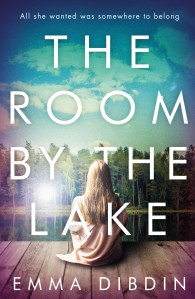
Blog Tour/Q&A: The Room by the Lake by Emma Dibdin

I’m delighted to be joining the launch celebrations for the publication in paperback of Emma Dibdin’s dark, unsettling psychological thriller, The Room by the Lake.   I read the book when it first came out last year and really enjoyed it.  You can read my review below.

I was also thrilled that Emma agreed to answer some questions about The Room by the Lake, the inspiration for the book and her approach to writing.  Oh, and cauliflower rice!

Follow my blog with Bloglovin


Didbin_THE ROOM BY THE LAKE_PBAbout the Book

A sophisticated debut thriller about a young woman drawn in by a cult, from the daughter of crime author, Michael Dibdin. Chilling, thought-provoking and terrifyingly plausible.

Caitlin never meant to stay so long. But it’s strange how this place warps time. Out here, in the middle of nowhere, it’s easy to forget about the world outside.

It all happened so fast. She was lonely, broke, about to give up. Then she met Jake and he took her to his ‘family’: a close-knit community living by the lake. Each day she says she’ll leave but each night she’s back around their campfire. Staring into the flames. Reciting in chorus that she is nothing without them.

But something inside her won’t let go. A whisper that knows this isn’t right. Knows there is danger lurking in that quiet room down by the lake…

Format: Paperback, ebook (320 pp.)                    Publisher: Head of Zeus
Published: 5th April 2018 [10th August 2017]  Genre: Thriller

Purchase Links*
Publisher (save 25%) ¦Amazon.co.uk ǀ  Amazon.com  ǀ Hive.co.uk (supporting UK bookshops)
*links provided for convenience, not as part of any affiliate programme

Find The Room by the Lake on Goodreads


Interview: Emma Dibdin, author of The Room by the Lake

Welcome, Emma! Without giving too much away, can you tell us a bit about The Room by the Lake?

The Room by the Lake is about a young English woman, Caitlin, who’s just out of university and on the verge of a breakdown. Desperate to escape after years of being a caretaker to unstable parents, she spontaneously books a flight to New York, which feels like a place she can become truly lost. Once there, she falls hard for Jake, a charming and slightly damaged former soldier who whisks her away to meet his family at their idyllic lakeside house upstate. But his family isn’t what it seems.

How did you get the idea for the book?

The idea to write about a cult came from a surreal encounter I had years ago in Seattle, with a man on the street who was protesting against then-president Barack Obama. The man was very young, about my age at the time (early twenties), and his argument was bizarre, illogical, as though he had learned it by rote or by brainwashing. He was polite, but dead-eyed, and the encounter really haunted me, particularly when I learned he was part of a far-right “political movement” which is essentially a cult. They prey on young people, I was told, often people cut off from their own families, and that got me thinking about what would make someone psychologically vulnerable enough to be sucked in.

The Room by the Lake is your first novel so can you tell us a bit about your writing journey?

I’ve always written fiction, for as long as I can remember – my mum loves to talk about how I used to write my own Animals of Farthing Wood stories when I was really young! Being an author was what I always wanted to do, but I went into journalism because it seemed like the best way of making an actual living from writing, and continued writing fiction in my spare time. I wrote The Room by the Lake during evenings and weekends, over the course of about two years, and I think the best thing about writing with limited time is that you can’t afford to be too precious – there’s no such thing as waiting for “the muse” to come.

In the book, Caitlin sees her move to New York as a form of escape.  Where in the world would be your dream place to escape to?

Well, funnily enough I really did move from London to New York two years ago, although not to escape! I think my dream place to escape to is anywhere my family and friends are. I’ve been craving a trip to Italy a lot lately – my parents lived there for years and we spent a lot of time there in my childhood, so I think my answer right now is Tuscany.

In The Room by the Lake, Caitlin comes across as a troubled, fragile, rather socially awkward young woman.  Do you think it’s necessary for readers to like the main character in a book in order to engage with them?

No, I don’t think so – I prefer characters that lean more towards anti-hero than straight hero, and any protagonist who’s not at least slightly troubled is a non-starter. Caitlin’s not necessarily somebody I’d want to be friends with, at least not at this point in her life, but I think her fears and insecurities make her fairly relatable. Female coming-of-age stories often get boxed into just being about sexual awakening, and while that’s definitely an element in Caitlin’s journey, I wanted her struggle to be psychological, and about the burden of mental illness in families.

How did you hope the setting of the book – the vast forest, the silent lake – would contribute to its atmosphere?  

The isolation of that setting is really key to Caitlin’s unravelling. Getting away from hectic city life and escaping to a peaceful forest sounds dreamy, but that experience can really turn on a dime if you’re feeling fragile. There’s such a weird duality to New York specifically: people always think of the city, which is one of the most densely populated in the world, but there’s also this vast expanse of very, very remote farmland upstate. I wanted to really draw out the contrast between those frenetic early chapters in Manhattan – where Caitlin’s shaky but at least engaged in the world – and this slow-paced retreat upstate, where she’s seemingly getting better.

Have you tried any of the dishes mentioned in the book – the sweet potato brownies, the cauliflower rice, or even the Apfelwein?

I’ve tried pretty much all of them! Cauliflower rice is great – I won’t pretend it tastes like the real thing, because it does not, but it’s a pretty good light alternative. I would never want to be fully paleo (in the immortal words of Oprah, I love bread https://www.youtube.com/watch?v=A2sx8Bc4mAw) but I do enjoy experimenting with ways to make slightly healthier versions of things, although there’s no substitute for a real brownie.

What was the biggest challenge you encountered when writing the book?

The third act was probably my biggest challenge, just working out how things should finally unravel. The first half of the book was always incredibly clear to me, Caitlin walking around New York in this alienated haze and becoming wilfully lost, but the climactic chapters at the cult went through a lot of different iterations. There’s a twist that comes towards the end of the book which wasn’t in my original draft, but came to me suddenly one day last December – and once I’d figured out that turn, everything else fell into place.

Which other writers do you admire?

Margaret Atwood, George Elliot, Elena Ferrante, Cormac McCarthy and Gillian Flynn are a few of my all-time favourites. I just read Robin Wasserman’s Girls On Fire, which was really vivid and intoxicating. I also love to read plays – I saw Angels in America while I was back in London over the summer, and just bought the text so that I can really dig into the language.

What are you working on next?

I’ve just started my second novel, a thriller that takes place in modern Hollywood, following a young journalist who becomes drawn into the life of a very famous actor she’s assigned to interview. Unlike The Room by the Lake, this book draws a bit from my own experiences (I’ve been in entertainment journalism for years) but with the drama cranked up several notches. I’m also working on a short story commissioned by Audible.

Thank you, Emma, for those fascinating answers…and the inside track on your next book.  


My Review

Following the death of her mother after years of acute mental illness, and feeling betrayed by her father’s relapse into alcohol dependency, Caitlin escapes to New York leaving no trace behind of her intended destination. Intelligent but socially awkward, Caitlin is introspective, a loner by nature with no previous serious relationships and hypersensitive to any signs she may have inherited the psychoses of her mother.

Caitlin is seeking a sanctuary and after weeks roaming New York alone dares to believe she has found it in the person of Jake. He seems to understand her and it appears Caitlin has at last found someone with whom she can share the thoughts and fears she’s kept hidden for so long.   When Jake invites her to travel upstate to meet the loving family he’s told her about, Caitlin readily accepts. What follows will test Caitlin’s resilience, her sense of her own identity, her strength of will and her very sanity.

The author creates a convincing picture of a damaged, traumatised individual making subsequent events believable. This is definitely a slow burner that builds in tension as with a growing sense of unease – like Caitlin – the reader starts to question whether what appears benign is really masking something more insidious and much, much darker.

I received an advance reader copy courtesy of NetGalley and publishers Head of Zeus in return for an honest review.


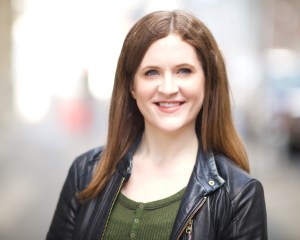
Emma Dibdin NewAbout the Author

Emma Dibdin grew up in Oxford, and now lives in New York. She is a writer and journalist whose work has appeared in Esquire, Marie Claire, Harper’s Bazaar, Cosmopolitan, and Total Film. The Room by the Lake is her first novel.

Connect with Emma

Website ǀ Twitter ǀ Goodreads

Room by the Lake PB blog tour