
When Chris Rowland at époque press contacted me about reviewing Luis Carrasco’s debut novel, El Hacho, on my blog I was immediately attracted by the book description. When I read the comments about the book by Jon McGregor, I knew I had to say yes to a review copy, never mind the already huge size of my review pile.
Unfortunately, it’s going to be a while until El Hacho reaches the top of my review pile but in the meantime I’m delighted to bring you an extract from the book.
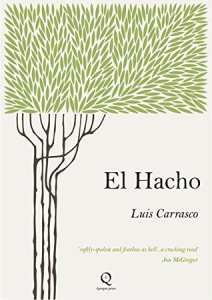 About the Book
The brilliant debut novel by Luis Carrasco, El Hacho is a timeless evocation of inheritance, duty and our relationship to the landscape that defines us. Set in the stark beauty of the Andalusian mountains it tells the story of Curro, an olive farmer determined to honour his family tradition in the face of drought, deluge and the lucrative temptations of a rapidly modernising Spain.
Wonderfully crafted, El Hacho is a poignant and compelling story of struggle and hope.
Praise for El Hacho
‘El Hacho is a tiny diamond of a novel, told in a voice at once softly-spoken and fearless as hell. Luis Carrasco’s writing is new to me, but he reads here as if he’s been doing this for years; his control and restraint are masterly, and the end result makes for a cracking read.’ [Jon McGregor, Costa Book Award Winning author of Reservoir 13]
Format: ebook, paperback (82 pp.) Publisher: Epoque Press
Published: 22nd February 2018 Genre: Contemporary Fiction
Purchase Links*
Amazon.co.uk ǀ Amazon.com ǀ Hive.co.uk (supporting UK bookshops)
*links provided for convenience, not as part of any affiliate programme
Find El Hacho on Goodreads
Extract from El Hacho by Luis Carrasco
A symphony of tinny bells hoved into range beneath the almond bank and soon the goats appeared around the trees, bouncing their heads around their hooves to snatch at a root amongst the rocks. The herder was amongst them, cajoling them past the terrace and up the track towards El Hacho in an old Serranían tongue. It issued from the well of his throat, cracked and split, like horse hooves treading the gravel of a dry and ancient river bed. The goats danced around him as he made his slow and arthritic steps, each one a measured act of compromise between his will and his age. He turned his brown face to the house as he passed them and dipped it low.
Some wine? said Curro as he laid a hand upon the puron, but the herder shook his head for no and didn’t stop and churned his voice at his herd.
Marie took another spray of wine and opened his tobacco and shoveled some of the brittle leaf into a paper and twisted it round. He slumped against the house and smoked. Is he still bringing you the cheese? he said and blew a heavy ring across the terrace.
When he can.
Perhaps you should ask him for a little money.
Curro stretched his legs out before him. Perhaps, he said. But we can’t eat his money. They don’t sell cheese in the village now?
Last time I looked, but where’s the sense in it. Why take his money to buy cheese when he’d rather give us cheese. We’ve enough work already.
Marie blew another ring that sat in the heavy air until it caught a fragile draft and wheeled away and broke. Probably better to make a formal arrangement though, he said.
Curro smiled. For him or us?
For us of course. He grazes them up on Hacho at least once a week. He ought to pay.
He does.
With money though, every week.
He’d only graze them somewhere else and what else would we do with the roots they pick from the rocks up there. Eat them ourselves? I’d rather have his cheese.
You should at least ask him for a kid at holy week. Roast it up.
Perhaps you should.
I will.
Curro took another stream of wine and capped it shut. Sometimes I struggle to pin you down José-Marie, he said.
How’s that?
The way you look at others.
How do I look at others?
Like there’s nothing in them but a way to make some money. We’re all spokes on the same wheel Marie. We turn together.
Marie’s face pinched. I don’t think that’s fair, he said sullenly.
No?
Not at all. Perhaps it’s not the same for you. It’s easier to fill two mouths than four.
This farm has always fed our family. It fed our grandfather’s table when there were more open mouths than a nest of roqueros. Papa told us that.
Marie weighed this thoughtfully. That was a different time, he said. People wanted for less. I need to put something down for my boys, for their boys when they come. They look to me for better things than what we had.
Like cars and televisions.
Why not? His voice was raised and the blood ran to his cheeks.
Are you still taking the car up to Ronda on the weekends for the taxi?
I am.
Does it pay well? If the tourists are up from Málaga or Sevilla. I made a hatful last Goyesca.
Curro scratched at the grass. What did you do with it? he asked.
With what?
The hatful.
I made a few repairs and put the rest away for oil and diesel.
Curro chuckled. But if the only thing to be made on owning the car is in the keeping of the car, then what’s the point in the owning of it. You don’t need it for anything else. Your children go to school in the village, your wife tends the home and you could walk up here every day from Benoaján.
Francisco please, Marie pleaded. You never wanted anything more than this? He swept his hand across the terrace. Olives and almonds and peppers at harvest? Jesus knows we find enough to eat, but there has to be more to it than that. You talk about the car and say there’s nothing in working to keep it if you only keep it to work it, but aren’t we just the same? If all we do is work to eat, and that’s as much as our work can bring, then let’s go get the shotgun and save ourselves the bother.
Curro folded his hands around his knee and admired his brother’s passion. With a different calling he would have gone far in this world and he pitied him the strictures of his birth.
You have convinced me, he said and reached across to pat his brother’s stomach. It’s no bad thing to think beyond what you see every day but I’ll remind you of the thing Papa used to say.
Which was?
The man is richest whose pleasures are the cheapest. Let’s try to find the balance.
Marie curled his lip as the shutters snapped hard above their heads and both men felt the siesta press upon them.
About the Author
Luis Carrasco is an exciting new writer living and working in Gloucestershire, with connections to both Britain and Spain. He was inspired to write El Hacho after falling in love with the people and natural beauty of the Sierra de Grazelama whilst living in Andalucía, He is currently working on his second novel.
Connect with Luis
About époque press
époque press is an independent publisher based in Brighton and Cheltenham established to promote new literary talent. Our main imprint is seeking out new voices, authors who are producing high-quality literary fiction and who are looking for a partner to help realise their ambitions. Our commitment is to fully consider all submissions on literary merit alone and to provide a personal response.
Connect with époque press

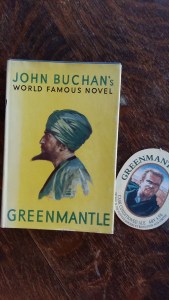 What follows is an introduction to the book (no spoilers!). It is also an excuse to show off a picture of my 1950 Hodder & Stoughton edition of Greenmantle complete with dust jacket. I will be posting my review of the book later in the month.
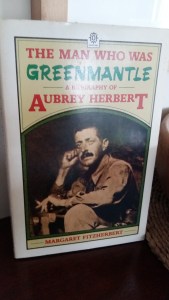 Characters and events in


