

I’m delighted to be hosting today’s stop on the blog tour for Her Hidden Life by V.S. Alexander. Unfortunately, the book hasn’t yet reached the top of my TBR pile, although I’m eager to read it based on some of the glowing reviews from other book bloggers. For instance, Beverley Has Read called it ‘a well-written, well-plotted and…well-researched historical novel which ticked lots of boxes’. Ginger Book Geek was ‘hooked from the moment I read the first sentence.’
Based on a true story, Her Hidden Life is described as a sweeping, heroic love story perfect for fans of Dinah Jeffries and Gill Paul. I have an extract from Her Hidden Life to whet your appetite. Incidentally, you can read a fascinating article by the author about the writing of Her Hidden Life here.
 About the Book
It’s 1943 and Hitler’s Germany is a terrifying place to be. But Magda Ritter’s duty is the most dangerous of all…
Assigned to The Berghof, Hitler’s mountain retreat, she must serve the Reich by becoming the Führer’s ‘Taster’ – a woman who checks his food for poison. Magda can see no way out of this hellish existence until she meets Karl, an SS officer who has formed an underground resistance group within Hitler’s inner circle.
As their forbidden love grows, Magda and Karl see an opportunity to stop the atrocities of the madman leading their country. But in doing so, they risk their lives, their families and, above all, a love unlike either of them have ever known…
(Her Hidden Life was published under the title The Taster in the US)
Format: ebook, paperback (400 pp.) Publisher: Avon Books
Published: 3rd May 2018 Genre: Historical Fiction, Romance
Purchase Links*
Amazon.co.uk ǀ Amazon.com ǀ Hive.co.uk (supporting UK bookshops)
*links provided for convenience, not as part of any affiliate programme
Find Her Hidden Life on Goodreads
Extract: Her Hidden Life by V. S. Alexander
In the first years of the war, Berlin had been spared. When the attacks began, the city strode like a dreamer, alive but unconscious of its motions. People walked about without feeling. Babies were born and relatives looked into their eyes and told them how beautiful they were. Touching a silky lock of hair or pinching a cheek did not guarantee a future. Young men were shipped off to the fronts – to the East and to the West. Talk on the streets centered on Germany’s slow slide into hell, always ending with ‘it will get better.’ Conversations about food and cigarettes were common, but paled in comparison to the trumpeted broadcasts of the latest victories earned through the ceaseless struggles of the Wehrmacht.
My parents were the latest in a line of Ritters to live in our building. My grandparents had lived here until they each died in the bed where I slept. My bedroom, the first off the hall in the front of the building, was my own, a place I could breathe. No ghosts frightened me here. My room didn’t hold much: the bed, a small oak dresser, a rickety bookshelf and a few items I collected over the years, including the stuffed toy monkey my father had won at a carnival in Munich when I was a child. When the bombings began, I looked at my room in a different way. My sanctuary took on a sacred, extraordinary quality and each day I wondered whether its tranquility would be shattered like a bombed temple.
The next major air raid came on Hitler’s birthday on April 20, 1943. The Nazi banners, flags and standards that decorated Berlin waved in the breeze. The bombs caused some damage, but most of the city escaped unscathed. That attack also had a way of bringing back every fear I suffered as a young girl. I was never fond of storms, especially the lightning and thunder. The increasing severity of the bombings set my nerves on edge. My father was adamant that I leave, and, for the first time, I felt he might be right. That night he watched as I packed my bag.
About the Author
V. S. Alexander is an ardent student of history and the arts and loves writing historical fiction with strong women protagonists. The author of several novels and short stories, Alexander’s first novel for Kensington Publishing was The Magdalen Girls, an Amazon best seller, set in 1962 Dublin. The author lives in South Florida where summer is never far away.
Connect with V. S. Alexander
Website ǀ Facebook ǀ Twitter ǀ Goodreads


 Scarborough was bombarded by German warships on 6th December 1914, part of an attack by the Imperial German Navy on the coastal ports of Hartlepool, West Hartlepool and Whitby in Yorkshire. In total the attack resulted in 592 casualties, many of them civilians, of whom 137 died. In Scarborough, nineteen people were killed. Buildings damaged included the Lighthouse (which later had to be destroyed), the Royal Hotel, the Grand Hotel and the Town Hall. The furthest bomb damage was three miles inland on a farm.
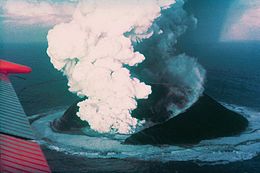 Surtsey is a volcanic island located off the southern coast of Iceland. It was formed in an eruption which reached the surface on 14 November 1963 and lasted until 5 June 1967. Its name derives from Surtr, a fire giant from Norse mythology.
 In
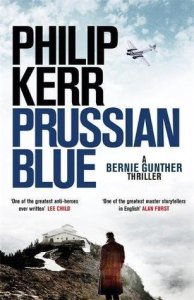 In
 A Christmas Carol or, to give it its full title A Christmas Carol in Prose, Being a Ghost-Story of Christmas, was first published in London by Chapman & Hall on 19th December1843. The first edition sold out by Christmas Eve and, by the end of 1844, thirteen editions had been released. In 1849 Dickens began public readings of the story which proved so successful that he undertook 127 further performances until 1870, the year of his death. A Christmas Carol has never been out of print.


