
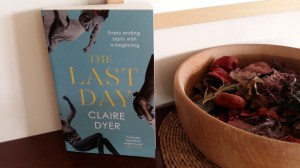
 About the Book
They say three’s a crowd but when Boyd moves back into the family home with his now amicably estranged wife, Vita, accompanied by his impossibly beautiful twenty-seven-year-old girlfriend, Honey, it seems the perfect solution: Boyd can get his finances back on track while he deals with his difficult, ailing mother; Honey can keep herself safe from her secret, troubled past; and Vita can carry on painting portraits of the pets she dislikes and telling herself she no longer minds her marriage is over.
But the house in Albert Terrace is small and full of memories, and living together is unsettling.
For Vita, Boyd and Honey love proves to be a surprising, dangerous thing and, one year on, their lives are changed forever.
Format: Paperback, ebook (370 pp.) Publisher: The Dome Press
Published: 15th February 2018 Genre: Contemporary Fiction
Purchase Links*
Publisher | Amazon.co.uk ǀ Amazon.com ǀ Hive.co.uk (supporting UK bookshops)
*links provided for convenience, not as part of any affiliate programme
Find The Last Day on Goodreads
10 Things I Loved About The Last Day by Claire Dyer
The structure – The book is told from the alternating points of view of the main characters but, at random intervals, the reader gets a chapter about a seemingly unrelated character whose role in the story will only be revealed at the end of the book.
The atmosphere – The book creates a powerful sense of claustrophobia. The house in Albert Terrace is small, smaller than the reader might have imagined, meaning Vita, Boyd and Honey are in close proximity all the time. They share one bathroom and the rooms are described as ‘crowded with furniture’. It doesn’t help that Boyd is a big man. At one point Vita says, ‘I feel cramped by their presence in the house.’
The apt names – The character names give an insight into their personalities. There’s Vita whose name matches her feisty nature, someone who’s full of life, energy and not a little pent-up anger. There’s Boyd, whose names speaks of solidity and honesty. There’s Honey who seems to embody the sweet nature her name suggests. And there’s Trixie – but I’m going to let you read the book to work that one out!
Colin – Poor Colin, Vita’s convenient companion for outings, suppers and – occasionally – something more. His comment to Vita, ‘If you’re happy, I’m happy’ sums him up.
Honey’s superstitions – Bringing bread and salt to a new home (and sprinkling the salt on the doorstep), going in and out by the same entrance, flinging open all the doors at midnight on New Year’s Eve to let the old year escape unimpeded. And I can’t finish without mentioning the precaution against bad luck Honey takes on p.47. Sorry, you’re going to have to read the book to find out what it is!
Vita’s pet portraits – In fact, not so much the pet portraits as Vita’s sheer contempt at what her artistic ambitions have been reduced to: painting pictures of pampered pooches.
Shared pleasures – Boyd’s and Vita’s early morning chats over tea or coffee and the crossword. What could be more civilised?
Tension – The presence of secrets and hidden frustration contribute to an air of mounting pressure that the reader feels must eventually find some release. As Vita observes, ‘…how can this house survive seeing it’s full to bursting with the three of us, our belongings, and so many unsaid things?’
That ending – The tension mentioned above builds to a dramatic and heart-breaking conclusion that represents both a last day in one respect and a first day in another.
Elements of the story, for me, were definitely in the realm of fiction but what really stood out about The Last Day was the depth of the characterisation, the intense atmosphere the author created within the house and the compelling nature of the relationship between Vita, Boyd and Honey. You can read my review here of Claire talking about The Last Day at Waterstones, Reading on 24th May 2018 (alongside author of The Cliff House, Amanda Jennings) .
I received a review copy courtesy of publishers, The Dome Press, in return for an honest and unbiased review.
In three words: Intense, compelling, intimate
Try something similar…That Summer in Puglia by Valeria Vescina (read my review here)
 About the Author
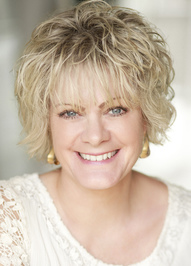
Claire Dyer’s novels The Moment and The Perfect Affair, and her short story, Falling For Gatsby, are published by Quercus. Her poetry collections, Interference Effects and Eleven Rooms are published by Two Rivers Press. She has an MA in Creative Writing from Royal Holloway, University of London and teaches creative writing for Bracknell & Wokingham College. She also runs Fresh Eyes, an editorial and critiquing service.
Connect with Claire


