

WWW Wednesdays 6th June ‘18


WWWWednesdays

Hosted by Taking on a World of Words, this meme is all about the three Ws:

  • What are you currently reading?
  • What did you recently finish reading?
  • What do you think you’ll read next?

Why not join in too?  Leave a comment with your link at Taking on a World of Words and then go blog hopping!


Currently reading

WaltScott_Sugar MoneySugar Money by Jane Harris (hardcover)

Martinique, 1765, and brothers Emile and Lucien are charged by their French master, Father Cleophas, with a mission. They must return to Grenada, the island they once called home, and smuggle back the 42 slaves claimed by English invaders at the hospital plantation in Fort Royal. While Lucien, barely in his teens, sees the trip as a great adventure, the older and worldlier Emile has no illusions about the dangers they will face. But with no choice other than to obey Cleophas – and sensing the possibility, however remote, of finding his first love Celeste – he sets out with his brother on this ‘reckless venture’.
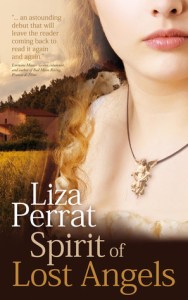
SpiritofLostAngelsSpirit of Lost Angels (The Bone Angel #1) by Liza Perrat (ebook, review copy courtesy of the author)

Her mother executed for witchcraft, her father dead at the hand of a noble, Victoire Charpentier vows to rise above her poor peasant roots.  Forced to leave her village of Lucie-sur-Vionne for domestic work in Paris, Victoire is raped and threatened by her Marquis master, and must abandon her newborn, Rubie, on the church steps.

Accused of a heinous crime, Victoire is imprisoned in La Salpêtrière mental asylum, where she bonds with fellow prisoner, Jeanne de Valois – conwoman of the infamous Necklace Affair that brought down Queen Marie Antoinette. She dreams of escaping the asylum but wonders if the price of freedom – losing Jeanne – is worth it.

Enmeshed in the fervour of the 1789 Bastille storming, Victoire hears the name ‘Rubie’ called. Could her foundling daughter be alive, and living in Paris?


Recently finished (click on title for review)
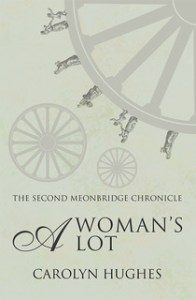
A Woman's LotA Woman’s Lot (Meonbridge Chronicles #2) by Carolyn Hughes (eARC, courtesy of the author)

How can mere women resist the misogyny of men?

A resentful peasant rages against a woman’s efforts to build up her flock of sheep… A husband, grown melancholy and ill-tempered, succumbs to idle talk that his wife’s a scold… A priest, fearful of women’s “unnatural” power, determines to keep them in their place.

The devastation wrought two years ago by the Black Death changed the balance of society: more women saw their chance to build a business, to learn a trade, to play a greater part. But many men still hold fast to the teachings of the Church and fear the havoc the “daughters of Eve” might wreak if they’re allowed to usurp men’s roles and gain control over their own lives.

Not all men resist women’s desire for change – indeed, they want it for themselves. Yet it takes only one or two to unleash the hounds of hostility and hatred…

The Concubine's ChildThe Concubine’s Child by Carol Jones (eARC, NetGalley)

In 1930s Malaysia, sixteen-year-old Yu Lan is in love with her best friend, Ming, whose father owns one of the busiest kopi shops in Petaling Street. But Ming’s family don’t see the apothecary’s daughter as a suitable wife – for Yu Lan’s father, Lim, spends more time playing mahjong than selling herbal remedies. It’s not long before Lim makes a terrible decision that will change Yu Lan’s life forever, selling her as a concubine to the wealthy, ageing Towkay Chan who is desperate for a male heir.

The consequences of Lim’s betrayal resonate through four generations and into the present day, where Yu Lan’s great-grandson, Nick, is searching for his lost family history. His wife, Sarah, begins to be very afraid of what he will find as past and present meld into one.

The Shady Side of TownThe Shady Side of Town: Reading’s Trees by Adrian Lawson & Geoff Sawers (paperback)

Three hundred years ago, an acorn germinated at the edge of a field; today a mighty oak stands in the middle of a congested roundabout.  What has it witnessed and what can we discover from it?

The stories of towns are so often told in terms of their architecture, or the humans that have lived in them.  This book brings trees to the fore, with evocative illustrations and beautifully told stories of the natural wonders of Reading.

After the PartyAfter the Party by Cressida Connolly (eARC, NetGalley)

‘Had it not been for my weakness, someone who is now dead could still be alive. That is what I believed and consequently lived with every day in prison.’

It is the summer of 1938 and Phyllis Forrester has returned to England after years abroad. Moving into her sister’s grand country house, she soon finds herself entangled in a new world of idealistic beliefs and seemingly innocent friendships. Fevered talk of another war infiltrates their small, privileged circle, giving way to a thrilling solution: a great and charismatic leader, who will restore England to its former glory.

At a party hosted by her new friends, Phyllis lets down her guard for a single moment, with devastating consequences. Years later, Phyllis, alone and embittered, recounts the dramatic events which led to her imprisonment and changed the course of her life forever. (Review to follow.)


What Cathy (will) Read Next
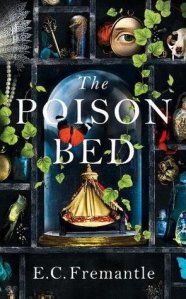
The Poison BedThe Poison Bed by E. C. Fremantle (eARC, NetGalley)

A king, his lover and his lover’s wife. One is a killer.

In the autumn of 1615 scandal rocks the Jacobean court when a celebrated couple are imprisoned on suspicion of murder. She is young, captivating and from a notorious family. He is one of the richest and most powerful men in the kingdom.

Some believe she is innocent; others think her wicked or insane. He claims no knowledge of the murder. The king suspects them both, though it is his secret at stake.

Who is telling the truth? Who has the most to lose? And who is willing to commit murder?
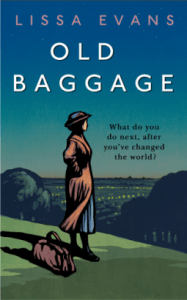
Old BaggageOld Baggage by Lissa Evans (eARC, NetGalley)

What do you do next, after you’ve changed the world?

It is 1928. Matilda Simpkin, rooting through a cupboard, comes across a small wooden club – an old possession of hers, unseen for more than a decade.

Mattie is a woman with a thrilling past and a chafingly uneventful present. During the Women’s Suffrage Campaign she was a militant. Jailed five times, she marched, sang, gave speeches, smashed windows and heckled Winston Churchill, and nothing – nothing – since then has had the same depth, the same excitement.

Now in middle age, she is still looking for a fresh mould into which to pour her energies. Giving the wooden club a thoughtful twirl, she is struck by an idea – but what starts as a brilliantly idealistic plan is derailed by a connection with Mattie’s militant past, one which begins to threaten every principle that she stands for.

#BookReview The Shady Side of Town: Reading’s Trees by Adrian Lawson & Geoff Sawers

The Shady Side of TownAbout the Book

Three hundred years ago, an acorn germinated at the edge of a field; today a mighty oak stands in the middle of a congested roundabout.  What has it witnessed and what can we discover from it?

The stories of towns are so often told in terms of their architecture, or the humans that have lived in them.

This book brings trees to the fore, with evocative illustrations and beautifully told stories of the natural wonders of Reading.

Format: Paperback (94 pp.)    Publisher: Two Rivers Press
Published: 1st May 2017          Genre: Non-Fiction, Nature

Purchase Links*
Publisher | Amazon.co.uk  ǀ  Hive.co.uk (supporting UK bookshops)
*links provided for convenience, not as part of any affiliate programme

Find The Shady Side of Town: Reading’s Trees on Goodreads


My Review

The Shady Side of Town is full of evocative and informative descriptions of some of the notable trees to be found around Reading in Berkshire, UK.  For example, this entry for the obscurely-named Elaeagnus-leaved Pear: ‘The trunk emerges from the ground twisting around on itself…it would not look out of place in a fairy tale involving elves and sprites deep in a Bavarian forest.’   Or the touch of personification in this description of a line of Lombardy Poplars: ‘Their branches do not intermingle.  They have just that bit of standoffishness about them which gives them a haughty air.’

The book emphasises the importance of community green spaces and the role of trees as natural relief from the buildings around them and the hustle and bustle of a large town.  Given the nature of urban development, some of the trees have ended up in rather incongruous positions, such as the middle of a roundabout!   As we learn from the book, trees provide a vital habitat for wildlife in an urban environment such as Reading and within the branches of the town’s trees the author observes bird species such as the goldcrest, siskin, redpoll, woodpecker and owl.   Beetles, spiders and bats also make their home in hollowed out trunks and other natural nooks and crannies in the trees.

Alongside the descriptions of the trees are interesting titbits about how they came to be planted and about the history of some of Reading’s older buildings.  It has to be said there are also some intriguing insights into the youthful activities of the author and those of a similar generation.

At times there is an elegiac quality to the descriptions. Talking about two mighty oaks in the Whitley area of Reading, the author writes: ‘These trees – having been here for so long that they were already old and hollow when the surrounding area was rich in wildlife, before the rise of chemicals and intensive farming – are repositories of the life of a countryside now lost.  How these trees must mourn, deep inside their boles.’  The author locates trees hidden away behind housing estates, overshadowed by hoardings or with only recycling bins for company.   Admiration for the resilience of trees definitely comes across as does concern for the proper future stewardship of Reading’s trees, such as the importance of coppicing.

Amongst the many things I loved about this book was being reminded of the historical role of trees in marking boundaries and crossroads.  In days before reliable maps and certainly before GPS, trees would often act as distinctive meetings places for local people.  I also liked the recognition that trees can conjure up visions of other places in the world, such as in this entry for a Bhutan pine in the Caversham area of Reading. ‘Bhutan is a mystical, isolated kingdom in the Himalayas famed for its happiness, amongst other things.’ 

The book blurb ends with the question, “Which is your favourite?” and I confess I find myself hard-pressed to pick one out.  However, if pushed, I’m going to go for a tree I saw often on the Whiteknights campus of the University of Reading in my student days.  It’s a Monterey Pine outside the University Library (the word ‘Monterey’ evoking memories of Jimi Hendrix for the author).  Here’s just a snippet to give a taste of the wonderful descriptions in the book.  ‘The magnificent black trunk soars skyward, with its huge branches growing horizontally all around the circumference before swooping back down in dramatic curves and forks tapering to the tips, the heavy foliage almost sweeping the ground.’    I must also mention at this point the fabulous illustrations by Geoff Sawers that accompany each entry.

The Shady Side of Town may be a slim volume but it is packed full of interesting detail and feels like a labour of love on the part of the author and illustrator.  It will appeal to those with an interest in trees, the natural world, environmental issues and social history.  Those who have lived, studied or worked in Reading will also find many interesting facts about the town within its pages.  If you ever have occasion to visit Reading, some of the trees mentioned are located within easy walking distance of the railway station.   Indeed, this little book may cause you to think about Reading in a completely new light…. I’ll confess, it did me.  It’s also a pleasure to support a local publisher.  They have plenty more enticing sounding titles in their catalogue so do visit their website (details below).

You can also follow The Shady Side of Town on Facebook here.

Follow my blog with Bloglovin

In three words: Fascinating, nature, environment

Try something similar…An Artist’s Year in the Harris Garden by Jenny Halstead


About the Author

After an eclectic career in which he was paid for spending a lot of time in Reading’s outdoor spaces, Adrian Lawson was extremely fortunate to be able to take early retirement with the intention of spending less time with his family.  Since then he has worked as a bike mechanic and campaigner for cycle facilities as Director of Reading Bicycle Kitchen.  Other than that he spends his days teaching refugees to speak English, walking his dogs and birdwatching.  He has a partner, Anne, three kids, four dogs and a taste for loud and bizarre music.

About the Illustrator

Geoff Sawers scuppered a promising sporting career when he left the crease at Welayarapatta Cricket ground in pursuit of a rare butterfly.  He never found it.  Today he lives in west Reading with his wife Dani Hall, their three children and a growing collection of moths.

About the Publisher

Two Rivers Press has been publishing in and about Reading since 1994.  Founded by the artist Peter Hay (1951-2003), the press continues to delight readers, local and further afield, with its varied list of individually designed, thought-provoking books.

Website  ǀ  Facebook  ǀ  Twitter