Book Review: Paris Echo by Sebastian Faulks

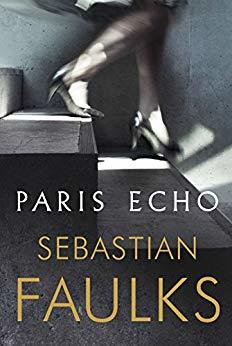
Paris EchoAbout the Book

Here is Paris as you have never seen it before – a city in which every building seems to hold the echo of an unacknowledged past, the shadows of Vichy and Algeria.

American postdoctoral researcher Hannah and runaway Moroccan teenager Tariq have little in common, yet both are susceptible to the daylight ghosts of Paris. Hannah listens to the extraordinary witness of women who were present under the German Occupation; in her desire to understand their lives and through them her own, she finds a city bursting with clues and connections. Out in the migrant suburbs, Tariq is searching for a mother he barely knew. For him, in his innocence, each boulevard, Métro station and street corner is a source of surprise.

Format: Hardcover, ebook (320 pp.)    Publisher: Hutchinson
Published: 6th September 2018     Genre: Literary Fiction

Purchase Links*
Amazon.co.uk  ǀ  Amazon.com  ǀ Hive.co.uk (supporting UK bookshops)
*links provided for convenience, not as part of any affiliate programme

Find Paris Echo on Goodreads


My Review

Paris Echo is one of those books where, whilst recognising the skill of the author and the quality of the writing, I found myself wondering if I was quite clever enough to understand everything the author was trying to communicate. It’s partly for that reason that I’m only now writing this review although I read the book some weeks ago…

The book explores a number of themes including abstruse (to me, at least) concepts such as ‘autoscopy’, the sense of being outside yourself and seeing yourself as if another person.  Tariq, one of the characters in the book, experiences this sensation on a couple of occasions.

The key theme, as suggested by the title, is how echoes of the past reverberate in the present.  For example, Hannah is returning to Paris where she studied previously to research the lives of women in Paris during the German occupation.  But she is also facing up to traumatic memories.  ‘Coming to the American Library when my real material lay elsewhere had been a frivolous thing to do; but I’d wanted to reconnect with my past before I pushed out into the unknown.’  The story told from Hannah’s point of view is interspersed with transcripts of recordings (fictionalised) that she listens to as part of her research.  I confess I did at times think this was merely a way for the author to insert chunks of historical detail into the book.

Tariq, on the other hand, is travelling to the place of his mother’s birth.  Hannah believes Tariq views Paris as ‘some sort of lost motherland’.  However, he never gets anywhere in finding out anything about his mother as far as I could see.

There were clever little touches that I liked such as the chapter headings being stations on the Paris Metro.  I also liked the sense of France’s past history being so present in a physical sense, with buildings, streets and stations named after historical, military and political figures.  ‘In Paris, where almost every street name was a nod to history…’  And the author doesn’t shy away from reminding the reader that France’s role in World War 2 encompassed collaboration as well as resistance.

However, there were many elements I struggled with.  For instance, Tariq encounters a girl named Sandrine on his journey to France.  Later, Hannah encounters Sandrine outside her building and Sandrine introduces Tariq to Hannah.  A nice neat circle, one thinks.  However, Sandrine then disappears completely from the story.

Tariq’s encounters with a woman he catches sight of one day and Hannah’s strange experience when visiting the site of a former concentration camp, left me frankly puzzled.  Were these experiences some sort of hallucination (drug-fuelled or otherwise) or intended to be manifestation of Hannah’s belief in ‘the impact of previous existences on every day I was alive…’?  I really don’t know but I’d love someone who’s read the book and thinks they know the answer to enlighten me!

I thought I would love Paris Echo but, sadly, I ended up merely confused.

Follow my blog with Bloglovin

In three words: Complex, thought-provoking, atmospheric

Try something similar…for a fictional treatment of SOE operations in World War 2, Night Flight to Paris by David Gilman or for firsthand testimony of life under German occupation,  A Countess in Limbo by Olga Hendrikoff and Sue Carscallen (click on titles to read my reviews)

MV 001About the Author

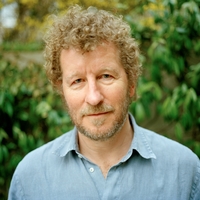
Sebastian Faulks was born in 1953, and grew up in Newbury, the son of a judge and a repertory actress. He attended Wellington College and studied at Emmanuel College, Cambridge, although he didn’t enjoy attending either institution. Cambridge in the 70s was still quite male-dominated, and he says that you had to cycle about 5 miles to meet a girl.

He was the first literary editor of The Independent, and then went on to become deputy editor of The Sunday Independent. Sebastian Faulks was awarded the CBE in 2002. He and his family live in London.

Connect with Sebastian

Website  ǀ  Twitter  ǀ  Goodreads

WWW Wednesdays – 5th December ‘18

WWWWednesdays

Hosted by Taking on a World of Words, this meme is all about the three Ws:

  • What are you currently reading?
  • What did you recently finish reading?
  • What do you think you’ll read next?

Why not join in too?  Leave a comment with your link at Taking on a World of Words and then go blog hopping!


Currently reading

The Cold North SeaThe Cold North Sea (Ingo Finch Mystery #2) by Jeff Dawson (eARC, courtesy of Canelo and NetGalley)

A game of spies, a brutal murder, the fate of an Empire…

The North Sea, October 1904 – When Russian warships bombard the Hull trawler fleet, killing innocent fishermen, public outrage pushes Britain and Russia to the brink of war, the sparks from which could inflame the entire Continent.

Doctor Ingo Finch, once of the Royal Army Medical Corps, is long done with military adventuring. But when a stranger seeks him out, citing a murderous conspiracy behind the infamous “Dogger Bank Incident”, Finch is drawn back into the dark world of espionage.

With Whitehall, St Petersburg and rival Bolsheviks vying to manipulate the political crisis, the future of Britain, and Europe, is at stake…

So Much Life Left OverSo Much Life Left Over by Louis de Bernières (hardcover)

A sweeping, heartbreaking novel following Daniel in his troubled marriage with Rosie as they navigate the unsettled time between the World Wars.

Rosie and Daniel have moved to Ceylon with their little daughter to start a new life at the dawn of the 1920s, attempting to put the trauma of the First World War behind them, and to rekindle a marriage that gets colder every day. However, even in the lush plantation hills it is hard for them to escape the ties of home and the yearning for fulfilment that threatens their marriage.

Back in England, Rosie’s three sisters are dealing with different challenges in their searches for family, purpose and happiness. These are precarious times, and they find themselves using unconventional means to achieve their desires. Around them the world is changing, and when Daniel finds himself in Germany he witnesses events taking a dark and forbidding turn.

By turns humorous and tragic, gripping and touching, So Much Life Left Over follows a cast of unique and captivating characters as they navigate the extraordinary interwar years both in England and abroad.


Recently finished (click on title for review)

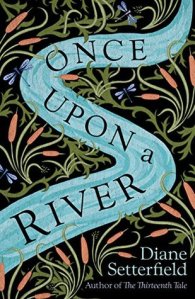
Once Upon A RiverOnce Upon A River by Diane Setterfield (proof copy, courtesy of Doubleday)

A dark midwinter’s night in an ancient inn on the Thames. The regulars are entertaining themselves by telling stories when the door bursts open on an injured stranger. In his arms is the drowned corpse of a little child.

Hours later the dead girl stirs, takes a breath and returns to life.

Is it a miracle? Is it magic? Or can it be explained by science?

Replete with folklore, suspense and romance, as well as with the urgent scientific curiosity of the Darwinian age, Once Upon a River is as richly atmospheric as Setterfield’s bestseller The Thirteenth Tale.

Sugar in the Blood HBSugar in the Blood: A Family’s Story of Slavery and Empire by Andrea Stuart (hardcover)

In the late 1630s, lured by the promise of the New World, Andrea Stuart’s earliest known maternal ancestor, George Ashby, set sail from England to settle in Barbados. He fell into the life of a sugar plantation owner by mere chance, but by the time he harvested his first crop, a revolution was fully under way: the farming of sugar cane, and the swiftly increasing demands for sugar worldwide, would not only lift George Ashby from abject poverty and shape the lives of his descendants, but it would also bind together ambitious white entrepreneurs and enslaved black workers in a strangling embrace. Stuart uses her own family story—from the seventeenth century through the present—as the pivot for this epic tale of migration, settlement, survival, slavery and the making of the Americas.

As it grew, the sugar trade enriched Europe as never before, financing the Industrial Revolution and fueling the Enlightenment. And, as well, it became the basis of many economies in South America, played an important part in the evolution of the United States as a world power and transformed the Caribbean into an archipelago of riches. But this sweet and hugely profitable trade – “white gold,” as it was known -had profoundly less palatable consequences in its precipitation of the enslavement of Africans to work the fields on the islands and, ultimately, throughout the American continents.

Interspersing the tectonic shifts of colonial history with her family’s experience, Stuart explores the interconnected themes of settlement, sugar and slavery with extraordinary subtlety and sensitivity. In examining how these forces shaped her own family–its genealogy, intimate relationships, circumstances of birth, varying hues of skin–she illuminates how her family, among millions of others like it, in turn transformed the society in which they lived, and how that interchange continues to this day. Shifting between personal and global history, Stuart gives us a deepened understanding of the connections between continents, between black and white, between men and women, between the free and the enslaved. It is a story brought to life with riveting and unparalleled immediacy, a story of fundamental importance to the making of our world. (Review to follow.)

Sadie's WarsSadie’s Wars (Currency Girls #3) by Rosemary Noble (ebook, courtesy of Rachel’s Random Resources)

Sadie is brought up amongst the vineyards of the Yarra Valley whilst her work-obsessed father reaps riches from the boom years before the Great War.  With post-war depression looming, Sadie’s only option is to flee from her disastrous marriage, seeking refuge in Cleethorpes, a small seaside town in northern England.

Years later, when her sons are in RAF Bomber Command, she receives a letter from her long-lost brother which forces her to confront the past and her part in her family’s downfall.  Can old wounds be healed? Will she find new love? Will this second war destroy everyone she saved?

The BlueThe Blue by Nancy Bilyeau (eARC, courtesy of Endeavour Quill)

In eighteenth century London, porcelain is the most seductive of commodities; fortunes are made and lost upon it. Kings do battle with knights and knaves for possession of the finest pieces and the secrets of their manufacture.

For Genevieve Planché, an English-born descendant of Huguenot refugees, porcelain holds far less allure; she wants to be an artist, a painter of international repute, but nobody takes the idea of a female artist seriously in London. If only she could reach Venice.

When Genevieve meets the charming Sir Gabriel Courtenay, he offers her an opportunity she can’t refuse; if she learns the secrets of porcelain, he will send her to Venice. But in particular, she must learn the secrets of the colour blue…

The ensuing events take Genevieve deep into England’s emerging industrial heartlands, where not only does she learn about porcelain, but also about the art of industrial espionage.  With the heart and spirit of her Huguenot ancestors, Genevieve faces her challenges head on, but how much is she willing to suffer in pursuit and protection of the colour blue?


What Cathy (will) Read Next

The Salt of the EarthThe Salt of the Earth by Józef Wittlin, trans. by Patrick Corness (eARC, courtesy of Pushkin Press and NetGalley)

At the beginning of the twentieth century the villagers of the Carpathian mountains lead a simple life, much as they have always done. The modern world has yet to reach the inhabitants of this isolated and remote region of the Habsburg Empire. Among them is Piotr, a bandy-legged peasant, who wants nothing more from life than an official railway cap, a cottage with a mouse-trap and cheese, and a bride with a dowry.

But then the First World War comes to the mountains, and Piotr is drafted into the army. All the weight of imperial authority is used to mould him into an unthinking fighting machine, so that the bewildered peasant can be forced to fight a war as he does not understand, for interests other than his own.

The Salt of the Earth is a classic war novel, a powerful pacifist tale about the consequences of war on ordinary men.

My Sister MyselfMy Sister, Myself by Jill Treseder (ebook, review copy courtesy of the author and Random Things Tours)

Hungary, 1956 – Russian tanks brutally crush the revolution against the Communist regime. Sisters Katalin and Marika escape Budapest with their family and settle in London.

However, the past is not so easily left behind. Their father is a wanted man, and the sisters’ relationship hangs in the balance. Their futures are shaped by loss. For Katalin, this means the failure of her ambition and a devastating discovery; for Marika, an equally heart-breaking experience.

Caught between their Hungarian heritage and their new lives in Britain, the sisters struggle to reconnect. Family secrets are exposed, jeopardising Katalin’s and Marika’s identities.  Can their relationship survive war, division and grief?