#BookReview The Figure in the Photograph by Kevin Sullivan @allisonandbusby

20200224_131215-1About the Book

1898. Juan Camerón’s father is killed while working as a photographer amidst the chaos of war in Cuba, but his last pictures reveal a sinister truth to his final moments…

Juan travels to Scotland to grieve with family and immerses himself in the study of photography. When he invents a device that inadvertently solves a crime, local law enforcement recruit him to help stop a brutal serial killer plaguing the streets of Glasgow.

Format: Hardcover (352 pages)      Publisher: Allison and Busby
Publication date: 23rd April 2020 Genre: Historical Fiction, Crime, Mystery

Find The Figure in the Photograph on Goodreads

Purchase links*
Publisher | Amazon.co.uk| Hive (supporting UK bookshops)
*links provided for convenience not as part of an affiliate programme


My Review

I was attracted to this book for a number of reasons: firstly, because historical crime is one of my favourite genres; secondly, because it’s published by Allison & Busby who have a great track record of publishing books I enjoy; thirdly, I was intrigued by it being partly set in Cuba.

Initially I was a little disappointed that the setting moves pretty quickly from revolutionary Cuba to Glasgow. However, I was soon immersed in the story and the atmosphere created by the author which vividly brings to life the sights, sounds and smells of the crowded streets and tenements of Glasgow at the very end of the 19th century.

The main character, Juan, was a little less vivid. The reader never gets much description of him so I found it hard to create a picture of him in my mind. At first, I wondered if this was deliberate on the author’s part, since there are detailed descriptions of other characters, or if it would have some significance for the story. As it turns out, the only things we really learn are that he is skilled in photography and that he can look after himself in a tight situation, having learned to box in Granada and been taught judo by his Jesuit tutor in Madrid. The latter comes in very handy. I also found Juan’s lack of curiosity about his mother’s whereabouts, mentioned as part of his back story early on in the book, rather surprising. However, perhaps the author is saving that for the future.

Introducing the use of photography as a detection technique, in particular Juan’s pioneering self-timer which enables photographs of a scene to be taken at set intervals, is a bit of a masterstroke on the author’s part. After all, who hasn’t enjoyed a ‘spot the difference’ quiz at one time or another? It also raises some intriguing questions about what we notice or don’t notice when we look at a photograph. Who is there who shouldn’t be? Who isn’t there but should be? Is there something that stands out as remarkable? Is there something so unremarkable it gets overlooked? It brought to mind Sherlock Holmes’ oft quoted observation about the curious incident of the dog in the night time. (Talking of Sherlock Holmes, I loved young Tommy, who appoints himself Juan’s assistant, messenger and guide; a sort of one urchin version of the Baker Street Irregulars.)

As the bodies mount up, Juan despairs at his lack of progress in discovering the identity of the serial killer, despite hours spent painstakingly analysing the scenes he’s photographed and undertaking his own investigations. But if he’s really not getting anywhere, why do so many influential local men seem anxious to bring his involvement in the case to an end? Like the process of developing a photograph, slowly the full picture is revealed. And Juan maybe on to something when he wonders if, in the future, it will be possible to place cameras in city streets taking continuous photographs.

I really enjoyed The Figure in the Photograph. It’s a well-crafted, atmospheric historical crime mystery and I look forward to reading further books by the author.  I received an advance review copy courtesy of Allison and Busby.

In three words: Compelling, atmospheric, suspenseful

Try something similar: The Wages of Sin by Kaite Welsh
Follow my blog via Bloglovin


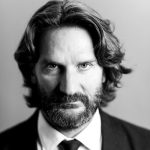
sullivan-kevin-wbAbout the Author

Kevin Sullivan was born in Glasgow. His career in journalism has placed him on the front line of defining historical moments in living memory, from documenting events at Tiananmen Square to covering the siege of Dubrovnik and the war in Bosnia and Herzegovina. His work has taken him to Singapore, Sri Lanka, Japan, the Western Balkans and Spain.  He lives in Sarajevo.  (Photo credit: Publisher author page)

Connect with Kevin
Website | Twitter


#BookReview A Life Without End by Frédéric Beigbeder @WorldEdBooks

A Life Without EndAbout the Book

What does the man who has everything – fame, fortune, a new love, and a new baby – want for his fiftieth birthday? The answer is simple: eternal life.

Determined to shake off the first intimations of his approaching demise, Frédéric tries every possible procedure to ward off death, examining both legal and illegal research into techniques that could lead to the imminent replacement of man with a post-human species. Accompanied by his ten-year-old daughter and her robot friend, Frédéric criss-crosses the globe to meet the world’s foremost researchers on human longevity, who – from cell rejuvenation and telomere lengthening to 3D-printed organs and digitally stored DNA – reveal their latest discoveries.

With his blend of deadpan humour and clear-eyed perception, Beigbeder has penned a brutal and brilliant exposé of the enduring issue of our own mortality.

Format: Paperback (304 pages)  Publisher: World Editions
Publication date: 16 April 2020 Genre: Contemporary Fiction

Find A Life Without End on Goodreads

Purchase links*
Amazon.co.uk | Amazon.com | Hive (supporting UK bookshops)
*links provided for convenience not as part of an affiliate programme


My Review

For a fair bit of this book I found myself trying to work out whether it was fiction or non-fiction. I came to the conclusion that it’s a mixture of both. Many of the people Frédéric meets do exist in real life (thank you, Google) and hold the positions in the scientific and commercial institutions mentioned. Without a lot of research, I’m unable to say how much of what they tell him about their discoveries and how they might be used is accurate, but I’m betting most of it is. That’s a bit scary in some cases.

This is my first book by the author but, reading up on him, I learned that there is a strong autobiographical element to his work. For instance, in the book, the narrator is married to his second wife and has two daughter, as does the author (although the names of his wife and daughters have been changed). I’m unsure if he shares with the narrator a seeming preoccupation with women’s breasts.

There are some great one-liners such as the author’s observation about the current obsession with selfies that, “Modern man is a collection of 75 trillion cells all striving to become pixels.” In fact, the subject of selfies is a bit of a running joke. There are also quirky touches such as tables entitled Advantages and Disadvantages Of Death, Some Differences Between A Thirtysomething Single Guy And A Fiftysomething Father (‘Goes clubbing in Ibiza vs. Buys a holiday home in the Basque Country’) and Key Differences Between Human And Robot (‘Cogito ergo sum vs. Cogito ergo sum coniuncta ad Wi-Fi’).

Great fun is had with Pepper the Japanese robot who accompanies Frédéric and his daughter, Romy, on their travels to interview scientists and doctors in his quest for the secret of immortality. There are some scenes in a spa resort they visit that are laugh out loud funny.

Encompassing topics as varied as genome sequencing, psychoanalysis, cell renewal, transgenic foods and blood transfusions, the book addresses serious issues as well and contains some sobering statistics, although true to the author’s style these are delivered with humour. ‘Life is a hecatomb. A mass murder that slaughters 59 million people a year. 1.9 deaths per second. 158,857 deaths a day. Twenty people have died around the world since the beginning of this paragraph – more if you’re a slow reader.’ [I had to look up hecatomb as well. It means the sacrifice or slaughter of many victims.]

To begin with, I wasn’t sure I was going to like this book but in fact I found it fascinating, albeit a little chilling at times, especially the chapter in which the author sets out a distinctly dystopian view of the future. Frédéric’s wife, Leonore, a trained scientist, provides a counterbalance to her husband’s belief in the benefits of immortality. She argues, “A life without end would be a life without purpose” and later, tiring (and who can blame her) of his incessant search for the secret of defeating death, describes it as “a fantasy designed to humour infantile, ignorant, narcissistic megalomaniacs who can’t bring themselves to face the inevitable.”

As well as being a very funny book, the narrator’s relationship with his elder daughter is rather touching and the end of the book is surprisingly moving. Does Frédéric find what he’s searching for? As one character tells him, “Perhaps if you publish it the ending will change. You know better than anyone that literature can conquer time.” Do you see what he did there?

I can’t end this review without commending the translator for his skill in reproducing the author’s self-mocking style and communicating with clarity such complex scientific information. If I wasn’t able to grasp quite all of it, that’s definitely my failing not his.

I received an advance review copy courtesy of World Editions.

In three words: Playful, thought-provoking, satirical


CROPPED-Beigbeder-F-c-jf-Paga-GRASSET-500x500About the Author

Frédéric Beigbeder is a French journalist and critic, and is responsible for the literary section of Le Figaro Magazine. Also a bestselling author, his novel 99 Francs both got him fired from his advertising job and established him as a controversial force within French literature. For his other novels, he has been awarded various prizes including the 2003 Prix Interallié and the 2009 Prix Renaudot, and the Independent Foreign Fiction Prize in 2005 for his novel Windows on the World. He is a regular guest on French national morning radio, and a frequent contributor to El País Icon (Spain), Interview (Germany), and Esquire (Russia).

About the Translator

Frank Wynne is a literary translator and writer. Born in Ireland, he moved to France in 1984 where he discovered a passion for language. He began translating literature in the late 1990s, and in 2001 decided to devote himself to this full time. He has translated works by Michel Houellebecq, Frédéric Beigbeder, Ahmadou Kourouma, Boualem Sansal, Claude Lanzmann, Tómas Eloy Martínez, and Almudena Grandes. His work has earned him a number of awards, including the Scott Moncrieff Prize and the Premio Valle Inclán. Most recently, his translation of Vernon Subutex by Virginie Despentes was shortlisted for the Man Booker International 2018.