My Week in Books – 28th June 2020

MyWeekinBooks

On What Cathy Read Next last week

Blog posts

Monday –  I shared my review of The Colours by Juliet Bates as part of the blog tour.

Tuesday – This week’s Top Ten Tuesday was a celebration of ten years of the meme and I shared some of the lovely author feedback I’m thankful for.

Wednesday – WWW Wednesday is the opportunity to share what I’ve just read, what I’m currently reading and what I plan to read next…and have a good nose around to see what other bloggers are reading.

Thursday – I published my review of The English Wife by Adrienne Chinn as part of the blog tour.

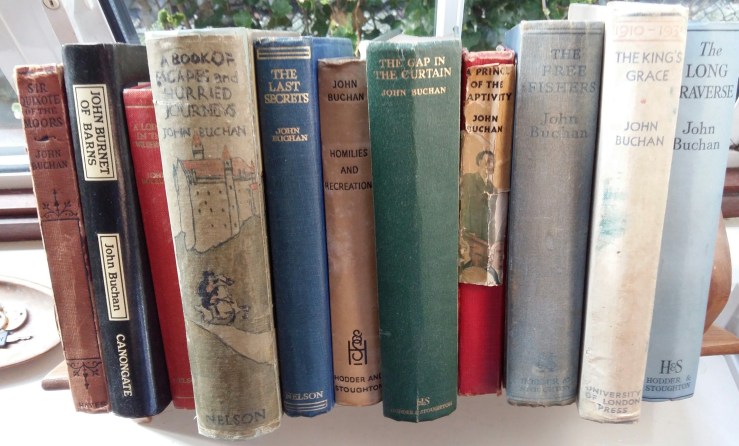
Friday –  I shared my review of my Buchan of the Month, Homilies and Recreations by John Buchan.

As always, thanks to everyone who has liked, commented on or shared my blog posts on social media this week.


New arrivals
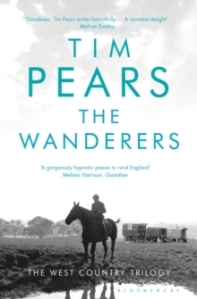
9781408892305The Wanderers (The West Country Trilogy #2) by Tim Pears (audio book)

Two teenagers, bound by love yet divided by fate, forge separate paths in England before World War I.

1912. Leo Sercombe is on a journey. Aged thirteen and banished from the secluded farm of his childhood, he travels through Devon, grazing on berries and sleeping in the woods. Behind him lies the past, and before him the West Country, spread out like a tapestry. But a wanderer is never alone for long, try as he might—and soon Leo is taken in by gypsies, with their wagons, horses, and vivid attire. Yet he knows he cannot linger, and must forge on toward the western horizon.

Leo’s love, Lottie, is at home. Life on the estate continues as usual, yet nothing is as it was. Her father is distracted by the promise of new love and Lottie is increasingly absorbed in the natural world: the profusion of wild flowers in the meadow, the habits of predators, and the mysteries of anatomy. And of course, Leo is absent. How will the two young people ever find each other again?
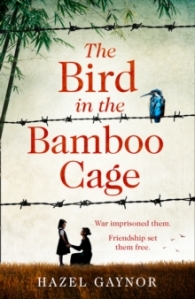
9780008393632The Bird in the Bamboo Cage by Hazel Gaynor (eARC, Harper Collins)

When war imprisons them, only kindness will free them…

China, 1941. Elspeth Kent has fled an unhappy life in England for a teaching post at a missionary school in northern China. But when Japan declares war on the Allies and occupies the school, security and home comforts are replaced by privation, uncertainty and fear. For ten-year-old Nancy Plummer and her school friends, now separated from their parents indefinitely, Miss Kent’s new Girl Guide patrol provides a precious reminder of home in a land where they are now the enemy.

Elspeth and her fellow teachers, and Nancy and her friends, need courage, friendship and fortitude as they pray for liberation. But worse is to come. Removed from the school, they face even greater uncertainty and danger at a Japanese internment camp, where cruelty and punishment reign.

Inspired by true events, this is an unforgettable read about a remarkable community faced with unimaginable hardship, and the life-changing bonds formed in a distant corner of a terrible war.

theborrowedboy_coverdesign_final-page-0The Borrowed Boy by Deborah Klee (eARC, courtesy of the author and Rachel’s Random Resources)

A borrowed boy, a borrowed name and living on borrowed time.

What do you put on a bucket list when you haven’t done anything with your life? No interesting job, no lovers, no family, no friends. Believing she has only weeks left to live, Angie Winkle vows to make the most of every minute.

Going back to Jaywick Sands, is top of her bucket list. Experiencing life as a grandmother is not, but the universe has other plans and when four-year-old Danny is separated from his mum on the tube, Angie goes to his rescue. She tries to return him to his mum but things do not go exactly as planned and the two of them embark on a life-changing journey.

Set in Jaywick Sands, once an idyllic Essex holiday village in the 70s, but now a shantytown of displaced Londoners, this is a story about hidden communities and our need to belong.


On What Cathy Read Next this week

Currently reading

The Narrow LandEXu9kKLWAAMtUAnThe OffingWaltScott_The Horseman

Planned posts

  • Book Review: The Offing by Benjamin Myers
  • Top Ten Tuesday: Most Anticipated July to December 2020 Reads
  • Waiting on Wednesday
  • Book Review: The Narrow Land by Christine Dwyer Hickey
  • 6 Degrees of Separation

#BookReview Homilies and Recreations by John Buchan #ReadJB2020

20200620_095517-1About the Book

A collection of essays on literary, political and historical matters.

Format: Hardcover (316 pages)            Publisher: Hodder & Stoughton         Publication date: 1939 [1926]                     Genre: NonFiction


My Review

My Buchan of the Month for June is Homilies and Recreations which was published in September 1926 by Thomas Nelson & Sons.  My copy (pictured) is a later revised edition published by Hodder & Stoughton in 1939. You can read my earlier blog post introducing the book here.

I will admit to approaching the book with a degree of trepidation as the inclusion of the word ‘Homilies’ in the title suggested the prospect of a rather moralistic tone. In fact, I was pleasantly surprised by how interesting many of the essays were, especially those originally delivered as lectures or speeches. There were even one or two moments of humour.

John Buchan’s personal interests come through clearly in both the choice and content of the pieces. For example, his passion for the novels of Sir Walter Scott, his interest in history and education, his regard for the United States and his fondness for the countryside around Oxford.

In ‘Some Notes on Sir Walter Scott’, Buchan reveals himself as an amazingly prolific reader. Whilst convalescing in the spring of 1917, he reports he read (or reread) eight of Scott’s novels, several novels by Alexandre Dumas and Victor Hugo plus half a dozen by Balzac. Buchan rates Sir Walter Scott as the greatest of these novelists for his ability to see things on a grander scale, to clarify life and observe “justly and nobly”. Using examples from some of the author’s novels, he defends criticism of Scott’s verbal style, his construction of plots and lack of psychological depth in his characters. Admitting that at times Scott could write “abominably”, Buchan asks whether there is any great writer who does not sometimes, in his phrase, “nod”.

Staying with the literary theme, in ‘The Old and the New in Literature’, Buchan addresses the long-standing debate about the relative merits of classic and modern literature. As he says, “The strife of old and new, classic and modern, has been going on merrily since the caveman discovered a new way of making pictures on bone, and was snubbed by the elders of his tribe, who pointed to certain ancient daubs on the cave wall as the last word in art.” In defence of the modern novel, he praises the instinct of writers to try something different whilst stressing the need for the “shape and purpose” that he sees as a feature of classic works.

John Buchan was a long time student of American history, and had a particular regard for the political, military and strategic skills of Abraham Lincoln. (Lincoln has a starring role in the final story in The Path of the King, published in 1921.) In ‘Two Ordeals of Democracy’, Buchan observes, “Democracy as a form of government is subject to perpetual challenge, not from foreign enemies alone, but from foes in its own household. Liberty demands a close and unremitting guardianship.” Wise words that could equally apply to today’s world.

‘Literature and Topography’ brings together two of Buchan’s interests – history and the natural world. He argues that for a fictional place to seem real it is necessary for the author to create “a particularized landscape” which the reader can fix in their memory in order to follow the story. No surprise that he includes Sir Walter Scott in his list of writers who were masters of creating fictional landscapes, alongside Charles Dickens, Anthony Trollope and Thomas Hardy. For Buchan, an essential element of a “particularized landscape” are place-names, which he describes as “splendid things”. He writes, “They may have the flavour of ancient stateliness, or they may be harsh mementos of old passions or gnarled remnants of a forgotten humour, or they may reflect the poetry in the people’s heart and sing themselves to music”.

It has to be said that, despite the eloquence of Buchan’s prose, some of the subject matter has dated and is unlikely to be of interest to the general reader. I would include in that category ‘The Victorian Chancellors’, a series of pen portraits of (largely forgottable) men who held the office of Lord Chancellor, and ‘Lord Balfour and English Thought’.

One of my favourite essays was ‘Style and Journalism’ in which Buchan pulls no punches, describing much of modern writing as “careless, fantastic, shapeless and, to my conservative mind, undeniably bad“. English journalism, however, he believes has reached the highest level of competence. Nevertheless, he lists what he sees as common “pitfalls” in journalistic style, some of which may have you casting a nervous eye over your own output. His list includes mixed metaphors, split infinitives and misuse of adverbs such as ‘singularly’ or ‘literally’. He shows particular disdain for abstraction: “Unless your object is to avoid the law of libel do not say that a man has a ‘complex of misappropriation’ but that he is a thief.”

elsfield-manor
Elsfield Manor, Oxfordshire

In ‘Thoughts on a Prospect of Oxford’, Buchan transports the reader to a ridge overlooking Oxford and describes how the view of the city would have changed over the centuries from the 4th century to the present day. In its role call of travellers on the road to Oxford, it recalls the opening chapter of his 1931 novel, The Blanket of the Dark. There’s even a reference to Elsfield, the manor house in Oxfordshire Buchan purchased as the family home in 1919.

In the final essay, ‘The Interpreter’s House’ (a reference to John Bunyan’s The Pilgrim’s Progress, an influential text for Buchan) he describes a university as not only “a seminary for the training of youth but a museum for record, a laboratory for discovery, a power-house for inspiration”. We’ll have to forgive his assumption that all the students will be male and his rather rosy view of the egalitarianism of Oxford colleges.

Next month’s Buchan of the Month is The Gap in the Curtain. Look out for my introduction to the book and my review.

Follow my blog via Bloglovin


John BuchanAbout the Author

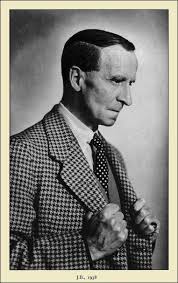
John Buchan (1875 – 1940) was an author, poet, lawyer, publisher, journalist, war correspondent, Member of Parliament, University Chancellor, keen angler and family man.  He was ennobled and, as Lord Tweedsmuir, became Governor-General of Canada.  In this role, he signed Canada’s entry into the Second World War.   Nowadays he is probably best known – maybe only known – as the author of The Thirty-Nine Steps.  However, in his lifetime he published over 100 books: fiction, poetry, short stories, biographies, memoirs and history.

You can find out more about John Buchan, his life and literary output by visiting The John Buchan Society website.

20200205_130743-1