My Week in Books – 12th July 2020

MyWeekinBooks

On What Cathy Read Next last week

Blog posts

Monday –  I shared my review of crime novel A Quiet Death in Italy by Tom Benjamin as part of the blog tour.

Tuesday – This week’s Top Ten Tuesday topic was Authors I’ve Read The Most Books By.

Wednesday – WWW Wednesday is the opportunity to share what I’ve just read, what I’m currently reading and what I plan to read next…and have a good nose around to see what other bloggers are reading.

Thursday – As part of the blog tour, I published my review of The Englishman by David Gilman. 

Friday –  I shared a progress update on my 2020 Reading Challenges.

Saturday – I published my review of The Time Machine by H.G. Wells.

As always, thanks to everyone who has liked, commented on or shared my blog posts on social media this week.


New arrivals

9780008366254The Second Marriage by Gill Paul (ebook, courtesy of Avon and Random Things Tours)

JACKIE – When her first marriage ends in tragedy, Jackie Kennedy fears she’ll never love again. But all that changes when she encounters…

ARI – Successful and charming, Ari Onassis is a man who promises her the world. Yet soon after they marry, Jackie learns that his heart also belongs to another…

MARIA – A beautiful, famed singer, Maria Callas is in love with Jackie’s new husband – and she isn’t going to give up. Little by little, Jackie and Maria’s lives begin to tangle in a dangerous web of secrets, scandal and lies.

But with both women determined to make Ari theirs alone, the stakes are high. How far will they go for true love?

This Is Happiness by Niall Williams (paperback)

Change is coming to Faha, a small Irish parish that hasn’t changed in a thousand years.

For one thing, the rain is stopping. Nobody remembers when it started; rain on the western seaboard is a condition of living. But now – just as Father Coffey proclaims the coming of the electricity – the rain clouds are lifting. Seventeen-year-old Noel Crowe is idling in the unexpected sunshine when Christy makes his first entrance into Faha, bringing secrets he needs to atone for. Though he can’t explain it, Noel knows right then: something has changed.

As the people of Faha anticipate the endlessly procrastinated advent of the electricity, and Noel navigates his own coming-of-age and his fallings in and out of love, Christy’s past gradually comes to light, casting a new glow on a small world.

Harking back to a simpler time, This Is Happiness is a tender portrait of a community – its idiosyncrasies and traditions, its paradoxes and kindnesses, its failures and triumphs – and a coming-of-age tale like no other. Luminous and lyrical, yet anchored by roots running deep into the earthy and everyday, it is about the power of stories: their invisible currents that run through all we do, writing and rewriting us, and the transforming light that they throw onto our world.

IMG_20200709_134412_647

To Calais, In Ordinary Time by James Meek (paperback)

Three journeys. One road.

England, 1348. A gentlewoman is fleeing an odious arranged marriage, a Scottish proctor is returning home to Avignon and a handsome young ploughman in search of adventure is on his way to volunteer with a company of archers. All come together on the road to Calais.

Coming in their direction from across the Channel is the Black Death, the plague that will wipe out half of the population of Northern Europe. As the journey unfolds, overshadowed by the archers’ past misdeeds and clerical warnings of the imminent end of the world, the wayfarers must confront the nature of their loves and desires.

A tremendous feat of language and empathy, it summons a medieval world that is at once uncannily plausible, utterly alien and eerily reflective of our own. James Meek’s extraordinary To Calais, In Ordinary Time is a novel about love, class, faith, loss, gender and desire—set against one of the biggest cataclysms of human history.


On What Cathy Read Next this week

Currently reading

Planned posts

  • Buchan of the Month: Introducing…The Gap in the Curtain by John Buchan
  • Top Ten Tuesday: Books That Make Me Smile
  • Waiting on Wednesday
  • Blog Tour/Book Review: Rags of Time by Michael Ward
  • Book Review: The Horseman by Tim Pears

The Time Machine by H.G. Wells #BookReview #classics #sciencefiction

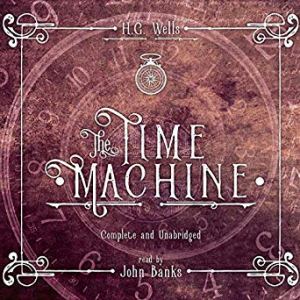
61fg+BR7jTL._SX342_About the Book

When a Victorian scientist propels himself into the year 802,701 AD, he is initially delighted to find that suffering has been replaced by beauty, contentment and peace.

Entranced at first by the Eloi, an elfin species descended from man, he soon realises that this beautiful people are simply remnants of a once-great culture – now weak and childishly afraid of the dark. But they have every reason to be afraid: in deep tunnels beneath their paradise lurks another race descended from humanity – the sinister Morlocks.

And when the scientist’s time machine vanishes, it becomes clear he must search these tunnels, if he is ever to return to his own era.

Format: Audiobook (3h 22m)                            Publisher: Ladbroke Audio
Publication date: 6th February 2017 [1895] Genre: Classics, Science Fiction

Purchase links*
Audible UK| Hive
*links provided for convenience not as part of an affiliate programme


My Review

The Time Machine
The Time Machine (1960)

The Time Machine is a story I realised I knew mainly from the 1960 film version starring Rod Taylor. I was interested, therefore, to see how much of the original book made it through the adaptation process. The answer is a surprising amount.

Although in the book the lead character is never named but instead referred to throughout as ‘the Time Traveller’, in both versions he gives an account of his experiences to a group of (mostly disbelieving) friends gathered for a weekly dinner. He describes how, far from the utopia hoped for, in the time period to which he travelled humankind has evolved into two distinct races: the degenerate, underground-dwelling Morlocks; and the indolent, rather childlike, surface-dwelling Eloi.

In the film there is no discussion about how the change in society might have come about but in the book the Time Traveller gives a lot of thought to the cause of such a marked stratification of society. His initial theory positions the Eloi as the superior, aristocratic race given they live a life of leisure, engaging in no work to feed or clothe themselves. The Morlocks on the other hand are the workers toiling beneath the surface. This probably reflects Wells’s own socialist views and life experiences.  It was common at the end of the 19th century for workers to live ‘below stairs’ or work in basements and the idea of the ‘haves’ exploiting the ‘have nots’ easily transfer to the book.

However, the Time Traveller becomes perplexed and a little frustrated by the passivity and lack of curiosity of the Eloi. In his view, humanity cannot make progress or innovate without struggle. In addition, the Eloi seem to have little care for one another or any fear of danger – until nightfall, that is. The reason for the latter gradually becomes apparent and eventually the awful truth of the relationship between the two races is revealed.

In the book, the Eloi are described as short, pale, and elfin-like whereas in the film they are blonde and beautiful. The Weena of the book, the only member of the Eloi who engages with the Time Traveller, is definitely not the glamorous character played by Yvette Mimieux in the film. In fact, the Time Traveller’s relationship with the childlike Weena in the book felt a little uncomfortable. The Morlocks in the book are albino and spider-like and I found the scenes in which they appear much scarier than I remember from watching the film.

Events towards the end of The Time Machine mean it is left to the reader to imagine what direction – past or future – the Time Traveller’s adventures will take him and when, or if, he might return to his own time. In the film, it seems fairly obvious.

There are aspects of The Time Machine that now seem distinctly prophetic. For example, the Time Traveller notes the temperature in the future is much higher than in his own century. When he ventures even further ahead in time, what he sees is a vision of a dying Sun and apocalyptic climate change. (The film version sees the Time Traveller witnessing events in the much more immediate future.)

It’s amazing to think how many of the concepts associated with time travel in modern fiction and film are owed to The Time Machine, a book written in 1895.  It’s a testament to the fertile imagination of H.G. Wells.

The audiobook version I listened to was narrated by John Banks who did a good job throughout but especially in communicating the Time Traveller’s sense of fear in some of the more dramatic scenes. 

In three words: Inventive, thought-provoking, chilling

Try something similar: The War of the Worlds by H. G. Wells

Follow this blog via Bloglovin


About the Author

Herbert George Wells was a novelist, teacher, historian and journalist, who has become known as the “father of science fiction.” His works have been adapted countless times, and provided the basis for many literary and theatrical productions.

About the Narrator

John Banks is one of the UK’s most prolific audiobook narrators, working for the likes of Big Finish, Audible, Random House and Games Workshop. He is a true multi-voice, creating everything from monsters to marauding aliens. He is also an accomplished stage and TV actor.