#BookReview Green Hands by Barbara Whitton @I_W_M


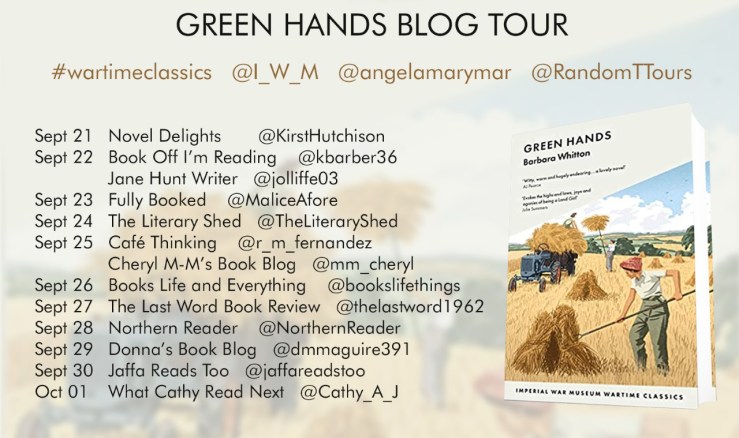
Welcome to today’s stop – which is also the final stop – on the blog tour for Green Hands by Barbara Whitton. My thanks to Anne at Random Things Tours for inviting me to take part in the tour and to Angela Martin and the Imperial War Museum for my review copy.
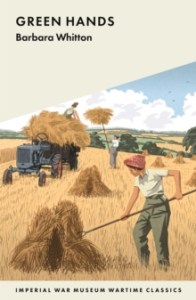

About the Book

It is 1943, and a month into their service as Land Girls, Bee, Anne and Pauline are sent to a remote farm in rural Scotland. Here they are introduced to the realities of ‘lending a hand on the land’, as back-breaking work and inhospitable weather mean they struggle to keep their spirits high.

Soon one of the girls leaves, and Bee and Pauline receive a new posting to a Northumberland dairy farm.
Detailing their friendship, daily struggles and romantic intrigues with a lightness of touch, Barbara Whitton’s charming novel paints a sometimes funny, sometimes bleak picture of time spent in the Women’s Land Army during the Second World War.

Written under a pseudonym and based on its author’s own experience, this new edition of a 1943 classic includes an introduction from IWM which puts the novel into historical context and shines a light on this vital aspect of Britain’s wartime home front.

Praise for Green Hands

“Tales from the home front are always more authentic when written from personal experience, as is the case here. Barbara Whitton evokes the highs and lows, joys and agonies of being a Land Girl” (Julie Summers, author of Dressed For War: The Story of Audrey Withers)

“Witty, warm and hugely endearing, Barbara Whitton’s Green Hands is full of engaging characters, burgeoning friendships and pure hard-graft. A lovely novel for anyone interested in wartime Britain, it leaves the reader with renewed admiration for the indefatigable work of the Women’s Land Army.” (A J Pearce, author of Dear Mrs. Bird)

About the Imperial War Museum’s Wartime Classics series

The Wartime Classics series was launched in September 2019 to great acclaim. The novels were all written either during or just after the Second World War and are currently out of print. As part of the Imperial War Museum’s commitment to telling the stories of those who experienced conflict first hand, each novel is written directly from the author’s own experience and takes the reader right into the heart of the battle. Browse all the titles in the series released so far here.

Format: Paperback (196 pages) Publisher: Imperial War Museum
Publication date: 3rd September 2020 [1943] Genre: Modern Classics

Purchase links*
Publisher | Amazon UK | Hive (supporting UK bookshops)
*links provided for convenience not as part of an affiliate programme


My Review

For Barbara, Anne and Pauline, their first impressions of what life as a Land Girl entails are not promising. The farm to which they are sent is cold, dark and rather cheerless. And its owner, Farmer Thompson, is scathing about their likely abilities. As they soon discover, the days are long and the weather veers between rain, sleet and more rain. Their initial task – throwing harvested mangolds into a cart – is back-breaking and more difficult than it sounds, especially when your aim is as poor as Anne’s. However, I was enchanted by the description of the mangolds flying in “a golden arc through the air”. (By the way, a “mangold” or mangel-wurzel is a variety of beet.)

Food portions at the farm are rather meagre, so much so that a meal of cold meat, rice pudding and prunes is looked upon as a “gala lunch”. It’s this sort of gentle humour and the camaraderie between the Land Girls that makes Green Hands such an engaging read. For example, I loved how Farmer Thompson is nicknamed ‘Mr Doomsday’ and the son of the family referred to as ‘the woeful Walter’. Ah yes, Walter, with his interminable talk about subjects of very little interest to anyone apart from himself and his inability to realise when he’s out-stayed his welcome. Having said that, he is responsible for a much-needed evening outing, to the cinema in the nearest town to see a Western. Barbara is surprised when the audience join in enthusiastically. “They boo the villain whenever the poor man shows his face and they stamp their feet and shriek with excitement in the final shoot-up.”

Things improve for Barbara and Pauline when they are redeployed to a dairy farm in Northumberland. The family are much more welcoming, with the exception of young Cecil “the Mussolini of the entire farm”. To Pauline’s delight, the food portions are more generous too. Barbara is given responsibility for a milk round and, as she carries out her deliveries, the reader gets a glimpse into the lives of people at different ends of the social spectrum.

As the Land Girls discover, many of the tasks on a farm are characterized by monotony: gathering stones, manure spreading, cutting thistles. The routine is relieved at intervals by the fun of driving the tractor or working with horses. And just occasionally there is time to pause and appreciate the surrounding landscape. “The country is spread out at our feet in all colours of green and golden brown, and looks like a giant patchwork quilt… A black bee, heavy with honey, blunders like a ball of sooty thistledown into the hay beside me, clings for a moment, and then zooms away again high into the sky.”

The great thing about the Wartime Classics series is that, not only does it introduce you to authors you may never have otherwise come across, but the introductions to each book provide fascinating nuggets of information. For example, I was surprised to learn that compulsory conscription of single women was introduced in 1941. I had always assumed that service in the Women’s Land Army or the Auxiliary Services was voluntary. I also hadn’t realised that the Women’s Land Army had originally been formed during the First World War.

Green Hands recounts the realities of life working as a Land Girl with wit and humour, demonstrating the vital role these remarkable women played on the Home Front during World War Two.

In three words: Charming, authentic, funny

Try something similar: Blitz Writing: Night Shift & It Was Different At The Time by Inez Holden

Follow this blog via Bloglovin


About the Author

Margaret Hazel Watson was born in Newcastle-upon-Tyne in 1921. She volunteered for the Women’s Land Army in 1939 and worked as a Land Girl for around a year before moving to the First Aid Nursing Yeomanry and later joining the Auxiliary Territorial Service. After the war, she wrote a number of accounts of her wartime experience under the pseudonym Barbara Whitton. She stayed in touch with her fellow Land Girls for the rest of her life – a testament to the deep bonds formed during their time together. She died in 2016.


#WWWWednesday – 30th September 2020

WWWWednesdays

Hosted by Taking on a World of Words, this meme is all about the three Ws:

  • What are you currently reading?
  • What did you recently finish reading?
  • What do you think you’ll read next?

Why not join in too?  Leave a comment with your link at Taking on a World of Words and then go blog hopping!


Currently reading

Two books from my Henley Literary Festival 2020 reading list and a book for a blog tour.

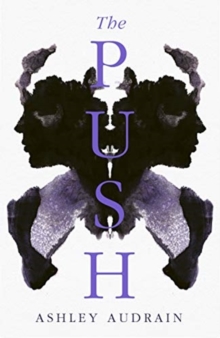
The Push Ashley AudrainThe Push by Ashley Audrain (ARC, courtesy of Michael Joseph)

What if your experience of motherhood was nothing like what you hoped for – but everything you always feared?

‘The women in this family, we’re different…’

The arrival of baby Violet was meant to be the happiest day of my life. It was meant to be a fresh start. But as soon as I held her in my arms I knew something wasn’t right. I have always known that the women in my family aren’t meant to be mothers.

My husband Fox says I’m imagining it. He tells me I’m nothing like my own mother, and that Violet is the sweetest child. But she’s different with me. Something feels very wrong. Is it her? Or is it me? Is she the monster? Or am I?

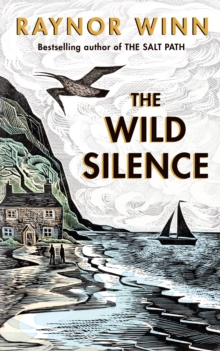
The Wild Silence Raynor WinnThe Wild Silence by Raynor Winn (eARC, courtesy of Michael Joseph via NetGalley)

Nature holds the answers for Raynor and her husband Moth. After walking 630 homeless miles along The Salt Path, living on the windswept and wild English coastline; the cliffs, the sky and the chalky earth now feel like their home.

Moth has a terminal diagnosis, but against all medical odds, he seems revitalized in nature. Together on the wild coastal path, with their feet firmly rooted outdoors, they discover that anything is possible.

Now, life beyond The Salt Path awaits and they come back to four walls, but the sense of home is illusive and returning to normality is proving difficult – until an incredible gesture by someone who reads their story changes everything.

A chance to breathe life back into a beautiful farmhouse nestled deep in the Cornish hills; rewilding the land and returning nature to its hedgerows becomes their saving grace and their new path to follow.

The Wild Silence is a story of hope triumphing over despair, of lifelong love prevailing over everything. It is a luminous account of the human spirit’s instinctive connection to nature, and how vital it is for us all.

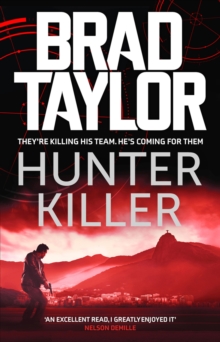
Hunter Killer Brad TaylorHunter Killer by Brad Taylor (ARC, courtesy of Head of Zeus)

They’re killing his team. He’s coming for them.

The Taskforce were once apex predators, an unrivalled hunting machine that decimated those out to harm the USA, but they may have met their match. While Pike is preparing to join the team on a counter-terrorist mission in South America, a friend is killed in South Carolina. The authorities believe it was an accident, but Pike suspects the attack was meant as a message to him.

When he loses contact with the team in South America, Pike becomes convinced the Taskforce is under attack. His men are the closest thing to family he has. He will do anything – even ignore direct orders to stand down – to find them.


Recently finished

Links from the titles will take you to my review (when I get round to writing then all!)

The Second Marriage by Gill Paul

Dear Child by Romy Hausmann

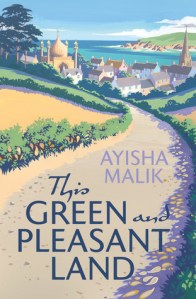
This Green and Pleasant Land Ayisha MalikThis Green and Pleasant Land by Ayisha Malik

Accountant Bilal Hasham and his journalist wife, Mariam, plod along contentedly in the sleepy, chocolate box village they’ve lived in for eight years.

Then Bilal is summoned to his dying mother’s bedside in Birmingham. Sakeena Hasham is not long for this world but refuses to leave it until she ensures that her son remembers who he is: a Muslim, however much he tries to ignore it. She has a final request. Instead of whispering her prayers in her dying moments, she instructs Bilal to go home to his village, Babbels End, and build a mosque.

Mariam is horrified. The villagers are outraged. How can a grieving Bilal choose between honouring his beloved mum’s last wish and preserving everything held dear in the village he calls home? But it turns out home means different things to different people.

Battle lines are drawn and this traditional little community becomes the colourful canvas on which the most current and fundamental questions of identity, friendship, family and togetherness are played out. What makes us who we are, who do we want to be, and how far would we go to fight for it? (Review to follow)

The Magic Walking Stick John BuchanThe Magic Walking Stick by John Buchan

A young boy called Bill, buys a walking stick from a roadside peddler. He discovers that it’s a magic stick that will take the owner to anywhere he wishes. Adventures ensue… (Review to follow)

The Salt Path by Raynor Winn

In one devastating week, Raynor and her husband Moth lost their house and received a terminal diagnosis that took away their future together. With nowhere to call home, they instead embarked on a journey: to walk the South West Coast Path, a 630-mile sea-swept trail from Somerset to Dorset, via Devon and Cornwall.

This ancient, wind-battered landscape lays them bare, stripping away every comfort they have ever known. With almost no money for food orshelter, carrying the essentials for survival on their backs, they wild camp on beaches and clifftops. Until slowly, with every step, every encounter, and every test along the way, the walk sets them on a road of discovery. They don’t know how far they will travel, but unexpectedly, they find themselves on a path to freedom. (Review to follow)

Green Hands by Barbara Whitton

It is 1943, and a month into their service as Land Girls, Bee, Anne and Pauline are dispatched to a remote farm in rural Scotland. Here they are introduced to the realities of ‘lending a hand on the land’, as back-breaking work and inhospitable weather mean they struggle to keep their spirits high. Soon one of the girls falters, and Bee and Pauline receive a new posting to a Northumberland dairy farm.

Detailing their friendship, daily struggles and romantic intrigues with a lightness of touch, Barbara Whitton’s autobiographical novel paints a sometimes funny, sometimes bleak picture of time spent in the Women’s Land Army during the Second World War. (Review to follow for blog tour)


What Cathy (will) Read Next

Those Who Know (Teifi Valley Coroner #3) by Alis Hawkins (ARC, courtesy of The Dome Press)

Harry Probert-Lloyd has inherited the estate of Glanteifi and appointed his assistant John as under-steward. But his true vocation, to be coroner, is under threat. Against his natural instincts, Harry must campaign if he is to be voted as coroner permanently by the local people and politicking is not his strength.

On the hustings, Harry and John are called to examine the body of Nicholas Rowland, a radical and pioneering schoolteacher whose death may not be the accident it first appeared. What was Rowland’s real relationship with his eccentric patron, Miss Gwatkyn? And why does Harry’s rival for the post of coroner deny knowing him? Harry’s determination to uncover the truth threatens to undermine both his campaign and his future.