
Reading is entertainment but, for me, it can also be an education – new words, events in history, myths that turns out to be reality and vice versa. Here are just a few of the things I learned from the books I’ve read recently. Click on the title of the book to read my review.
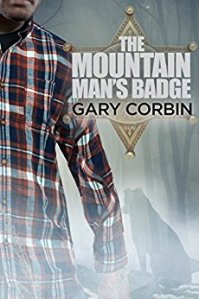 In The Mountain Man’s Badge by Gary Corbin, set in a small town in Oregon near the Cascade Mountains, the hero, Sheriff Lehigh Carter, visits a diner and orders a ‘Reuben. Extra dressing. Fries.’ I’d never heard of a ‘Reuben’ and wondered what it was. Then, in the way things sometimes occur in life, I happened to be up in London to visit the theatre last week (since you ask, The Moderate Soprano starring the peerless Roger Allam). My husband, who is an aficionado of such establishments, took me to a Dutch bar he knows called Da Hems and there on the menu amongst the list of sandwiches was a ‘Reuben’. Its origins and how it got its name are disputed and there are slight variations in the ingredients however Jamie Oliver describes it as ‘the heavenly piling of hot pastrami, sauerkraut, Swiss cheese and Russian dressing into two slices of soft rye bread’. It was delicious.
Source: Jamie Oliver website
 In The King’s Daughter by Stephanie Churchill, I came across references to an item of women’s clothing that I’ve often seen mentioned in historical fiction but never been entirely sure what it actually is – the kirtle. Luckily, in another piece of serendipity, I saw an article featuring the garment shared on her Facebook page by Catherine Meyrick, author of Forsaking All Other. The article has some great pictures of how a kirtle was constructed and worn in relation to other garments.
Source: Walking Through History Facebook Page
 Kirtle wasn’t the only word that caught my eye in The King’s Daughter. A method of transport mentioned quite a few times in the book is a palanquin: ‘The carriage without wheels…was more or less a wide, cushioned chair with raised sides all around. The seat centred on a platform supported by two stout poles carried on the shoulders of six burly men.’ I knew vaguely that this was some kind of litter (defined as a human-powered, wheel-less vehicle for transport of people) but was curious to find out what it looked like. This was the best (copyright free) image of what I believe is being described I could come up with. Two burly men missing, sadly.
Source: Wikipedia
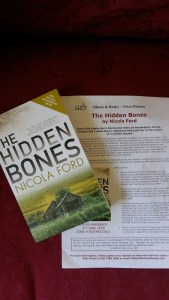 Set in Wiltshire, Nicola Ford’s debut crime novel, The Hidden Bones, involves both an archaeological excavation and a murder investigation. There’s also the little matter of a missing artefact – a ‘sun disk’. What a surprise it must be to uncover something like that which has lain undiscovered for so long. (By the way, that’s not dissimilar to the murder mystery at the heart of in the book.) In fact, a Bronze Age sun disc was discovered in Wiltshire back in 1947 but only put on public display for the first time in June 2015 to coincide with the Summer Solstice. You can read about it and view images of the disc by following the link below.
Source: This Is Wiltshire website
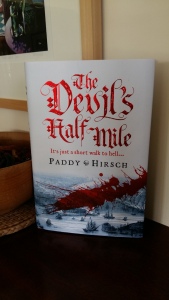 My final ‘fascinating fact’ comes from a book I’ve just finished and will be reviewing shortly – The Devil’s Half-Mile by Paddy Hirsch (due to be published on 5th July 2018). We’re back to American foodstuffs, this time something referred to as a ‘savory chonkey’. I’ll let a quote from the book, set in 18th century New York, reveal more plus give you a taste (pun intended) of the fabulous style and verve of the writing. (Don’t worry; there is a superb glossary as well.) ‘The sidewalks were equally busy. Shoppers and passersby competed for space with a crush of handsellers and their carts: chive fencers selling cutlery, swell fencers touting the sharpness of their sewing needles, flying stationers flogging their penny ballads and histories, crack fencers offering bags of nuts, and everywhere the cakery pannam fencers, whose trolleys were piled with pies, sweet bowlas tarts and savoury chonkeys, the minced-meat pastries that no true New Yorker could resist.’ So, for UK readers, a chonkey is something similar to a Cornish pasty perhaps? Yes, I know, now you want to know what ‘sweet bowlas tarts’ are as well. I’m still searching for definitive information on that one but it’s probably an apple, or other fruit, tart.
What fascinating facts in fiction have you come across this week?

 What Cathy Read Next...
I love this. Even with burly men missing.
LikeLiked by 1 person
I’m sure your imagination can fill in the gaps lol
LikeLiked by 1 person
I’ve come across the Reuben in American fiction usually as I recall, possibly inaccurately, set in New York although given that used to be known as New Amsterdam perhaps my recollection is correct. Great quote from The Devil’s Half-Mile. Have you read Jake Arnott’s The Fatal Tree? Similarly colourful language, also with a glossary.
LikeLiked by 1 person
Pretty sure I have The Fatal Tree on my wishlist if not in my TBR pile. But thanks for the recommendation. The Devil’s Half Mile is terrific by the way – review coming soon.
LikeLiked by 1 person
This is a great idea for a post! Not sure that I have any Fascinating Facts from Fiction for this week, BUT will definitely be keeping an eye out for more from now on thanks to this post.
LikeLike
For one, I found out about the terrible devastation that came about in 1938 Providence, Rhode Island after the ‘Category 5’ hurricane.
LikeLiked by 1 person
Yes, I find historical fiction is particularly good for throwing up interesting facts; things I knew nothing about or had underestimated the impact of on ordinary people.
LikeLiked by 1 person
I love this idea as I’m always picking up fascinating facts from my fiction reads. While I was on holiday I learnt the origin of a fairly common saying from a non-fiction read, and then I came across that phrase in the next three books I read which was weird although I obviously only noticed it because it had recently been bought to my attention! I would share it but because I liked it so much it will be part of the review…
LikeLiked by 2 people
Great example of how much you can learn from fiction. You’ve reminded me that I read a phrase in a book yesterday whose original meaning may be different than I assumed. Off to research it now…
LikeLiked by 2 people