
Reading is entertainment but it can also be education – new words, myths that turn out to be reality and vice versa. Here are just a few of the things I learned from the books I read this week. Click on the title of the book to read my review.
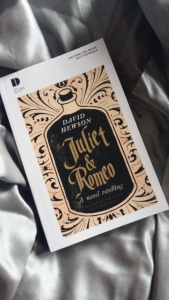 Whilst reading Juliet & Romeo, David Hewson’s retelling of the story that inspired Shakespeare’s Romeo and Juliet, I was intrigued by reference to the fishermen using cormorants that are trained to catch fish.
It transpires this is a traditional fishing method which originated in Japan and China many centuries ago. The fishermen tie a snare near the base of the bird’s throat which prevents it swallowing larger fish which are held in its throat. However, the birds can swallow smaller fish. When a cormorant has caught a fish, the fisherman brings the bird back to the boat and has the bird spit the fish up.
You can find some amazing photographs of the practice here.
Source: Wikipedia
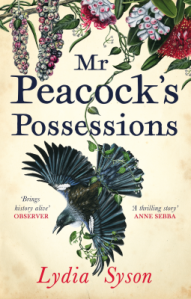 Staying on the bird theme, in Mr Peacock’s Possessions by Lydia Syson, mention is made of a practice called ‘blackbirding’. Indeed the alternative name for the fictional island on which the book is set is ‘Blackbird Island.’
‘Blackbirding’ was the shocking practice of coercing people through trickery, such as posing as missionaries, and kidnapping them to work as labourers. It came to prominence in the 1860s when ‘blackbirding’ ships would sail the Pacific seeking workers to mine guano deposits on the islands off Peru. Later, the ‘blackbirders’ focused on supplying indentured labourers for the sugar cane plantations of Queensland and Fiji. Those “blackbirded” were usually the indigenous populations of nearby Pacific islands.
Source: Wikipedia
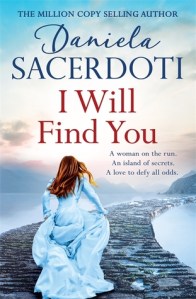 Next, we’re off to the Scotland and the fictional island of Seal, one of the locations in I Will Find You by Daniela Sacerdoti. In the book there are a number of references to a feature of the landscape called machair.
As I now know, machair is a Gaelic word meaning fertile, low-lying grassy plain. It refers to the dune grassland that occurs on the exposed western coasts of Scotland and Ireland, formed partly by sand made up of crushed shells blown ashore by Atlantic gales. It is a habitat renowned for its diversity with an abundance of wildflowers, rarer species such as orchids and hollows favoured as nesting places by corncrakes (as mentioned in the book).
Source: Visit Outer Hebrides
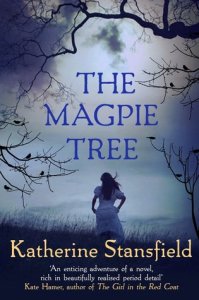 Now we’re moving south to Cornwall, the location of the historical mystery The Magpie Tree by Katherine Stansfield. One of the many things I enjoyed about the book was the author’s inclusion of some Cornish dialect words.
How about ‘braggaty’ meaning spotted, mottled or ‘clitter’ meaning a confused noise.
Source: Cornish Culture
 Finally, it’s back to Italy and That Summer in Puglia by Valeria Vescina. One of the many things I loved about the book was the luscious descriptions of Italian food. A reference to a drink, nocino, that I’d never heard of caught my eye.
As I now know nocino is a walnut based alcoholic drink, common in the north of Italy. It is made with green unripe walnuts, has a syrupy consistency and is a dark oily brown in colour. Its aroma is distinctly nutty and it’s strong: 40% alcohol by volume or 80 proof.
Source: Italy Chronicles blog
What fascinating facts did you learn from your reading this week?

 What Cathy Read Next...
I learned that the Middle English equivalent of ‘Let sleeping dogs lie’ goes back at least to the fourteenth century – Troilus and Criseyde by Chaucer.
LikeLiked by 1 person
Great example, I love finding out this sort of thing!
LikeLiked by 1 person
Such an enjoyable post, Cathy.
LikeLiked by 1 person
Thank you! The cormorant fishing was my favourite one.
LikeLike
You’ve made me think I should be a more attentive reader!
LikeLiked by 1 person
I think you have to be careful not to get too distracted from the story though. I’ve started noting down one or two ‘facts’ that spark my curiosity for each book I read but then leave it at that.
LikeLiked by 1 person
Fantastic post you should make this into a meme!
LikeLiked by 1 person
Glad you enjoyed it. Feel free to join in! It was your weekly links post that sort of triggered the idea
LikeLike
What a lovely post, Cathy. And thank you for including That Summer in Puglia! Very glad you enjoyed the descriptions of the food and drink, too. Cuisine and drinks tell us so much about a culture!
LikeLiked by 1 person
And, as in your book, the way people eat tells you about their character. I’m thinking of Tommaso’s mother eating with a knife and fork something he’d eat with his hands.
LikeLiked by 1 person
Enjoyed this post- I loved how one can (and does) learn so many things from the books we read. Great idea putting it together!
LikeLike
Fiction can be so didactic. ♥
LikeLiked by 1 person
Good word!
LikeLike